

startup investor/helper, founder @conviction. interested in intelligence, accelerating progress. tech podcast: @nopriorspod
on ⛓
Joined July 2011
- Tweets15.6K
- Following3.4K
- Followers166K
- Likes25.2K




1/ Excited for @goodwin_ml and team @fractile_ai. In a sea of incremental chip bets, they’re taking a huge swing (in close partnership with some of the top labs): stacking DRAM directly on top of the processor to support the memory bandwidth needs of frontier AI models

We’re delighted to announce that Fractile has raised $720M in a Series C led by @thrivecapital @foundersfund @lightspeedvp and @redpoint, with further participation by brilliant new and existing investors.

More from Walter here about how to build chips that push the frontier forward, rather than just try to second-source the elephant
youtube.com/watch?v=OpeCP4wC…
14
3,677
sarah guo retweeted

Keenable Search 1.0 takes 1st (pro, 83) and 2nd (realtime, 82) on the Artificial Analysis Search Index: ahead of Exa (auto, dynamic highlights) and Perplexity (medium) at 80
We benchmarked both modes of @KeenableAI's Keenable Search 1.0, pro and realtime, in our Stirrup agent harness with Keenable Search as its web_search tool to complete 1700 search-focused tasks.
At $4 per 1k searches, Keenable costs about $0.040 per task in both modes, over a third below the board median ($0.063). It is also one of the fastest products we measure: 15.0s (realtime) and 15.5s (pro) per task, 2nd and 3rd on the board.
Key benchmarking results for Keenable Search 1.0:
➤ Artificial Analysis Search Index: Keenable (pro) scores 83 and Keenable (realtime) 82, up from 67 for both modes when we first benchmarked Keenable in August, and a ~50-point lift over the same model with no search (33). Both lead Exa (auto, dynamic highlights) and Perplexity (medium) at 80
➤ DeepSearchQA is Keenable's strongest benchmark: both modes score 88 F1, 1st and 2nd of 26, ahead of Exa (auto, dynamic highlights) at 86. Pro also ranks 1st on BrowseComp (87%, level with Perplexity (medium)) and on AA-Omniscience (73%, level with Exa (auto, dynamic highlights) and Firecrawl)
➤ Fast search: realtime takes 2.3s of search time per task (2nd of 26) and pro 3.0s (3rd), against a board median of 12.5s. Each search returns in about 330ms (realtime) and 390ms (pro) on average
Key details:
➤ Setup: GPT-5.6 Luna (medium) in Stirrup, Keenable Search API with mode=realtime and mode=pro
➤ Pricing: $4 per 1k requests in both modes (public pay-as-you-go price)
➤ Cards: We disabled Keenable's search cards for testing (disable_cards=true)

sarah guo retweeted

Keenable takes #1 on the @ArtificialAnlys Search Index.
Less than three months after opening to the public, and three weeks after taking #1 on the Vals Web Search Index.
We built Keenable to learn from every agent query and it’s learning fast.
artificialanalysis.ai/agents…

congrats Nils and team Tendrils! enormously ambitious and technically special team — rarely do you see folks attach something as core as cpu architecture. thrilled to have you in the @conviction Embed family

Tendrils has raised $30M led by @benchmark to rebuild general-purpose computing. @jaltma is joining our board.
At Tendrils, we believe that the future of general-purpose computing lies beyond legacy architectures for legacy software.


sarah guo retweeted

Hack vector we're seeing in almost every customer codebase: github actions that aren't pinned to specific versions.
Github actions are build steps that run in CI and in deploy workflows. There are third party actions that do all kinds of utility operations: list changed files, log in to Docker, deploy to github pages... etc. Everyone uses them.
The problem is that their behavior can change. This is code that runs in your CI that can change under you at any time. It isn't versioned by your own version control. A third party can change what these actions do whenever they want.
A lot of very widely used utilities are managed by solo devs on their personal github accounts: peaceiris/actions-gh-pages, dorny/paths-filter, appleboy/ssh-action.
If these github accounts get taken over, the attacker can run arbitrary code within your github runners: exfiltrate your code, steal whatever secrets are in CI, even inject code changes into deploys.
A lot of github workflows pin to a version, like dorny/paths-filter@v3. This is not good enough, because those version tags can be changed at any time to point to new commits. You need to pin to a specific sha, like dorny/paths-filter@0e4a8c6effa4802afeda77dc8d303f8176d7dfad.
This happened last year. Attackers compromised a popular github action. (A simple util that listed files changed in a PR.) They shipped a malicious version of the github action, and then they retroactively changed version tags like "v1.0.0" to point to that compromised code. They used this to steal secrets from 23,000 repos.
This is a really broad amplification vector that will take you very little effort to avoid upfront. I'm not sure if this category of vuln even has a name, but it's a ticking timebomb.
What we're doing for our own code:
1. Switch all github actions to pinned shas
2. Add a lint rule that makes sure all github workflows use pinned shas, not any other kind of version tag
Both of these are oneshot-able in your agent of choice.
to Josh’s point, it may not have the delivery and consumption patterns of “software” the way we think about today, but it will serve the functions
think generated pages in instinct, generated workflows in sola, chrome extensions for personalized versions of the web, etc.

I totally believe in this. But I don’t think they will think from scratch - it will be modifying / tweaking / adding onto core products and platforms. The products that are confident in themselves and alllow users to iterate and customize will win over the ones that act like they are perfect and it is all user error
It's all hands on deck to keep your IP and keep the internet running right now. Impossible to understate how important it is to find and fix all your vulns! Or at least all of them that *any model* could find. 👇

We built the vuln scanner we wanted to use but couldn't find.
Introducing Vuln Scans in Detail!
It uses the same abliterated models attackers are using to create havoc across the internet right now.
Under the hood we are:
- Spinning up your dev environment in a sandbox
- Throwing an enormous amount of abliterated model tokens at trying to hack your code
- Cross-checking your supply chain with cve/.now from Sazabi, to find any supply chain vulns that are exploitable in your app
This is all happening within a cloud dev environment. We will not hack your prod system.
The abliterated models are scary good. We're finding nasty issues in every repo we scan. We've found 13k vulns so far, and the majority are already fixed.
We see the current moment as an all-hands-on-deck situation. Agent swarms are stringing together minor-seeming vulns across different apps to hack systems in new and unexpected ways. We all need to find and patch an enormous number of vulns, fast, or the internet is in trouble.
You don't even have to be a target to get hacked right now. Your entire product might be a stepping stone in an attack aimed somewhere else.
We can remediate findings for you (i.e. send you PRs that fix the vulns), or you can consume them via your agent of choice, or in your ticket tracker of choice.
If you need help or advice on getting your system secure fast, please get in touch. We have helped teams of all sizes adapt to the current moment. DM me.
We're delivering these scans at-cost, because it's all-hands-on-deck. We hope you'll get one today.
~1000 TPS on deepseek flash
love us some model driven model infra

many models are now orders of magnitude better than humans at kernel work.
e.g. an early checkpoint of kimi k3 handled the majority of kernel optimization for its later development. profiling, rewriting, benchmarking is well-defined and verifiable, which makes it the ideal task for an agent to hill-climb.
similarly, we used our internal harness to optimize 80+ kernels and bottlenecks for deepseek v4.1 flash 1017 to create the fast endpoint.
it is on artificial analysis at 991 output tokens/s and lowest time per task (pareto frontier).
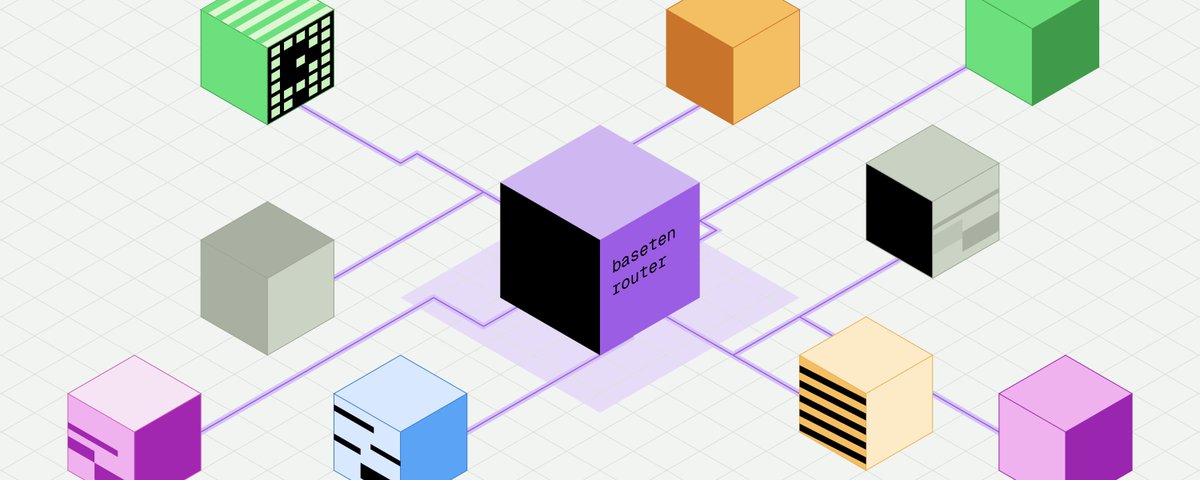
if you want to understand how to make flash models even faster, I explain our optimizations, covering kernel fusion, programmatic dependent launch, and host loop minimization here:


a few years ago, I started out skeptical that many non-engineers really wanted to make/mod their own personal software -- but I've come around, think I was wrong. range of desires from:
- I feel so powerful
- no one will make me the workflow/personalization I need
- can I just PM the product for a few weeks and fix this thing that is driving me crazy
obvious in retrospect, but if the ease:power ratio is good enough, of course people will make their own software