
I tink, therefore I am Post-training API by @thinkymachines
San Francisco
Joined January 2026
- Tweets198
- Following1
- Followers16K
- Likes301

Pinned Tweet
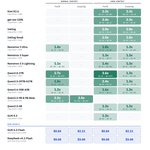
Inkling 2 Small is live on Tinker!

Introducing Inkling 2 Small. Scoring 31 on the AA Intelligence Index, it's a big jump over its predecessor.
Inkling 2 Small is available for fine-tuning and inference on Tinker today, with full weight release planned soon.
thinkingmachines.ai/news/ink…

It’s encouraging to see how much tinker accelerated @msuiche- he’d previously burned 4600$ in gpu rental without finishing a single training step! He did some cool inkling 2 small experiments too.
That’s tinker’s goal - so cheap and easy that there’s no reason to do it yourself.


Extremely bullish on American AI. Here is my (cyber) review Inkling 2 Small (Thanks @cHHillee & @brucedang ).
I love the model, but I think I love the platform even more. I barely played with it and already feel how much potential it can unlock.

Kimi K3.1 Pro from @Kimi_Moonshot is live on Tinker today with 256K context.
K3.1 Pro is the strongest open-weights model on several benchmarks of agentic coding and knowledge work, and is the largest model on Tinker today.

Introducing Kimi K3.1 Pro: our most capable 3T-class open-weight model.
🔹 1M-token context, 2.8T total / 104B active params (MoE), Multimodal.
🔹 Full-project coding: games in Unreal, Unity & Godot.
🔹 Excels at parametric 3D modeling in Blender & CAD.
🔹 More reliable at finance work: Accurate modeling with hallucination down by 65%.
🔹 Matching the strongest proprietary models across coding, agentic and knowledge benchmarks.
Kimi K3.1 Pro and K3.1 Pro Highspeed (2–3× faster) are now live on Kimi.ai, Kimi Work, Kimi Code, and the Kimi API.
Open weights by Nov 4, 2026.
🔗 API: platform.kimi.ai
🔗 Tech blog: kimi.ai/blog/kimi-k3-1-pro

Samaya trained Nemotron 3.5 Lightning to beat Fable 5.1 on its finance research benchmark at 9% of the cost. The model was trained on Tinker together with the harness it works in: first by imitating 8 teachers, then RL on its own mistakes.

Introducing Samaya Sterling: our first post-trained model for state-of-the-art financial research.
On FrontierFinance, Sterling outperforms Claude Fable 5.1 (58.9% vs. 55.9%) at 11× lower cost.
Using a model with just 3B active parameters, Sterling demonstrates what's possible when specialized training meets a purpose-built financial research harness.
Read the full research ↓

Off-policy RL is difficult; runs can suddenly collapse because of async RL staleness or numerical mismatch.
StableReinforce is a new method on Tinker that keeps your RL runs stable, even when learning drifts from sampling.
tinker-docs.thinkingmachines…
Agents are good at navigating filesystems. With RL, they learn to build new ones in anticipation of other agents' queries, boosting subsequent RAG accuracy from 44% to 77%.
A step towards agents training to work together, supported by the Tinker grants program!

now live on Tinker!

🚀 DeepSeek-V4.1-Flash-1017 is here!
Stronger benchmark performance, faster task completion, and shorter outputs than the previous version—a Pareto improvement in performance and cost. Now live on our website, app, and API.
🛠️ Optimized for @DeepSeekHarness, Tencent CodeBuddy, WorkBuddy, and more. Upgrade to DeepSeek Harness v0.2.1-rc.1 or later for the best experience with the new model.
1/4


We're hiring a Tinkerer who's excited to read post-training research, build it in Tinker, and share the results with everyone
Tinker runs on open science, and we want you to make it a home for the researcher community
jobs.ashbyhq.com/ThinkingMac…
Nemotron 3.5 Super VL from @nvidia is live on Tinker today.
With 12B active parameters, efficient architecture, and native text, images, and video inputs 3.5 Super VL should be a strong base for training long running always-on multimodal agents.

Dimuon is a new optimizer we built for LoRA fine-tuning. In our SFT tests, it often reaches lower loss in fewer steps than AdamW. We're still experimenting with Dimuon; you can Tinker with it today and share your feedback!
See our optimizers guide at tinker-docs.thinkingmachines…

By changing the prose but keeping the arguments and labels, IdeaLens detects where a person or AI came up with the idea, not just who wrote them down. Trained on Tinker, and the code+data+model are open sourced as well!

Traditional AI detectors are accurate when ideas and prose come from the same source. However, on mixed provenance benchmarks where they differ, they follow the prose and not the ideas in the writing.
IdeaLens correctly detects who came up with the ideas and not who wrote the prose on these mixed benchmarks, with an average idea detection accuracy of 81.3% vs ProseLens's 25.4% and Pangram 4's 25.9%.
This suggests that ideas are a strong differentiator of human and AI writing.

Fulcrum's training approach is brilliant: the base model already knows how to write, so both SFT and RL are tailored to the precise distinction between the default LLM voice and authors' voices. Smart customization can be both cheap and effective.

LLM next-token prediction is already a probabilistic classifier, so an open LLM can serve a Jev-like interface: discrete options in, fast probabilities out. Our own @ekzhang1 made it better at the job with a $5, 10-minute run on Tinker.

Did some SFT on Qwen3.6-35B-A3B this evening, just to get it to respond better to Jev-y prompts via github.com/ekzhang/openjev-s…
Cost: $5, easy 10 min training run on Tinker. +8% on GPQA diamond and +12% on MMLU-Pro.
Also evaled @jaredpalmer's Kev here for comparison


... and now you can too. Our new cookbook recipe let's you train your own decision model, targeting either a single answer or a calibrated probability distribution. It matches our reasoning RL recipe on forecasting, while requiring no reasoning at all!
tinker-docs.thinkingmachines…
1
513
Training a search agent is great for RL because every lever impact model behavior in legible ways. Jasper's guide shows how small updates to the reward function teach a model to avoid sloppy tool calls, prune unnecessary docs, and balance persistence with token efficiency.

Sharing my first of hopefully many research blog posts! jasperlu.com/blog/training-s…
This one is the kind of educational blog post I wish I'd had when I started with RL for LLMs.
I tried to make it as open as possible. Every rollout is browsable, the code is open source, and I walk through my entire thought process, from learning rate sweeps to reward shaping.
Sundial put the effort in getting RLVR right: training on verified fixes instead of artificial errors, smart rewards that disincentivize hacking, and deterministic scoring.
The result — a trained Inkling-Small that fixes 83.7% of LaTeX errors in under 1 second and $.0013.

We fine-tuned @thinkymachines' Inkling-Small to fix LaTeX compile errors inside the editor, in under a second. On real errors it matches Claude Fable 5.1, six times faster and at about 1/40 of the cost.
When we interviewed mathematicians, one of the most common annoyances we heard about in their day to day work is battling with LaTeX compilation errors.
The most obvious solution is to ask a chatbot to fix errors. That works decently well, except switching to a different window breaks the writing flow, and copy-pasting the snippet often loses relevant context, especially when multiple files are involved.
So we scraped 272,000 questions from TeX.StackExchange and kept the 3,978 whose snippet still fails today, whose accepted answer compiles, and whose difference replays exactly as a patch. The largest dataset previously released had 88.
We tried tweaking the reward function in many ways. The first one was only a compilation check, which led the model to remove content until the document built. In the end, what worked best was rewarding compilation and a close match with the solution's PDF, and penalizing removed content.
We're rolling out the model inside the @sundialmd editor this week. When a compile fails, the fix is applied as a suggestion in under a second and the PDF rebuilt.
Write-up: sundial.md/blog/textinguishe…
Thanks @tinkerapi and @thinkymachines for the support.

To learn who the model thinks it is, look at whom it imitates. Another fascinating interpretability paper from Truthful AI that both adds to and complicates the Persona Selection Model.


RLVR isn't just for math and code. Engineers spent decades building physics-based verifiers for electromagnetic systems. @gentrajectory is using these and Tinker to train models that design power transformers to meet specs at low cost in the real world.

AI is now improving its own model architectures and chips. The power infrastructure it runs on deserves the same attention.
We used RL to teach a Kimi base model to design medium-power transformers. It met 93% of unseen specs, helping to compress multi-week engineering efforts into a few minutes of inference.
1/5
We highlighted how OpenResearch+Tinker make exploratory research easier, but equally important is auditing: testing dozens of competing published methods in an automated way with the compute cost forecast to within a dollar.
We love to see our research grants support great work!

Using Tinker with an autoresearch loop is a really effective way to reproduce post-training papers at predictable costs
Today there are dozens of self-distillation methods all claiming improvements over each other, and it’s hard to establish which claims hold up
We gave agents a Tinker budget to reproduce self-distillation results across models and training setups. With just a few user prompts, they reproduced SDFT’s continual learning benefits across Qwen3-8B and Qwen3-30B-A3B over multiple seeds, and investigated SFT’s failure modes.
Read more below:

We've shared research on fine-tuning forecasters, now you can try it for yourself: a cookbook recipe for training a model to predict event probabilities given reference information.
Start with the provided dataset from @ProphetArena, then try your own.
github.com/thinking-machines…