

cofounder @mirurobotics (YC S24) - the software deployment platform for robotics
San Francisco, CA
Joined August 2016
- Tweets4.1K
- Following1.3K
- Followers3.4K
- Likes13.1K






Pinned Tweet
i believe i can do anything
i don’t know how hard it will be or how long it will take me
but i will do it
Random, funny note
The @robotaxi tip options are hilarious


One thing that’s struck me about being back in ATX this week is the sheer amount of Cybercabs here. Every single street in downtown has the gold cars zipping around. It’s striking and in your face.
There are so so many Robotaxis - now more than Waymo in TX.
I don’t think people are able to properly grasp what’s coming. @Tesla’s incredible ability (and now renewed focus) to scale manufacturing means that the only practical bottleneck at this point is regulation. For the purposes of a taxi service in metro areas, self driving seems like a solved problem.
I now have a visceral understanding of the Tesla bull case. Not crazy to say that the Cybercab fleet will 100x in the next year.


1
3
562

One thing that’s struck me about being back in ATX this week is the sheer amount of Cybercabs here. Every single street in downtown has the gold cars zipping around. It’s striking and in your face.
There are so so many Robotaxis - now more than Waymo in TX.
I don’t think people are able to properly grasp what’s coming. @Tesla’s incredible ability (and now renewed focus) to scale manufacturing means that the only practical bottleneck at this point is regulation. For the purposes of a taxi service in metro areas, self driving seems like a solved problem.
I now have a visceral understanding of the Tesla bull case. Not crazy to say that the Cybercab fleet will 100x in the next year.
Generational opportunity to replace the country’s most popular vehicle (f150) with a best in class, modern electric version.
Fumbled it all away because of the strange, strange design. So sad.

Tesla will wind down Cybertruck production around mid-2027, CEO Elon Musk says, after years of persistently weak sales for a futuristic model once touted as a rival to legacy pickup trucks. nbcnews.com/tech/tech-news/t…

3
15
1,072
Selling 4 tix for warriors game on Saturday. Will sell for cheap, trying to not lose my shirt 😹
1
474
We just shipped Calibration Management in Miru 🚢🚢🚢
Calibrations are some of the most useful data for debugging your robots. But most teams running fleets can’t easily get to them.
Calibration files are scattered across disks on your fleet and can be sneakily overwritten.
Miru’s Calibration Management lets you upload, track, and diff calibrations across your entire fleet.
It handles the messy networking conditions of production robots and makes it easy to see how calibrations have changed over time and across your fleet.
It’s live today. Let me know if you’d like to give it a shot!
5
23
980
Most robotics companies are product-driven. They define what a robot should do, design it, build it, and then sell it to customers who'd be a good fit.
@GrayMatterRobot starts the other way. They begin with the customer’s problem and work backward to the robot.
They do this through application engineering. It’s the robotics version of Palantir’s forward-deployed model.
In high-mix manufacturing, every build looks slightly different. Unlike cars, the fire trucks and parts for military aircraft GrayMatter works on are often one-of-one.
A robot defined in advance can't adapt well to this variation. Application engineers solve this. They embed with each customer, learn the process, and adapt the robot to fit it. They work out which tasks go to the robot, which go to the operator, and which go to digital AI workflows.
The risk with this model is that every deployment becomes a custom project. GMR has solved for this in four ways:
-> 𝗨𝗻𝗶𝗳𝗼𝗿𝗺 𝗵𝗮𝗿𝗱𝘄𝗮𝗿𝗲 𝗱𝗲𝘀𝗶𝗴𝗻
GMR keeps ~85% of its hardware the same across applications: cameras, FANUC arms, and safety systems. The remaining ~15% of design space allows engineers to be flexible, while acting as a useful constraint.
-> 𝗧𝗼𝗼𝗹𝗶𝗻𝗴 𝗳𝗼𝗿 𝘁𝗵𝗲 𝗹𝗲𝘃𝗲𝗿𝗮𝗴𝗲 𝗽𝗼𝗶𝗻𝘁𝘀
GMR works across processes like sanding, blasting, and more. The hardest problems usually come when switching from one process to another. GMR builds agents to run experiments and test samples to make life easy for application engineers.
-> 𝗦𝘁𝗮𝗻𝗱𝗮𝗿𝗱𝗶𝘇𝗲 𝘁𝗵𝗲 𝗺𝗲𝘁𝗵𝗼𝗱
They built out playbooks and documentation. If every engineer solves the same problem their own way, the company can't scale.
-> 𝗟𝗲𝘁 𝘁𝗵𝗲 𝗳𝗶𝗲𝗹𝗱 𝗳𝗲𝗲𝗱𝗯𝗮𝗰𝗸 𝗱𝗿𝗶𝘃𝗲 𝘁𝗵𝗲 𝗽𝗹𝗮𝘁𝗳𝗼𝗿𝗺
Field teams solve first. Then the platform team finds what keeps recurring across deployments and pulls it into the product. The "roadmap" is driven by boots on the ground.
(From my conversation with @brualshah on Scaling Robotics)

two articles that i have greatly enjoyed over the past few days.
@colossusmag is so, so good. bravo


1
3
350
Days like this remind me that we are lucky to have some of the coolest customers on Earth.
The journey of forward-deploying @mirurobotics has taken us to many interesting places, including shop floors, construction yards, and logistics facilities.
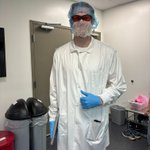
Never before has it taken us to a cleanroom! Turns out that's required when your robots are doing advanced manufacturing with superhuman precision; even a speck of dust can derail a build.
It was fun to learn the rules - dress from top to bottom, tuck your glasses under your hairnet, and wipe down all the devices.
It was less fun to have to go through the tedious process of gowning and degowning during testing 😆
Either way, it was such a cool experience. Stepping into the cleanroom felt like a movie; with scientists and engineers shuffling about, it felt like a scene from Oppenheimer.
Most importantly, we got Miru up and running with the robots, and we can help the team accelerate scaling this fleet that will change the world.
10/10 day 🦾
(pictured - Ben gowned up)

@Stripe can plausibly go to $1T
They are the tollbooth for all of capitalism
They stand to benefit tremendously from the arc of progress
It’s kind of incredible they have such good PR
If it was Peter Thiel running this company they would have already be regulated to oblivion
3
8
602
why do agents use vercel to deploy software when they could just build the infra themselves?
3
8
826
𝗧𝗵𝗲 𝗲𝗿𝗮 𝗼𝗳 𝗰𝗹𝗼𝘂𝗱 𝗶𝗻𝗳𝗲𝗿𝗲𝗻𝗰𝗲 𝗶𝗻 𝗿𝗼𝗯𝗼𝘁𝗶𝗰𝘀 𝗶𝘀 𝘀𝘁𝗮𝗿𝘁𝗶𝗻𝗴.
Closed frontier robot models are now available through an API.
On Oct 13, @physical_int launched the Pi API beta. Teams can upload their robot data, fine-tune Pi’s models on Pi’s infrastructure, and run them through a hosted inference gateway. Access is gated behind an application form, and Pi hasn’t published pricing.
Six days later, @dreamlabs_ai came out of stealth with a $90M seed and its model, Dream-1. Dream prices its API by the hour: $3 for the full model and $0.75 for a lighter version. Sign-ups are now open to the public!
Until this month, you had two options. You could run open weights like openpi or GR00T on your own robot, a step behind the frontier. Or you could go through a clandestine process to be picked as a lab's partner (really only possible if you were in SF). Now the frontier is something anyone can access with an API.
𝗡𝗼𝘄 𝘁𝗵𝗮𝘁 𝘁𝗵𝗲𝘀𝗲 𝗺𝗼𝗱𝗲𝗹𝘀 𝗮𝗿𝗲 𝗼𝗻 𝘁𝗮𝗽, 𝗮 𝗳𝗲𝘄 𝘁𝗵𝗶𝗻𝗴𝘀 𝗮𝗿𝗲 𝗼𝗻 𝗺𝘆 𝗺𝗶𝗻𝗱:
-> Starting a robotics company gets cheaper. You don’t need a big research team or years of building autonomy for your domain before your first customer.
-> The data story is interesting. The most valuable robotics data comes from robots solving specific customer problems. That’s a deployment company’s post-training secret sauce, and they’ll want to guard it fiercely. So what do the data agreements with these labs say? How much flows back into the foundation model? Nobody wants the data they worked hard for to end up training a model their competitors use.
-> The moat keeps moving into the field: commissioning, ops, support, and hardware.
𝗜𝘁'𝘀 𝘀𝘁𝗶𝗹𝗹 𝘂𝗻𝗰𝗹𝗲𝗮𝗿 𝗵𝗼𝘄 𝗿𝗲𝗺𝗼𝘁𝗲 𝗶𝗻𝗳𝗲𝗿𝗲𝗻𝗰𝗲 𝘄𝗶𝗹𝗹 𝗵𝗼𝗹𝗱 𝘂𝗽 𝗶𝗻 𝗽𝗿𝗼𝗱𝘂𝗰𝘁𝗶𝗼𝗻:
Outdoor autonomy already struggles with sparse connectivity. Starlink may close some of that gap, but how much, and what speed is good enough? In factories and warehouses, IT rarely lets you bring your own routers, so you rely on the customer’s legacy network. That's if you can even get internet access; many of these sites are firewalled.
The answer probably looks like the Sys 1/2 setup. A large backbone in the cloud decides what to do, and a small decoder on the robot turns that into motor commands. Gemini Robotics did this and cut backbone latency to under 160 ms and got about 250 ms end-to-end, enough for 50 Hz control.
Whatever the practical reality is, people will try to explore this. The allure of frontier models on top is just too promising. Cloud inference is here to stay.


life moves fast. grok @bot is down, none of my chats work, and they haven't for the past few years.
PLEASE SOMEONE HELP ME
3
429
How has @graymatterrobot designed its robots to work seamlessly in defense manufacturing?
To Brual, whether it’s a fire truck, an aircraft part, or a munition, “I’m still sanding the same thing.”
This works because of two decisions GMR made early on:
1) Everything runs on the edge. The core software runs on local computers, never in the cloud. If a customer pulls networking and runs air-gapped, the system still works.
2) No CAD required. Asking customers for CAD files kicks off IT and security reviews that are especially strenuous in defense. GMR’s robots scan the part in front of them and get to work.
The biggest difference is support. GMR can't dial in remotely and fix problems the way you can for a commercial customer. So GMR builds diagnostics into the software to pinpoint failures fast, and spends a lot of time training their customer's own operators to troubleshoot the robot. And these customers will pay more for it!
If you’re building robots in manufacturing, design with your strictest customer set in mind. Turns out that your commercial customers will benefit too.
1
324