

🌌 One mind-blowing science moment a day, and what it means for us. Space, AI, robotics, energy. Wonder first.
- Tweets14.1K
- Following2.7K
- Followers18.4K
- Likes18.3K
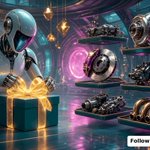


ALT Google DeepMind just introduced Gemini Robotics 2.5, its most capable vision-language-action model yet. Led by robotics head Carolina Parada, the team evaluated it across 200 distinct tasks, from serving food with tongs to pipetting liquid and tying a bow on a gift box. Compared with earlier baselines, it succeeded 30% to 100% more often, depending on the task, and finished 20% to 30% faster


ALT A Caltech-led team studied 257 black hole mergers spotted by the LIGO–Virgo–KAGRA network over the past 10 years. Three-quarters of them clustered around 10 times the mass of our Sun, and for the first time, the data show a distinct lack of black holes between 12 and 16 solar masses. That pattern, plus a narrower range of spins, matches what theorists predicted for "failed supernovae," stars that quietly imploded instead of exploding.


ALT NASA’s two ESCAPADE (Escape and Plasma Acceleration and Dynamics Explorers) spacecraft have each successfully completed a powered Earth flyby, using Earth’s gravity in combination with a sustained engine burn to slingshot themselves toward Mars. With these successful maneuvers complete, the twin spacecraft are on target to reach the Red Planet in September 2027.


ALT Google DeepMind just used a new system called AlphaProof Code to formally verify key security properties of the Signal protocol, the cryptography behind billions of conversations in apps like Signal and Google Messages. Led by Pushmeet Kohli and Swarat Chaudhuri, Gemini Carbon agents generated over 6 million lines of Lean proof in just four weeks, a job that used to take expert teams years. This is the first time anyone, with or without AI, has formally verified the actual implementation of a widely deployed protocol like this, down to the compiled code running on devices. To check the system wasn't just rubber-stamping, they reintroduced two old, already-fixed bugs. AlphaProof Code proved both buggy versions were insecure. Follow @worldofscitech

ALT How Google DeepMind researchers built a new agentic framework that formally verified the code of Signal’s cryptographic protocol — long considered to be a grand security challenge. https://deepmind.google/blog/introducing-alphaproof-code/

ALT How Google DeepMind researchers built a new agentic framework that formally verified the code of Signal’s cryptographic protocol — long considered to be a grand security challenge. https://deepmind.google/blog/introducing-alphaproof-code/

ALT #Art and #Music aren't luxuries—they're essential fuel for the human brain. They strengthen memory, spark creativity, reduce stress, build emotional resilience, and activate neural pathways. A world that creates more art & music creates healthier minds 🎨🎵🧠 #MentalHealth

ALT The Carbon in Earth's Heart Was a Long-Distance Delivery ☄️ What if the carbon at the center of our planet came from the far edge of the solar system? A team led by Columbia's Yves Moussallam, with Yale's Damanveer Grewal, studied tiny droplets of magma trapped in crystals from Hawaiian eruptions, including Kīlauea Iki in 1959. Each one is a message in a bottle from deep inside Earth. They found an unusually heavy carbon-13 signature that they read as "carbon leaking from the core." The best match: carbon-rich meteorites from the outer solar system, which likely arrived in the final stage of Earth's assembly, just before the core closed for business. It's the first observational estimate of the core's carbon fingerprint, published in PNAS

ALT Earth’s ‘core carbon’ may have come from the far reaches of the solar system. A research team that includes Yale cosmochemist Damanveer Grewal makes the first observational estimate of the isotopic composition of carbon in Earth’s core.

ALT Claude Learned to Dream, and Its Memory Got Sharper 🌙 What if your AI got smarter while it slept? Anthropic just shared how Claude uses "dreaming": idle time between sessions to reread its old transcripts, catch its own mistakes, and rebuild its notes into a linked wiki. Basically what your brain does every night, except Claude doesn't snore. The numbers are wild. On a company archive of about 350,000 files, scaling dreaming from 2 to 128 sessions lifted Claude's wiki-only answers from 13% to 48% of graded criteria. In Pokémon Red, old Sonnet 3.7 hoarded 413 memory files and earned one badge. Fable 5 kept nine files plus a single dashboard file and earned four. For us: SI assistants that remember what matters, fix what they got wrong, and stop making us repeat ourselves. Turns out the secret to a great memory is knowing what to forget. Sweet dreams, Claude! #Claude #AI

ALT Søren Kierkegaard wrote that life can only be understood backward, but it must be lived forward. We’ve encountered a similar bind when designing memory for AI agents. As humans, we encode memory constantly as we go about our lives. The hippocampus plays a central role in this, capturing experiences in the moment so that memories form quickly and are immediately available. But only some experiences are consolidated into long-term knowledge. Much of that consolidation appears to happen when our brains are offline. As we sleep, and during quiet rest, the hippocampus replays our recent experiences. This is thought to gradually distill those experiences and integrate them into the neocortex—the part of our brains that stores most of what we think of as knowledge.

ALT NASA Is Hiring for a Job With a Moon View 🌕 Imagine your next commute ending at a Moon Base! NASA just opened applications for its next astronaut class, the people who could walk on the Moon, live and work at the Moon Base, and pave the road to Mars. Administrator Jared Isaacman calls it "an extraordinary time to join NASA's astronaut corps." The deadline is Dec. 3. You need U.S. citizenship, a STEM master's (or an equivalent path like a medical degree or test pilot school), and three years of experience. Pay: $164,395 a year. Last round, more than 8,000 people applied and 10 were picked. Final selections come in late 2027. For us: the crew who will build humanity's first off-world neighborhood is being chosen right now. It might be someone you know. It might be you! Shoot for the Moon. This time, literally. #NASA #Artemis
