

A think tank committed to economic development, economic diplomacy, and economic justice in West and Central Asia. Original account @BourseBazaar.
Joined August 2026
- Tweets143
- Following3
- Followers420
- Likes33






Pinned Tweet
Our original account, @BourseBazaar is compromised and X Support has been unable to help regain access.
So we are starting anew with @BourseBazaarFdn!
Follow us for wide ranging analysis on economic diplomacy and economic development in West and Central Asia.

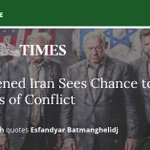
In a recent article for @thetimes on how the Iranian regime feels emboldened after Democrats’ gains in the U.S. midterm elections, @SameralAtrush quoted @yarbatman on the possibility of Iran cutting deals with countries in the region.
While Washington believes tightening its naval blockade will cause enough economic damage to pressure Iran into making concessions, Batmanghelidj argued that Gulf states, Pakistan, and Turkey may seek arrangements with Iran to help it withstand the blockade and reduce the risk of renewed conflict.
Read the full article: thetimes.com/world/middle-ea…

Our Rihla Summit hydrogen session focused on building demand through domestic industries as export markets develop more slowly than expected.
@RumaithaBusaidi emphasized that exports and local industrial development should go hand in hand. @me_albreiki highlighted opportunities to use hydrogen in existing industries and develop clusters linking producers with nearby buyers. @ouedraogo_nadia stressed the importance of retaining value, jobs, and expertise in producer countries, while Louis Skyner emphasized the need for projects to have reliable buyers and a realistic plan to make them financially viable.
Moderated by @dawud_ansari, the discussion also explored cooperation among producer countries on standards and market development, including through a proposed Organisation of Hydrogen Exporting Countries.
Watch the full session on our YouTube channel: youtu.be/ATYKNlGuCpI?si=w3DQ…


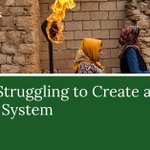
Despite being one of the world’s largest producers of natural gas, Iran struggles to meet domestic demand, particularly in winter, when residential and commercial consumption rises.
In the final article of our three-part series on Iran’s energy system, Arya Kia notes that while near-universal electricity access is a significant achievement, the number of people connected to the grid tells us little about energy justice in Iran.
Kia discusses three different kinds of energy justice and outlines where Iran is struggling to create a more equitable energy system. A household may be connected to the grid yet still face repeated blackouts; heavily subsidized energy can still distribute benefits unevenly; and an energy-producing region can generate national wealth while bearing a disproportionate share of the environmental costs.
Read the full analysis: open.substack.com/pub/bourse…

87
Oil and natural gas supplied more than 90% of the Gulf’s electricity in 2024, making it harder to power new data centers with clean energy. In our latest analysis, Kapil Narula examines why Gulf countries are working to expand data centers within their borders and what steps should be taken to ensure this expansion is sustainable.
Narula argues that where data centers are built, how they are powered, and how they are cooled will determine whether they become an asset or a liability. With the Gulf’s year-round hot climate, cooling data centers can put pressure on electricity and water supplies.
But the regions’ abundant sunlight, strategic geographic location, and investment from tech companies like Google and Microsoft give the region an opportunity to develop green data centers. At the same time, corporate commitments to clean energy are helping drive demand for green infrastructure.
Read the full analysis: open.substack.com/pub/rihlai…

Iranian officials welcomed the Democrats’ gains in the U.S. midterms as a rebuke to Trump’s war on Iran. In Tehran, views are divided over whether the result makes renewed U.S. strikes less likely or gives Trump more reason to act before the new Congress takes office in January.
In its coverage of the debate, @amwajmedia quoted @yarbatman, who argued that the election results could create room for a deal to end the war in both Washington and Tehran. In his view, the risk of major military escalation has diminished.
Read the full article: amwaj.media/en/media-monitor…

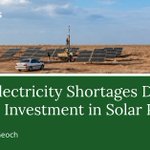
Iran is shifting towards solar power to help ease its electricity crisis. However, its renewable energy program receives almost no support from Western governments, development banks, or international investors, and sanctions make it difficult to import renewable equipment.
In our newest analysis, Matthew Macgeoch explains why solar has become a matter of energy security for Iran. Despite holding the world’s second-largest proven gas reserves, Iran could supply only about 62 GW of electricity when demand approached 80 GW in the summer of 2024.
Chinese quick-to-install equipment can support Iran’s renewable energy program. As MacGeoch notes, a reported oil-for-solar arrangement uses oil revenues in China to purchase Chinese-made panels for Iran’s National Development Fund. But this arrangement leaves Iran’s solar expansion program vulnerable to disruptions in either oil revenues or panel shipments.
Read the full article: open.substack.com/pub/bourse…

Cuba received about $232 million in U.S. fuel between January and August 2026, even as households faced prolonged blackouts. U.S. policy has restricted oil shipments to the island while allowing American companies to sell fuel to Cuban private businesses.
In a new article for @weareceda, Lydia Mackey and Josefine Petrick examine who stands to benefit from these changes. As sanctions push foreign companies to withdraw, U.S. investors are pursuing stakes in strategic sectors such as nickel and cobalt mining.
The authors urge Washington to end its de facto blockade on oil shipments and consult Cuban civil society, independent entrepreneurs, and diaspora communities so Cubans have a say in how their economy is rebuilt.
Read the full article: weareceda.org/ceda-publicati…
Read the article on our Substack: open.substack.com/pub/thesan…

At the Rihla Summit, we discussed how Chinese manufacturing and clean-tech expertise can work together with Gulf investment to help partner countries build their own industries.
The conversation covered clean-energy supply chains in North Africa, opportunities for local suppliers in Central Asia, and how Ghana can retain more value from its minerals.
Thank you to our panelists @dawud_ansari, Lin Song, @Jessica_Obeid, Yunis Sharifli, and Patrick Kwabena Stephenson for bringing their valuble insights to the discussion, which was moderated by Rihla Initiative Director @MehranHaghirian.
Watch the full session: youtu.be/8Hk10CMTFwc?si=7Ib7…


While the Iranian economy has continued to shrink since the onset of war earlier this year, the pace of contraction has eased since June. The resilience of some sectors has helped the government withstand continued U.S. pressure.
In our latest Critical Question (CQ) memo, @yarbatman and @tedla_ezana examine how much output Iran has lost since February and what has changed since June. They look beyond headline GDP figures to see how individual sectors and firms have fared, and compare Iran’s experience with that of other economies that have faced war or severe restrictions.
Get in touch with Darius Barik if you’re interested in accessing the full piece or discussing any related matters.
Link to the CQ piece: open.substack.com/pub/bourse…

During our session on Green Industrialization at the Rihla Summit, panelists discussed how to connect clean energy with existing industries and put policies and financing in place to make projects feasible.
The discussion also emphasized the need to plan education and training alongside investment, giving young people clearer pathways into the jobs these projects create.
Moderated by @me_albreiki of the Gulf Organization for Industrial Consulting, the session featured @NadimAbillama of the International Energy Agency; @DianaAthamneh, Energy Transition and Sustainability Expert; @ImadAhmed of the Bourse & Bazaar Foundation; Duy Linh Nguyen of the Tony Blair Institute for Global Change; and @JitsaiS of Youth for Energy Southeast Asia.
Watch the full discussion on our YouTube channel: lnkd.in/dHnf-7Ng


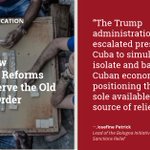
The Trump administration is making it harder for Cuba to buy oil abroad while allowing American companies to sell fuel to Cuban private businesses. Cuba received about $232 million in U.S. fuel between January and August 2026, even as households continued to face prolonged blackouts.
In a new article for The Sanctions Age, published in collaboration with @weareceda, Lydia Mackey and Josefine Petrick argue that Washington is worsening Cuba’s energy crisis while positioning the U.S. as its only source of relief. As sanctions pressure pushes foreign companies to pull back, U.S. investors are also pursuing stakes in strategic industries such as nickel and cobalt mining.
The authors warn that deals made without public oversight could give those investors a financial interest in keeping Cuba’s current leaders in power. They also call on Washington to end its de facto oil blockade to ease the humanitarian crisis and to consult Cuban civil society and diaspora communities on decisions that will shape Cuba’s economic future.
Read the full article: open.substack.com/pub/thesan…

On November 2, Chinese Foreign Minister Wang Yi met separately with Iranian and Saudi security officials in Beijing, while Xi Jinping discussed the war and safe navigation through the Strait of Hormuz with Oman’s Sultan Haitham bin Tariq. The meetings bring renewed attention to an argument by @MehranHaghirian made in a May analysis. China could use its influence to end the war on Iran and the instability in the Gulf.
China’s role matters because of its interface with nearly every part of this crisis. It is the guarantor of the 2023 Iran-Saudi agreement signed in Beijing, and has been engaged with Pakistan and others in mediation efforts since the war began.
It has used its position at the United Nations to shape the multilateral response to the crisis, and is the foremost customer of energy from the Gulf Cooperation Council states and from Iran.
Its firms, trading networks, and nationals have been affected by U.S. sanctions, the risks around the Strait of Hormuz, and the disruption caused by the war.
Read the full analysis: open.substack.com/pub/bourse…

Stronger coordination on environmental policy and project preparation could help GCC countries turn their financial capacity into viable green investment.
In her vision speech at the Rihla Summit, Dr. Mariam Al Busaidi drew on Oman’s experience to discuss GCC cooperation on environmental policy, common indicators to measure results of green investments, and joint project preparation to help promising ideas attract finance.
For her full speech: lnkd.in/dX67UXmh


1
106
Despite economic turmoil and military conflict in Iran, Iranian entrepreneurs are looking towards the future by building AI startups.
In our latest analysis, @HosseinHamdieh examines the growing interest in AI among Iranian tech experts, highlighting how their entrepreneurial efforts reflect optimism about technology and innovation in Iran, even amid the economic pressures of war and sanctions.
He sheds light on the AI Innovation Factory of Iran (AIIF), an innovation hub designed to connect three things that too often remain disconnected: technical talent, venture capital, and the needs of established industries.
While innovation cannot replace diplomacy, AI could help preserve the technological skills needed for Iran’s economic recovery and future growth.
Read the full article: open.substack.com/pub/bourse…

In a new essay for @thebafflermag, @yarbatman explores the history of brickwork in Iran, examining how its contemporary revival reflects the country’s creativity and resilience.
This resilience, however, should not overshadow the constraints facing Iranian architects and engineers. Esfandyar traces how the embrace of concrete and steel during the Pahlavi era diminished the prestige of traditional bricklaying. For decades, Iran’s most skilled bricklayers worked primarily on restoring historic sites.
Today, a combination of sanctions and protectionist policies have restricted access to modern construction materials and technologies, making brick one of the few available avenues for architectural innovation.
Although brick has regained prestige in contemporary architecture, attracting international attention online, the workers skilled in this craft have yet to see comparable improvements in their social standing or economic circumstances.
Read the full article: thebaffler.com/salvos/brick-…

Our Rihla Summit South and Southeast Asia session explored what it takes to turn GCC interest in green industries into projects ready for investment, with commitments to local jobs, skills, and technology transfer.
Saurabh Jain-Punamiya, Railla Veronica Puno, Kantheera (Dream) Tipkanjanarat, Usman Manzoor, and Samantha Youngeun Shin joined moderator Dang-Dao Nguyen to discuss project preparation, co-development, and transition finance.
Watch the full session on the Rihla Youtube Channel: lnkd.in/d-Gjd-V6


1
99
Our Executive Director of Research and Programs @MehranHaghirian joined Raouiae Khouyi on the @PolicyCenterNS podcast to discuss his June article, “The Global Costs of Disruption in the Strait of Hormuz,” and how the economic consequences have evolved since its publication.
The conversation covers the effects on trade, fertilizer supplies, and food security, particularly in developing economies, and how stronger regional cooperation and deeper economic ties among GCC states, Iran, and Iraq could help reduce the risk and impact of future conflicts.
Listen to the full conversation: on.soundcloud.com/UfN1AhSpJe…
Read the article: policycenter.ma/publications…
In a new explainer for The Sanctions Age, Poorvika Mehra of the Charity & Security Network examines how expanded U.S. sanctions against the ICC threaten the financial infrastructure and international cooperation that sustain its work.
Even where general licenses permit transactions, banks and service providers may withdraw rather than navigate compliance risks, disrupting essential operations.
To protect the ICC, Mehra calls for practical measures to keep banking and payment services available to the Court and its civil society partners, alongside diplomatic opposition to the sanctions.
Read the full explainer: open.substack.com/pub/thesan…

1
95
Our Rihla Summit session on Central Asia and the Caucasus – Powering the Next Stage of Growth explored how reliable power, water efficiency, and community engagement can turn investment commitments into lasting benefits for investors and local communities.
Thank you to the moderator and lead for Rihla’s Central Asia and the Caucasus Council, Shakhlo Kamaladinova, and to all our participants on the panel.
Watch the full session: youtu.be/6qPbos8QLKc?si=bf6n…


97