

Teaches politics & history at Cambridge. Interests include empire, war, technology, architecture, science fiction, utopia. Writing a book on transhumanism
Cambridge, England
Joined July 2016
- Tweets25.9K
- Following2K
- Followers15.6K
- Likes12.8K






Pinned Tweet
NEW BOOK!
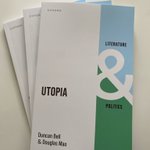
I'm happy to say that my new book, Utopia, co-written with Douglas Mao, has been published on-line
academic.oup.com/book/62279

Well-deserved - a brilliant writer

At 81, M John Harrison (the M stands for Michael) is the oldest ever Booker winner. After the ceremony finished late on Monday night, he and his partner, the writer and editor Cath Phillips, tried to sleep, but couldn’t stop talking about the prize. “Every so often one of us would appear to fall asleep and then jerk awake and say, ‘We won the Booker.’”
@emilylawford speaks to Booker Prize winner M John Harrison: "I was as nervous as a cat" newstatesman.com/culture/boo…

An interesting critical engagement by
@jasonwblakely & David Albertson with the book on Utopia I wrote with Douglas Mao
“Integral Utopianism” politicaltheology.com/integr…


👇👇

We’re hiring at the Zolberg Institute on Migration and Mobility at The New School! Please help spread the word!
newschool.wd1.myworkdayjobs.…

RIP Juan Atkins, techno pioneer
Very happy that I got to see Cybotron live.
theguardian.com/music/2026/n…

👇👇👇
@Dept_of_POLIS

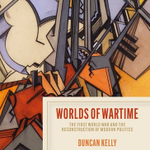
Duncan Kelly, Worlds of Wartime: The First World War and the Reconstruction of Modern Politics
is an extraordinary intellectual history, and the outstanding history book I read in 2026. This is a tour de force exploration of the effects of World War I on the evolution of economic, social and political thought. One recurring theme in the book builds on the thoughts of Élie Halévy and focuses on "étatisation"- way in which state power/control, required by the war, become steady state features of the postwar society. Another invaluable feature of the book is the way it articulate the richness of thought that emanated from the war and, by implication, the ways that this richness is lost in conventional narratives when it involved paths not taken.
Not only did I learn the most from this book of any history I read this year, it was also (by far) the most difficult for me to understand. This due to the differences in ways that Kelly conceptualizes history and time. Nonlinearities, juxtapositions of differences in time scales across difference phenomena, etc. all represent a much more complex vision of the dynamics of historical developments as found in economics, and I would say economic history. And more concretely, the set of models I have in my head to interpret historical narratives (which are very much defined by the various stochastic processes I use) were inadequate to capture the depth of Kelly's vision.


Cool new book by my brilliant colleague Iza Hussin

Out now - All the Seas were Ink by Iza R. Hussin.
In this innovative history, Hussin traces the material life and movement of law, Islam, and constitutions, through the travels of Abu Bakar of Johor (1833–1895).
Find out more here: cup.org/4sxKihy

👍

The best player in the world.
Our 2026 #BallonDor winner: HARRY KANE! 🏴🏆

ALT Harry Kane wins the Ballon D'or
1
3
556


The Introduction to an excellent roundtable on David Armitage's classic book, The Ideological Origins of the British Empire (2000)
Andrew Fitzmaurice, "The Past and the Future of the Ideological Origins of the British Empire"
tandfonline.com/doi/full/10.…
