

宇宙とかSFとか Headquarters...https://xitter.twitterapi.xyz/t.co/uLFjNswfze
Joined February 2010
- Tweets226K
- Following3.3K
- Followers3.3K
- Likes377K




Pinned Tweet
衛星フォボスを目指す #MMX、気がつけば打ち上げ予定日まで3日。火星に巣食う魔物に戦いを挑む後輩にに先輩探査機のご加護をとの投稿を読んで思い出して過去絵再掲。
無事打ち上がりますように。本邦初の火星軌道投入、成りますように!!(>_<)

つづき。
MMX「どうしてこういうことするんですか! のぞみ先輩も何か言ってやってください!」
FB「だってえ…私の下、なかなか入ってこないんだもん…」
のぞみ「わかる…わかるよー…」MAVEN「あれー?のぞみ先輩、どうしたんですかー?」
元ネタ→ xitter.twitterapi.xyz/umi_no_teitoku/status/…


MASA Planetary Log retweeted

Getting closer..

ESA's Hera mission for planetary defence has begun surveying its target asteroids from 30-25 km away, flying in 'rectangular orbits' around the ultra-low-gravity Didymos and Dimorphos bodies 🛰️🪨🪨esa.int/articles/hera-spacec…
MASA Planetary Log retweeted
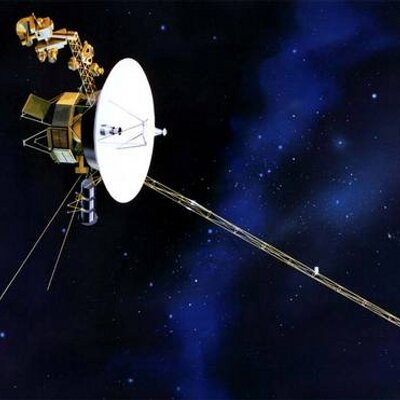
So you’ve probably seen a lot of posts and articles about Voyager 1 reaching the one light-day milestone on November 18, 2026. What are the _next_ milestones for the Voyager probes?
While Earth and even Jupiter fade into the background and become less relevant for the Voyagers, the Sun is still the dominant gravitational force, and will remain so for hundreds of years. On February 4 next year, Voyager 1 will reach the one light-day distance _from the Sun._ Why is this date different? Because of the position of Earth in its orbit around the Sun. Earth was a little farther away (orbiting around the ‘backside’ as seen from Voyager 1) and so the distance to Earth was a little greater in November.
For this next milestone, you will notice that the order is reversed (Sun first, Earth second), and now you can figure out why that is! On August 11, 2028 Voyager 2 will be 150 times as far from the Sun as the Earth, or 150 Astronomical Units (AU). It will be 150 AU from the Earth five weeks later on September 18, 2028.
The milestone after that? On January 6 2029, the two Voyagers will be 20 BILLION miles apart. I have milestones tagged out to 2100 (the current limit to the HORIZONS system for the Voyagers), but that’s for another post…
#Voyager1 #OneLightDay
MASA Planetary Log retweeted

NASA's new UVEX space telescope will study the universe in ultraviolet light to reveal the violent and turbulent events that bubble under what appears to be a cosmic sea of tranquility. space.com/science/astrophysi…

MASA Planetary Log retweeted

11月17日火曜日、ボイジャー1号の距離が「1光日」に達するとのこと。それを記念して、地球人類みんなで空に懐中電灯を向けて、V・G・Rのモールスコードを打とうというNASAからの呼びかけです。
やる!🙋
science.nasa.gov/mission/voy…


MASA Planetary Log retweeted

世界初のブラックホールシャドウの撮影画像は本当に正しい画像なのか?
オーストラリア連邦科学産業研究機構 (CSIRO) が独自の処理・解析技術を開発し、あのドーナツ型の構造は実在するものであることを発表。完全に独立した形での検証結果が発表されたのは初めてのことよ。
#彩恵りりの1日1論文

ALT 今回の研究で構築されたM87* (M87の中心部にある超大質量ブラックホール) の画像。 上段・下段では処理の仕方が異なり、下段の方がイベント・ホライズン・テレスコープの写真に近い仕上がりとなっています。 [CC BY 4.0に基づく表示] 以下の原著論文の図1より引用 Samuel Lai, et al. "Independent interferometric observable confirms black hole shadow in M87*". Nature, 2026; 659, 317-323. https://www.nature.com/articles/s41586-026-11241-9
MASA Planetary Log retweeted

Hubble at work.
This non-Earth image captures the Hubble Space Telescope with its aperture door open.
Our attitude analysis reveals Hubble was pointing towards tile CLUTCH-TARGET-GC, part of the CLUTCH (COSMOS Legacy UV-Optical Treasury Campaign with Hubble) programme. Public records show that Hubble was observing its target at this time.
By combining close-up imagery with attitude analysis, HEO can reveal not just a spacecraft's configuration, but what it is doing.

MASA Planetary Log retweeted

SpaceXだけ打上コストを一桁下げて、垂直統合で自社コンステレーションを激安で上げ、社外には従来価格を吹っ掛ける未来までは想像していたが…
まさか垂直統合が上手く行き過ぎて、自社衛星以外の打上は利益率低すぎるので撤退という斜め上の事態は想定してなかったよなぁ…
MASA Planetary Log retweeted

Neat use of mid-infrared data! The comet’s warmed surface emits heat, giving astronomers clues about its shape and temperature beyond reflected sunlight.
MASA Planetary Log retweeted

エンケ彗星の核は細長い形? すばる望遠鏡で観測した熱放射の時間変化をもとに推定
sorae.info/astronomy/2026111…
産業医科大学の大坪貴文氏を筆頭とする研究チームは、すばる望遠鏡が2003年11月に中間赤外線で観測した「エンケ彗星(2P/Encke)」のデータを解析し、
彗星の本体である核(彗星核)の形と表面温度を推定したとする研究成果を発表しました

ALT エンケ彗星の彗星核の想像図(Credit: 京都産業大学(Microsoft Copilot使用))

ALT すばる望遠鏡による観測が行われた2003年11月時点でのエンケ彗星の位置を示した図。太陽から1.09天文単位、地球から0.27天文単位離れていた(Credit: 京都産業大学)
MASA Planetary Log retweeted

CONTOURが爆発しなければハッキリ分かってたんだろうな、、、

エンケ彗星の核は細長い形? すばる望遠鏡で観測した熱放射の時間変化をもとに推定
sorae.info/astronomy/2026111…
産業医科大学の大坪貴文氏を筆頭とする研究チームは、すばる望遠鏡が2003年11月に中間赤外線で観測した「エンケ彗星(2P/Encke)」のデータを解析し、
彗星の本体である核(彗星核)の形と表面温度を推定したとする研究成果を発表しました
ALT エンケ彗星の彗星核の想像図(Credit: 京都産業大学(Microsoft Copilot使用))
ALT すばる望遠鏡による観測が行われた2003年11月時点でのエンケ彗星の位置を示した図。太陽から1.09天文単位、地球から0.27天文単位離れていた(Credit: 京都産業大学)
MASA Planetary Log retweeted

ESA's Hera mission for planetary defence has begun surveying its target asteroids from 30-25 km away, flying in 'rectangular orbits' around the ultra-low-gravity Didymos and Dimorphos bodies 🛰️🪨🪨esa.int/articles/hera-spacec…
老後を描くのは面白い試み。大半が後進の育成にあたっているのが平和で良い。女性キャラの描き方もうまい。
[4K] Super Street FIghter 2 Turbo - The World Warriors: Life Today youtu.be/ERwMMWo4dZM?si=1Szb… @YouTubeより
139


ひさーーーしぶりに見た。
すごいなあ。これ、もう12年前なのか…
Mix - OK Go - I Won't Let You Down - Official Video youtube.com/playlist?list=RD… @YouTubeより

110
そんな短期で惑星の軌道が変わる世界ではおちおち生命も発生していられない…

🪐🫥 Une exoplanète disparaît sous les yeux du télescope TESS. Que s’est-il passé ?
À environ 1 000 années-lumière de la Terre, l’exoplanète géante TOI-2535 b a cessé de passer devant son étoile. Elle appartient à la catégorie des « Jupiters chauds », des géantes gazeuses qui orbitent extrêmement près de leur étoile. Elle accomplit un tour complet autour de celle-ci en seulement 8,25 jours.
🔹 Entre avril 2019 et mars 2026, le télescope TESS de la NASA a observé à plusieurs reprises le passage de cette planète devant son étoile, un phénomène appelé transit. Mais les astronomes ont remarqué une anomalie : ces passages ne se produisaient plus à intervalles réguliers, avec des décalages évoluant progressivement. En 2026, les transits ont finalement complètement disparu.
🔹 La planète a-t-elle détruite ou éjectée de son système ? Les chercheurs envisagent une autre piste : une seconde planète, encore invisible, exerce une influence gravitationnelle suffisamment importante pour modifier son orbite.
🔹 Les calculs de l’équipe internationale, dirigée par des chercheurs de l’Université de Californie à Los Angeles, indiquent que les deux planètes font osciller mutuellement leurs orbites, à la manière d’une toupie. Cette inclinaison progressive modifie leur alignement avec la Terre : TOI-2535 b ne passe donc plus devant son étoile depuis notre point de vue, ce qui explique sa disparition apparente.
🔹 Cette découverte pourrait également éclairer un mystère de l’astronomie : comment les Jupiters chauds se retrouvent-ils si près de leur étoile ? Deux scénarios sont envisagés, l’un impliquant une migration violente après une forte perturbation gravitationnelle, l’autre une lente spirale vers l’étoile au sein du disque protoplanétaire. La présence d’une planète voisine pourrait favoriser cette seconde hypothèse.
👉 Les astronomes estiment que TOI-2535 b ne devrait redevenir observable lors d’un transit que dans 30 à 50 ans. Sa mystérieuse voisine pourrait toutefois être détectée bien avant.
📄 : Samuel W. Yee et al., A TESS Disappearing Act: The Vanishing Transits of TOI-2535 b, The Astrophysical Journal Letters.
📷 : Image d’illustration d’un Jupiter chaud.
