






Can robots learn to correct their own fuzzy memories?
UQ-DAAAM, a new system from @MITLIDS students and PI @lucacarlone1 identifies and corrects unreliable object descriptions in robot memory, helping robots perform complex tasks more reliably. bit.ly/3WS7MC5

Five LIDS PIs named 2026 #AI2050 Fellows!
Congrats to Senior Fellow @m_sendhil and Early Career Fellows @alex_damian_, @baileyflan, @Micro_Yunha, and @manish_raghavan! The @schmidtsciences initiative supports research tackling #AI's toughest challenges. bit.ly/4Ai7gfj

Congrats also to @MIT_alumni Irene Chen PhD '22 and Allison Z. Koenecke '14 as well as former postdoc Juan Carlos Perdomo who were also named #AI2050 Early Career Fellows.
56
Could #AI chatbots influence how Americans vote?
@MITLIDS PI @charapod & @MITPoliSci's @AdamBerinsky spoke with @CNN about how popular AI chatbots answer questions about the midterms—and why the chatbot voters choose matters. cnn.com/2026/10/30/business/…
@MIT_SCC @MITSloan @MIT_SHASS

Congrats! LIDS researchers Kaveh Alimohammadi, @NavidAzizan, and collaborators, have received the 2026 MIT Prize for Open Data for their work on generating scientifically useful synthetic data while protecting individual privacy. bit.ly/4ixDiN5
@ScienceMIT @mitlibraries

1
6
409
Gunter Stein, a pioneering control systems engineer and longtime @MITLIDS researcher, has died at 84. His work helped shape modern control theory, while his influential essay “Respect the Unstable” emphasized engineers’ responsibility for safety.
MIT News: bit.ly/4e40zVv

4
141
How AI came to model the “messy” human mind
Benjamin Lindquist explores how engineers introduced randomness into early AI systems, laying the groundwork for today’s deep-learning models—and their tendency to hallucinate.
Read the Q&A: bit.ly/3VRrGgi

1
125
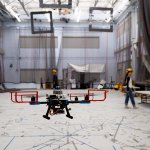
How can drones safely navigate unknown environments with moving obstacles? @MITLIDS researchers developed SANDO, a system that plans efficient flight paths with mathematical guarantees against collisions. The tech could advance disaster-response robotics.
bit.ly/4jQxIri

5
139
What happens when companies use the same #AI to screen job applicants? A new study from @MITLIDS PIs Brian Hedden and Manish Raghavan finds that “algorithmic monoculture” isn't always harmful to job seekers — and may even benefit them in some cases. More: bit.ly/4hSEFpg

How can AI help improve the complex systems that shape everyday life? @MITLIDS PI and associate prof @MIT_CEE and @mitidss, @wucathy uses Reinforcement Learning to develop safer, more efficient transportation systems.
Read her @MITNews profile: bit.ly/4AStaGR
@MIT_SCC

ALT Photo of Cathy Wu, leaning against a wall with a bicycle
5
133
This game-playing AI is the new champ at Stratego. LIDS grad student Zhiyuan Fan, PI @gabrfarina, and collaborators developed Ataraxos, an AI that defeated top-ranked human players of the complex board wargame — with potential applications beyond games. bit.ly/4hqqnf6

When #AI operates in the physical world, “pretty close” may not cut it. LIDS researchers developed HardFlow, a method that helps pretrained generative AI satisfy hard constraints while improving solution quality — without retraining. bit.ly/4xydxBN

🗳️ What is AI telling voters about elections?
MIT’s new LLM Election Observatory, from LIDS PI @charapod and collaborators, is tracking how major AI models answer questions about candidates and issues — and how those answers evolve throughout the midterms.
bit.ly/4dwYpx7

When it comes to AI-assisted medical diagnosis, one size may not fit all.
A new study from @MarzyehGhassemi and team found that AI explanations affect clinicians and non-experts differently—highlighting the need to design AI support around user expertise.
bit.ly/4gv0jR7

Congratulations to LIDS PI Sasha Rakhlin, named director of MIT’s Statistics and Data Science Center! @rakhlin aims to strengthen connections across MIT and advance the rigorous foundations of data science and #AI. MIT News: bit.ly/4gcm08m

4
247
Inspired by pinecones, tree bark, and seedpods, MIT researchers developed a mathematical framework for designing manufacturable, adaptive materials that mimic complex behaviors found in nature — with applications from robotics to aerospace. bit.ly/4zr0VOK
Using reason, again and again
A profile explores the work of LIDS PI Brian Hedden, whose research connects ethics and computing. From "Time-Slice Rationality" to MIT's SERC initiative, Hedden is helping shape a more thoughtful future for AI and computing. bit.ly/4wadCuy

MIT LIDS PI Dimitri Bertsekas, whose groundbreaking work shaped optimization, control, reinforcement learning, and AI, has passed away at 83. A prolific author, educator, and mentor, his impact will continue through generations of students and researchers. bit.ly/3Rg1fip

Following questions where they lead. A new profile highlights Bailey Flanigan's interdisciplinary journey—from medicine and economics to computer science and political science. Today, she develops computational tools to strengthen democratic participation: bit.ly/452IlyR

ALT A portrait of Bailey Flanigan
A faster way to sample from #AI diffusion models from @MITLIDS @FanChen0111, PI @rakhlin, with @MIT_CSAIL PI @KonstDaskalakis and Sinho Chewi. Read the paper that won the Outstanding Paper Award at #icml2026 @icmlconf

MIT researchers developed a faster way to sample from AI diffusion models.
They propose a new algorithm reaching the same level of accuracy in exponentially fewer steps, suggesting a path to much more efficient image generation & other diffusion-based AI systems. It recently won Outstanding Paper at ICML: bit.ly/450rpbZ

Helping AI meet the real world
@MITLIDS Devavrat Shah develops AI that supports continuous decision-making under real-world constraints. His work led to Ikigai Labs, creator of a foundation model for tabular and time-series data, now part of @Celonis More: bit.ly/3Rnx60p

2
231