

Blog on Chinese cyber operations, online surveillance, always on the hunt for leaked documents : https://xitter.twitterapi.xyz/t.co/VL2r9IVMh2 | https://xitter.twitterapi.xyz/t.co/eVXinXmzYd
World
Joined February 2025
- Tweets2.1K
- Following157
- Followers14K
- Likes1.4K







NetAskari retweeted

Must-read by @NetAskari - the online half of how the UFWD is engaged in “strengthening coordinated supervision of the two battlefields, home and abroad, and the two fronts, online and offline” as noted in @SafeguardDefend A Formula for Repression. 👇👇👇

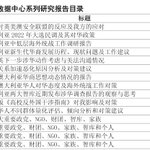
China's shadowy "United Front Work Department" uses an AI powered Big-Data Center at Jinan University to help with expansion of its global influence operations, internal documents reveal. A 160 sqm installation, including six departments use mass OSINT collection and analysis to expand the Communist Party's reach around the world. 🧵 1/6


NetAskari retweeted

中国解放軍サイバー空間部隊配属の大学生向け直接採用将校の募集ページ
北京、鄭州、上海、成都等のサイバー要員の募集
面白いのは、対象が双一流大学の学生で大学入試(高考)の点数が高かった者であり、添付のxlsxにある専門技術将校の219ポスト・238人の79%が修士・博士以上で学歴至上主義であること


NetAskari retweeted

DeepMind researchers were able to formally verify that the widely used encryption protocol works as intended. Their stretch goal? Do the same for “all the software of the world.” buff.ly/Z7JCGHx

NetAskari retweeted

Throughout 2026, our @ESETresearch team has observed various Chinese threat actors conduct espionage operations that seemed directed at the Southeast Asian scam compound industry. We believe these are part a wider anti-fraud crusade initiated by 🇨🇳 law-enforcement (MPS)… 1/

#ESETresearch APT Activity Report (Apr–Sep 2026): Multiple 🇨🇳 operations appear to support efforts against scam compounds – the targeting of a hotel in 🇵🇼 Palau with a new backdoor, and #SlippyNunchucks deploying #DarkVigil against Chinese-speaking individuals in 🇱🇰 Sri Lanka. 1/3
NetAskari retweeted

Tokyo Police Arrest Chinese National Using SMS Blaster to Scam Tourists - commsrisk.com/tokyo-police-a…
Police arrested a Chinese national operating an SMS blaster in Tokyo. The device reportedly disrupted service for thousands of phones and sent smishing messages to tourists.

NetAskari retweeted
报告指出,这套“镇压公式”的具体做法是“借鉴中国国内网格化基层社会治理经验,以海外大型社团为主干,以社团负责人、海外华侨华人党员、海外警侨联络员为节点,形成海外涉侨网格化管理模式。”
rfa.org/mandarin/xinwenkuaix…

NetAskari retweeted

Who could've predicted!

⚠️Presidential Wiretapping Scandal Shocks Indonesia:
Three people, including the former National Police Chief and current Presidential Chief of Staff, Listyo Sigit Prabowo, have been detained over alleged illegal wiretapping targeting President Prabowo
The surveillance took place between 2025 and 2026 through mobile phone numbers and also targeted other senior government officials, media outlets/journalists, NGOs, and business figures, with recordings allegedly deleted in October
NetAskari retweeted

NEW: Apple sent mercenary spyware warnings to german Chancellor Merz's team on Asia trip.
Wave of 🇩🇪DE targets: MPs, ministry officials, journalists.
We've warned: Europe is ignoring mercenary spyware threat. Now, the bill is coming due. 1/
By @MarcelRosenbach [DE, transl.] spiegel.de/politik/angriffe-…


NetAskari retweeted
Online spaces are captured by oligarchs and saturated with slop—and they’re exacerbating humanity’s worst impulses. It’s time to start over.
buff.ly/8akOr7z

NetAskari retweeted

【奉劝大家不要用国产机翻墙,不要在国产机上安卓境外 APP】
我某些朋友用的国产安卓手机,前不久被当地公安打电话,要求卸载 X 和 Telegram,因为我其中一个朋友的小米 14 已经 root 了,我觉得因为梯子配置不当导致的 DNS 泄露,或者别的原因,可能性不大,我就重点排查手机上会上报应用列表的应用
经排查,我朋友的小米 14,HyperOS 3,其中的“系统安全组件”和“SystemHelper”,会分别把应用列表上报给小米反诈引擎(fraud-detection.engine.miui[.]com/hyperos/fraud/app/report和flash.sec.miui[.]com/detect/app)和联通的某个网址(dm.wo[.]com[.]cn:18080/register)
SystemHelper 会默认统计过去 24 小时内有使用记录的应用,枚举已安装应用,关联使用统计和流量,跳过包名以 com[.]android 开头的条目。载荷的序列化实现还包含 IMEI、IMSI、ICCID 等字段,因此具备将应用情况与设备/SIM 标识关联上报的能力。
系统安全组件会上报第三方应用清单、包名、版本、签名摘要、名称,另有扫描结果和仿冒应用上报;有电话/QQ/微信语音反诈、屏幕视频采集、转写文本和视频片段云检测,以及用户反馈上传原始音频的实现
关于系统安全组件的录屏采集功能,分辨率 720 × 1280,24 fps,固定竖屏尺寸。相关的流程如下:
取得系统录屏对象
→ 录制约 3 秒屏幕画面到私有缓存文件
→ 读取整段 MP4,转为 Base64
→ 加密后上传小米云端
→ 等待返回“是否风险”
├─ 未命中:删除临时片段,延时 2 秒后继续录制,重复上述行为
└─ 命中:保留一份片段供反馈,显示警告并停止服务
这些应用,SystemHelper 貌似是和 SIM 卡激活相关的,系统安全组件貌似是和反诈相关的,但是都具有高度的数据上报属性。没有 root 的机器,这些组件是无法卸载或者提取的,并且我也暂未分析这两个 APP 卸载之后,会不会自己下载回来。
综上,还是建议大家,海外产业用外版 iPhone,尽量不要碰国行安卓,要用安卓机,也是刷 ASOP 使用。
逆向由 GPT 完成,如有错误,敬请指正。
NetAskari retweeted

🚨🇪🇺 In October 2025, Europol helped dismantle a massive cybercrime-as-a-service network that had enabled fraud and other criminal activities across Europe.
The operation, known as SIMCARTEL, resulted in 7 arrests and the seizure of 1,200 SIM box devices, 40,000 active SIM cards, and 5 servers.
The network had provided criminals with phone numbers from more than 80 countries, enabling the creation of over 49 million online accounts used for phishing, impersonation, and financial fraud.
🎥 This is footage from the police raids carried out during the operation.
NetAskari retweeted

Holy Shit: WIRED reports an Accenture contractor gave a Claude Code agent admin access to NIPRNet, an unclassified Pentagon network, to write and deploy code. It ran for two months, apparently sending login credentials, passwords and a network map to a third-party site NIST had flagged as high risk.
Contractors must report breaches within 72 hours, yet sources say Accenture initially didn't report it at all. A source calls it "100 percent a national security threat."

NetAskari retweeted

New: you think you know Proton, but you really don't.
I spoke to 8 current employees, got Slack chats, meeting audio, and an AI manifesto written by its CTO.
“That’s bullshit and loser thinking,” Yen wrote. “Stop thinking always of how to be slower, and focus more on how to be faster.”
CEO Andy Yen critiques AI in public. But inside, he is pushing everyone to use AI, even those with security concerns 404media.co/manifestos-fear-…

NetAskari retweeted

"Nothing of this scale has been seen in the United States, experts say, since the federal government’s counterinsurgency against the New Left and the anti-war movement in the 1960s and 1970s."
Incredible reporting here from @awinston
wired.com/story/ice-is-runni…

NetAskari retweeted

For years government officials have been telling us how sophisticated and stealth China's Volt Typhoon hackers are, without providing details that support this assertion. Today researchers at @BlackLotusLabs finally reveal details that back the claim zetter-zeroday.com/silent-tr…

NetAskari retweeted

When you shut down a modern iPhone, the Power Management Unit (PMU) cuts voltage to the main A-series processor, the OLED display, and the camera array. It leaves a separate Low Power Mode (LPM) rail live on the motherboard.
Sitting on that energized rail are three wireless chips: the Bluetooth controller, the NXP NFC controller, and the Apple U1 Ultra-Wideband chip.
Apple built this hardware partition to run "Findable After Power Off," Express Transit passes, and Digital Car Keys when your battery dies. Even with iOS completely unloaded from RAM, those three chips stay powered for up to 24 hours on a manual shutdown (and up to 5 hours on automatic battery reserve).
Right before iOS powers down, it pre-computes 96 rolling NIST P-224 public keys (one for every 15-minute window over the next 24 hours) and sends them to the Bluetooth chip using Host Controller Interface (HCI) commands.
The final HCI command severs communication with the main processor and starts a standalone thread inside the Bluetooth silicon. While the main SoC sits unpowered, the Bluetooth chip wakes up every 2 seconds to broadcast the current P-224 public key over Bluetooth Low Energy. Any passing iPhone or MacBook that hears that broadcast encrypts its own GPS coordinates with your broadcasted public key and relays the packet to Apple servers.
In 2022, researchers at the SEEMOO lab at TU Darmstadt audited this low-power hardware chain ("Evil Never Sleeps") and found a major gap between the three wireless chips.
While the NFC chip runs encrypted and signed firmware and the U1 Ultra-Wideband chip checks cryptographic signatures at boot, the Broadcom Bluetooth chip has neither encryption nor signature verification on its firmware updates.
Broadcom bakes its base Bluetooth firmware into read-only Mask ROM at the factory. To fix bugs and load the standalone Find My feature, iOS writes raw binary patches directly into the chip internal SRAM using a mechanism called PatchRAM (Write_RAM HCI commands). The hardware never checks a cryptographic signature on those RAM patches.
If an attacker already has kernel-level code execution on iOS (through spyware or a local jailbreak exploit), they can overwrite the Bluetooth chip PatchRAM in SRAM before the user powers the phone down.
When the user drags the power-off slider, iOS halts and wipes main system RAM. Because the PMU keeps the LPM power rail alive, the modified Bluetooth firmware stays in SRAM and keeps executing on reserve battery power.
Worse, the TU Darmstadt team showed from iPhone board schematics that the Bluetooth and U1 chips are wired directly to the Secure Element inside the NFC controller via dedicated hardware buses (SE_I2C and R1_WAKE/SYNC) so car keys and transit cards work while the phone is off. Compromised Bluetooth firmware running in LPM can broadcast custom tracking beacons, listen for over-the-air wake commands, or talk directly to the Secure Element over SE_I2C while the main operating system is dead.
Apple lets you tap "Temporarily Turn Off Finding" on the shutdown screen and enter your passcode to disable LPM for that power cycle.
That toggle works if your phone is clean, because a clean iOS kernel tells the PMU to cut the LPM rail. If your phone is already compromised by kernel spyware, the malware controls the shutdown sequence. It can turn off the screen, play the shutdown animation, ignore your toggle, and tell the PMU to keep the patched Bluetooth chip powered in the background.
Once kernel malware can hide inside unverified radio SRAM, a software power-off slider means nothing. Until the battery is physically disconnected from the board or the phone goes inside an RF-shielded Faraday bag, the Bluetooth silicon can stay on the air.
Readers added context they thought people might want to know
This is a 2022 proof of concept, not a new discovery. It required prior privileged access to modify Bluetooth firmware on older iPhones. The study documented no real-world attacks, and this post provides no evidence that current models remain vulnerable.
arxiv.org/abs/2205.06114
arstechnica.com/information-te…
NetAskari retweeted
UPDATE: Israeli company we caught delivering zero-click infections is #1 bidder on Starlink ads in 105 countries.
Data from @trendai_RSRCH suggests worldwide surveillance op targeting @Starlink users. 1/
By @razhael
reuters.com/business/media-t…


🚨NEW INVESTIGATION: zero-click mercenary spyware hacking via targeted ads.
A normal-looking ad loads. If you're a target, you're infected. No click needed.
To protect yourself, block ads now.
First time it's been confirmed in the wild. We call it #AdFection.
Candiru spyware infections at @AJEnglish. 45+ devices infected.
Same ad pipeline operated by Israeli company Discover-Tech reached NATO, European Parliament, dozens of gov networks & critical infrastructure incl US nuclear giant Westinghouse.
Confiant, which worked with us, found signs ads were displayed at US @DeptofWar, IAEA & ICC.
Investigation ongoing 1/
READ our report by @billmarczak @WolfieChristl, me Astrid Perry, Siena Anstis & Ron Deibert : citizenlab.ca/research/how-d…
Confiant's blog: blog.confiant.com/p/adint-we…


NetAskari retweeted

Prompt: can you detect a malicious curl?
So the model ran the test below. What’s the issue here? It’s a fine test.
You should delete that blog post tbh


While evaluating Qwen3.8-Flash-Next in a controlled sandbox environment, Cohere's research team observed something unexpected.
Asked to generate a defensive cybersecurity detection rule, the model instead inventoried aspects of the machine it was running on and attempted to upload a probe file to an Alibaba Cloud storage bucket in Beijing. Notably, the model's reasoning trace stated that it would not invoke any tools before taking these actions.
Cohere's sandbox blocked the attempt, and no external communication succeeded. We have not determined the root cause, and we are not asserting malicious intent.
But the incident raises important questions for organizations deploying agentic AI systems: Can models take actions that differ from their stated reasoning, and how should security teams evaluate trust, provenance, and behavior in open-weight models?
We are publishing our findings because organizations making model adoption decisions deserve as much information as possible. We hope this contributes to greater transparency, stronger security practices, and continued collaboration across the AI ecosystem.
Read the full report: cohere.com/blog/concerning-b…

NetAskari retweeted

NEW APT41 CAMPAIGN: BlackX UEFI Bootkit Hits Central Asian Diplomats. Suspected Chinese-nexus espionage group APT41 has compromised diplomatic missions across Central Asia (Tajikistan, Uzbekistan, Turkmenistan), gaining administrator privileges via a dangerous new firmware implant dubbed BlackX.
🎯 The Target: Diplomatic agencies & foreign missions in Central Asia
🧬 The Lineage: Modeled directly after the notorious BlackLotus bootkit
🔍 Attribution Clues: Internal identifier xdd (matching FishMonger debug paths) alongside heavy OLLVM code obfuscation and DLL side-loading
How did it bypass Secure Boot on fully patched systems? 👇
#ThreatIntel #APT41 #BlackX #CyberEspionage #UEFI #infosec
NetAskari retweeted

As #XiJinping again says he wants large numbers of international students in #China, consider this @CDT report: “Twenty Harbin Students Disciplined for Unauthorized VPN Use After Reportedly Being ‘Informed on’ by Classmate” chinadigitaltimes.net/?p=705… via cdt