
sharing reverse engineering knowledge
Joined May 2013
- Tweets4.5K
- Following6
- Followers14.5K
- Likes974




Pinned Tweet
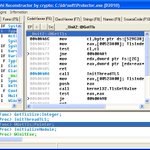
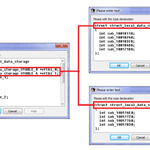
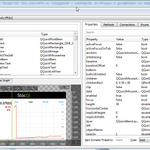
New #CodeXplorer v2.1 [IDA7 Edition] released! Changelog: multiple bugfixes, added gcc Virtual Tables and RTTI parsing, improved Linux and macOS support. github.com/REhints/HexRaysCo… #REhints

REhints retweeted

idasql 0.0.20 released with IDA 9.5 release.
My favorite features are the instance discovery and communication, the database rescue feature, and UI actions surface.

idasql 0.0.20 is out, with IDA 9.5 support.
Your agent now works with every IDA you have open. It finds them, starts the server it needs, and tells you what it changed.
IDA 9.2-9.5 · Windows, Linux, macOS · x64 and ARM64
github.com/allthingsida/idas…

REhints retweeted

Announcing a major milestone achieved by my team @GoogleDeepMind: we have proven key security properties of the machine code underlying the Signal messaging protocol. This is the first time the actual production code of a widely deployed protocol has been formally verified – by any method, with or without AI – and at this depth.
More than a research breakthrough, it’s a prime example of how frontier AI can be a force multiplier to counter the speed and scale of modern cyber threats.
Formal verification offers a higher standard of security; however, it’s extremely complex and time consuming, which is why in many cases it’s considered to be impractical. Similar efforts could take teams decades of combined effort. We did it in a month’s time.
Using AlphaProof Code, Google DeepMind's new agentic framework for formal verification that runs on LLMs including Gemini Carbon, we verified the Signal protocol down to the actual code running on devices. This milestone lays the groundwork for a future in which vital systems, from medical device firmware to power grid software, ship with mathematical proof that their protections work.
Reaching that future will take continued research from our community. In that spirit, we're open-sourcing our formal specifications and verification artifacts so others can build on this work.
On a personal note, this moment is of deep significance to me. I started my own research journey more than two decades ago as an intern working on checking the consistency of complex software systems. Seeing this grand challenge made practical with modern AI is extraordinary.
I'm extremely proud of my team members: Swarat Chaudhuri, Andrew Ferraiuolo, Anton Kovsharov, Tej Chajed, Sam Schlesinger, Karn Seth, Jonathan Katz, and Charles Sutton for taking on this grand challenge and delivering, and grateful to the Signal team for their partnership.
deepmind.google/blog/formal-…

REhints retweeted

30 years ago today, Phrack 49 published Aleph One’s “Smashing the Stack for Fun and Profit”.
A legendary paper that inspired generations of hackers and helped shape modern exploit development.
Still an essential reading.
phrack.org/issues/49/smashin…
Phrack 73 is coming soon!

REhints retweeted

Many people have a shallow understanding of what Rust actually guarantees. The borrow checker is great for ensuring memory safety *within an application*, the guarantees for multi-process interaction (and even interaction with shared libraries etc.) aren't the same thing.

REhints retweeted

Good news! We've wrapped our initial "Lights Out" research into out-of-band management devices and BMCs. The final advisories are live and OOBscan now includes detections for all issues. The bad news: many of these issues still have no patch:
github.com/runZeroInc/oobsca…
REhints retweeted

Slides from the talk @mlippautz and I gave at the recent @offensive_con in Tokyo: saelo.github.io/presentation…
Blog post for the Fuzzing vs. AI part: projectzero.google/2026/10/f…
REhints retweeted
Code-execution flaw in UEFI firmware affects most servers on planet Earth: arstechnica.com/security/202…
Great work by Alex Matrosov (Anthropic) and Dan Holmes-Mitra (Google)!

REhints retweeted

I have just noticed that my Scudo internals paper (released while at L3Harris Trenchant) can't be (easily?) found anymore due to website changes... here is a link to a pdf copy for those that need it: github.com/rrbranco/ScudoAll…

REhints retweeted

this blog shows some of the worst bugs claude found, including a zero-click rce on the linux networking stack that roots a server over the network with no creds or interaction, and tens of full rce chains in chrome (recording below is the one in the blog): anthropic.com/research/disco…
REhints retweeted

LLMs are great at finding bugs, but so are fuzzers. @5aelo compared the vulnerabilities found in V8 by BigSleep, an agentic system, with those found by the Fuzzilli fuzzer.
projectzero.google/2026/10/f…

REhints retweeted

Submit to the CFP! We close in 5 daysssssss

Our CFP is still open! Submit your talks on
-bizarre reverse engineering projects
-tool releases
-exploits and vulnerabilities
-Non-technical and policy talks on cyberz
districtcon.org/cfp

REhints retweeted

📢 IDA 9.5 is here: more platforms, more agentic power.
→ 3 new decompilers: Android Dalvik, Infineon TriCore and Qualcomm Hexagon
→ IDA MCP and Assist for AI-driven reverse engineering
→ Recursive decompilation across call graphs
→ IDA Home now includes 11 cloud decompilers instead of 2, at the same price
→ And much, much more
It’s one of our biggest releases yet. Active license holders can download it now from the Download Center.
hex-rays.com/blog/ida-9.5-re…

REhints retweeted

AI-assisted research is killing embargoes. Coordinated disclosure will never be the same.
The industry used to have the luxury of testing or sitting on a fix for months. Not anymore. When everyone's using the same tools and the same intelligence to find vulnerabilities, you're not the only one finding that bug.
Product security and PSIRT need a serious rethink: less gatekeeping, more proactive evaluation of security posture, and shipping fixes continuously at scale.
The biggest impact will be in firmware and hardware, where disclosure timelines have historically stretched past 12 months. That mindset is a leftover from outdated processes and slow testing and bring-up environments.
REhints retweeted

All the details including the slides are now available at quentinkaiser.be/security/20…
REhints retweeted
My presentation at Hexacon is done ! Time for public disclosure.
Pictured below: remote unauthenticated code execution over-the-air (including the shell) on Proximus BBOX 3V+


REhints retweeted

Exciting work from @willzhou97 (Fellow, now full time!) and @bucketofkets on the Frontier Red Team. One of the cool parts of the job is seeing a future world early. We think this one is ~pretty underpriced.
"We should aim to harden our systems to make it difficult for such replicators to spread, but also prepare to deal with a world where they are here to stay."

Anthropic's Frontier Red Team believes small AI models may now be months away from being capable of self replicating without access to a datacenter.
Quoting from the blog:
'The capabilities that make AI models generally powerful coding agents also generalize to cyber tasks, including autonomous replication. Like coding agents in 2024, we’re seeing signs of life for AI worms. We don’t yet have a full rogue replicator, but agents are becoming increasingly capable of completing the individual steps in the replication chain (and passing on their adaptations to future copies of themselves).
At the same time, increasing amounts of inference compute are now available both inside and outside of datacenters (see Appendix D). It’s uncertain exactly what form autonomous AI replication will take. It could be a slow, distributed “digital slime mold,” living on relatively insecure compute. It could also be a powerful cyber model that breaches datacenters at a high pace, or a model that scams people for compute credits.
As a prediction that goes beyond our experiments, we expect a future awash with agents running on all types of hardware, including some that aren’t under human control. While it’s true that IoT devices have been vulnerable for a long time, lightweight agents may be much more willing than human attackers to put in the effort to compromise large fractions of the world’s IoT compute. The rise of slow replicators would also be a bellwether for more aggressive, faster ones that can breach more hardened machines or be effective API key thieves. We should aim to harden our systems to make it difficult for such replicators to spread, but also prepare to deal with a world where they are here to stay.'

REhints retweeted

Very excited to share details on the bugs used in our full chain Chrome exploit! We used three bugs (V8 corruption, V8 sandbox escape, and renderer sandbox escape via Crashpad). The third bug is my favorite!


REhints retweeted

📚 Slide decks from OB1 2025 & 2026 are live!
Catch up on talks you missed, revisit top sessions, or dive into the technical breakdowns. Most slides are up on GitHub:
👉🏻 github.com/star-sg/OBO
Huge thanks to all our speakers, sponsors, activity partners, and attendees!

REhints retweeted

Agenda for OffensiveCon Tokyo 2026 is live!
Explore the talks and plan your schedule now:
offensivecon.jp/agenda/2026.…
#OffensiveCon #Tokyo
