

Professor of Cancer Immunology and Immunotherapy
University of Cambridge, UK
Joined October 2018
- Tweets2.3K
- Following726
- Followers2.3K
- Likes3.8K






Pinned Tweet
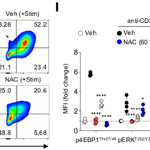
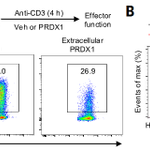
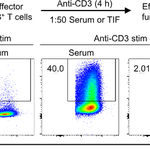
Delighted to share new work published in @ScienceMagazine entitled 'Tumor-derived antioxidants suppress immunity by depriving T cells of reactive oxygen species,' led by @XanWesolowski in the lab science.org/eprint/YQNFAHKNF…

Roychoudhuri Lab retweeted

Insane paper alert!
Interferon is the one therapy that can actually deplete the mutant stem cells in myeloproliferative neoplasms, the blood cancers where the marrow keeps overproducing one lineage or another. The standard explanation for how it works was fairly mechanical. It pushes the mutant cells into the cell cycle, they divide, and eventually they exhaust or lose ground. Clean enough to teach. Lama et al. pulls it apart, and it can do that because of a set of single-cell methods that read out the mutation, the transcriptome, the surface proteins and the chromatin in the same cell, so the healthy stem cells sit inside the same patient as a built-in control, right next to their mutant neighbors.
What they see is that interferon does not do one thing to a stem cell, it does two opposite things at once. Part of the stem pool is driven into an inflammatory myeloid progenitor state nobody had really described before, running on AP-1 and NF-κB. Another part is pushed toward lymphoid output. That lymphoid arm is easy to overlook, but it seems to be doing the clinical work, offsetting the myeloid overproduction that defines the disease, which is likely why counts normalize even in patients whose mutant fraction barely moves.
Interestingly, the result that carries the paper is a negative one. If fitness ran on proliferation, the clones cycling fastest under interferon should be the ones whose fate you could predict. But the mutant cells cycled faster than the healthy ones throughout, before treatment and during it, and that gap predicted nothing about which clones expanded and which collapsed. What predicted it was whether a clone would follow that inflammatory myeloid path out of the stem state. The ones that resisted held on or grew. The ones that went along got cleared.
So the drug is not really wearing the clone down. It is holding open an exit from the stem cell state, and resistance amounts to declining to take it. The mutations tilt the cell's transcription-factor wiring, PU.1 in particular, so mutant and healthy cells read the same interferon signal differently, and the mutant ones tend to sit tighter in the stem compartment…and the same resistance signature turns up in DNMT3A clonal hematopoiesis, so it is probably not tied to one mutation or one disease. If a clone survives by refusing to differentiate, killing it is beside the point. You would have to take the exit away, so it has to leave the stem state whether it resists or not, and I don't know what that looks like yet, or how much of this same quiet sorting runs in ordinary aging marrow where no one is being treated at all.
@AnnaEnim @landau_lab and many more rockstars!
#MyeloproliferativeNeoplasms #Hematology #StemCellBiology #SingleCell #Interferon
Nature Genetics, doi.org/10.1038/s41588-026-0…

Roychoudhuri Lab retweeted
It's now been 5 years since we replaced our relatively new gas boiler for a #heatpump in our home - and we haven't looked back! Comfortably warm in winter, no damp on walls anymore, ~reduced cost, massive reduction in CO2 emissions. Summer is a nice time to book a
2-day install!


Roychoudhuri Lab retweeted
Cool to see so many #heatpumps being installed this year. We’ve had our heatpump at home now for 3 years and it’s been saving us money while providing more comfortable heating and reducing our estimated CO2e by 75-80%.

The convergence on PRDX1 from this study and ours using completely different methodologies is remarkable! science.org/doi/10.1126/scie…

New findings on antioxidant suppression from Julian Lum: CRISPR screen of factors sensitising T cells to suppressive activity of human ovarian cancer ascites fluid identifies PRDX1 whose deletion increases intracellular ROS and enhances T cell function! biorxiv.org/content/10.64898…

New findings on antioxidant suppression from Julian Lum: CRISPR screen of factors sensitising T cells to suppressive activity of human ovarian cancer ascites fluid identifies PRDX1 whose deletion increases intracellular ROS and enhances T cell function! biorxiv.org/content/10.64898…
Roychoudhuri Lab retweeted

Amazing study from
@RoychoudhuriLab published in @ScienceMagazine
identifying tumour-secreted PRDX1 as an immune escape mechanism, providing a potential therapeutic approach to enhance ICB therapy.
Kudos to all the authors!
Paper - tinyurl.com/bdedx4fw
Roychoudhuri Lab retweeted

🚨Happy to share with you our Lab’s latest #BioRxiv pre-print. 🥳
TGF-β- and IL-1-dependent fibroblast states differentially shape pancreatic cancer microenvironments and metastasis
biorxiv.org/content/10.64898…
A huge amount of work (and 🐭 breedings!).
Hope you enjoy the read!
Thank you Piyush!

Amazing study from
@RoychoudhuriLab published in @ScienceMagazine
identifying tumour-secreted PRDX1 as an immune escape mechanism, providing a potential therapeutic approach to enhance ICB therapy.
Kudos to all the authors!
Paper - tinyurl.com/bdedx4fw
3
513

Roychoudhuri Lab retweeted

Why have antioxidant supplements not helped reduce the incidence of cancer and in some trials shown an increase?
Suppression of T cell immune response to cancer
@ScienceMagazine
science.org/doi/10.1126/scie…
science.org/doi/10.1126/scie…


Thank you Kris - look forward to the all work that will come out of your lab over the years! Hope all is going well

So happy to see this out from the great Roychoudhuri lab. Congrats to @XanWesolowski, @ardinyo_ and the rest of the coauthors.
1
584
Yes indeed, it's likely Goldilocks at work.. Intriguingly, the reason b-mercaptoethanol is added to T cell cultures is because it reacts with extracellular cystine to form a mixed disulfide that T cells can easily import and break down into cysteine needed for metabolism.

Super interesting work. Obviously too much ROS is bad for T cells (otherwise we wouldn’t add antioxidants to T cell medium). But clearly depleting ROS entirely is bad. A nice example of hormesis!
9
784
Roychoudhuri Lab retweeted

Catz Fellow Prof. Rahul Roychoudhuri (2020) & a team from @Cambridge_Uni & @OHSUNews have discovered cancer cells release antioxidants to prevent immune cells from destroying them in new research published by @ScienceMagazine: caths.cam.ac.uk/cancer-shiel… @RoychoudhuriLab
📸2: @NIH

ALT Prof. Rahul Roychoudhuri

ALT A cancer cell surrounded by three T cells
Thanks Derya - I saw the interesting post on your attempts to make a new flow cytometry analysis using AI! Fascinating..

1
274


Roychoudhuri Lab retweeted

An antioxidant released by tumors dampens T cell immunity @ScienceMagazine @RoychoudhuriLab @Cambridge_Uni @surgeonscie @OHSUKnight @ardinyo_
science.org/doi/10.1126/scie…
science.org/doi/10.1126/scie…

A labour of love for @XanWesolowski and @ardinyo_ who despite the feverish pace of experiments managed to look composed and slightly old-timey at all times.

1
3
140
Couldn't have done it without tremendous work brilliant thoughts of members of @roychoudhurilab @Cambridge_Uni @CRUKCamCentre and collaborations with @Mito_Redox @PCHo_Lab @flatzlab @luglilab
Thanks Nav Chandel for crystal clear Perspective @NavChandel1: science.org/doi/10.1126/scie…

1
4
153