

I am inspired and awakened by @SadhguruJV , Mother Nature , current PM of India, Music, Computer Software and Human Emotions.
Joined October 2013
- Tweets50.2K
- Following2.5K
- Followers295
- Likes71.6K





Sreejith Sivasankar retweeted

There was always a desire to serve Baba Bholenath and I am happy to have got that opportunity in the form of the Vishwanath Dham Project.

Kudos @PMOIndia for visualising a kayakalp & doing the Puja & Shilanyas of the AastaPurna project & to @myogiadityanath ji for finding SevaBhavi KarmaYogis to deliver this project 2 decades after Ahilyabai Holkar jis last effort
#ModiHaiToMumkinHai
xitter.twitterapi.xyz/narendramodi/status/11…
Sreejith Sivasankar retweeted
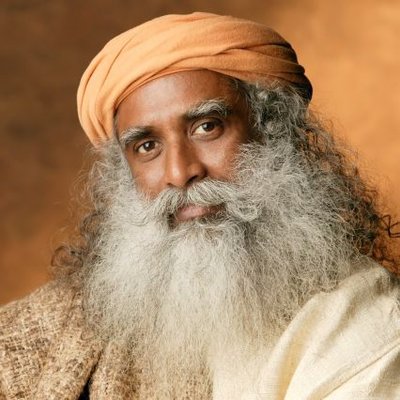
When you are joyful within yourself, your actions naturally become caring, gentle, and generous. #SadhguruQuotes

Sreejith Sivasankar retweeted
अपेक्षन्ते न च स्नेहं न पात्रं न दशान्तरम्।
सदा लोकहिते युक्ता रत्नदीपा इवोत्तमाः।।
Sreejith Sivasankar retweeted

On this Veterans Day, we honor the courage, sacrifice, and selfless service of all who have served. We are deeply grateful to you and your families. May your lives be filled with peace, good health, and profound well-being. Isha Foundation remains committed to making powerful tools for inner well-being available to every veteran, so that those who have given so much may find joy, balance, and peace within.
Because those who served others deserve to thrive within themselves, Sadhguru is offering Inner Engineering to all U.S. veterans, free upon completion.
isha.us/veterans
The video shows a glimpse of our September 12 day at Isha, where veterans and their families came together to spend the day exploring, relaxing, and enjoying the experience.
Sreejith Sivasankar retweeted

Thinking of all our veterans and their families today. Thank you for your service and sacrifice to our country.
Today’s doodle showcases achievement medals across every branch of service.
During the Winter, there is a slowdown of life. The celebration of Diwali with light, music and various aspects is to ensure we stay vibrant and exuberant within during this time.
#Deepavali


Unable to refute a single primary proof from Panini’s Ashtadhyayi, Bhagavad Gita (2.46), Srimad Bhagavatam (1.3.17), Skanda Purana, or Kashi’s Purnimanta Panchanga, hiding behind a pundit’s opinion video is a textbook admission of defeat (Nigrahasthana) by @svrao52 in classical debate ( one of the methods to know the truth)Half-baked bookish pedantry (Shushka-panditya) never overrides authentic Shastra, nor can borrowed commentary measure a realized Yogi’s inner clarity (Anubhava). With every misconception answered by scripture, let us put a full stop to this discussion here, unless if there is a pramana to reopen it again, Namaskaram.
1

Located at Kotla Firoz Shah in Delhi, the majestic Ashokan pillar is a sandstone monolith measuring 42 feet and 7 inches in height. Originally erected during the reign of emperor Ashoka, the Great around 250 BCE, the pillar was brought from Topra, near Ambala, by Sultan Firoz Shah Tughlaq and installed at its present location in 1367 CE. It was placed on a specially constructed three-tiered pyramid and served as a symbolic minar known as Minar-i-Zarin, or the Golden Minar.
The pillar bears the Seven Edicts of Ashoka, inscribed in Prakrit using the Early Brahmi script. These edicts convey messages of compassion, truthfulness, liberty and virtuous deeds. The pillar also bears subsequent inscriptions associated with Chahman Prince Visala Dev, Sri Bhadra Mitra and Sultan Ibrahim Lodi.
The transportation and installation of the pillar involved considerable effort and expenditure, as described in Tughlaq period historical records. The Ashokan edicts on the pillar were deciphered in 1837 CE, providing the key to understanding the Brahmi script.
Ashokan pillars, some highly ornate and adorned with animal capitals, have been found all across Northern India which were carved and polished during the Mauryan period at Chunar, near Mirzapur, Uttar Pradesh and were used to spread the royal message by the emperor Ashoka.


i agree.. historians have completely hidden the greek invasion of india .. to hide their conversions of muslims to pagans.. this also should be taught with any bias... if its sandrokottos let it be ..instead of chand ra gupta.. chand is urdu word.

3
23
Regarding your comment 3: "instead of sandrokottos let it be... chand is urdu word"
This contains a major phonetic and etymological mistake:
. Sandrokottos vs. Chandragupta: "Sandrokottos" (or Sandracottus) and Chandragupta are not two different people. Sandrokottos is simply the ancient Greek phonetic transcription of the name "Chandragupta". Because ancient Greeks lacked a "ch" sound and had difficulty with certain Indian consonant clusters, they wrote Chandra-gupta as Sandro-kottos.
In 1793, the British philologist William Jones realized that the Sandrokottos mentioned in Greek histories (such as Megasthenes's Indica) was exactly the same person as the Mauryan emperor Chandragupta found in Sanskrit texts. Far from being hidden, this breakthrough is celebrated as the foundation ("the sheet anchor") of ancient Indian chronology, allowing historians to align Indian dynastic records with the globally recorded Greco-Roman timelines.
. The Etymology of "Chand": The claim that "Chand" is an Urdu word is false.
Bullet "Chand" (चाँद) is a direct, natural colloquial contraction (a tadbhava word) of the Sanskrit "Chandra" (चन्द्र), meaning "moon" or "shining/glittering".
. "Chandra" is an ancient Vedic term that has been used in India's oldest scriptures for thousands of years, predating both the Greek arrival and the eventual development of Urdu (90% Urdu is samskitam”) by millennia.
. While Urdu, as a much later Indo-Europe fusion language, absorbed "Chand" and "Chandra" through its shared Indic heritage, the root, meaning, and birth of the word are deeply and unequivocally Indic/Sanskritam.
9
2. Regarding your comment “…to hide their conversions of Muslims to pagans" (Chronological Anachronism)
This is an absolute impossibility due to basic historical timelines.
. The timeline of the Greeks in India: The campaigns of Alexander and the rule of the Indo-Greek Kingdoms occurred roughly between 326 BCE and 10 CE.
. The timeline of Islam: Islam was founded in the early 7th century CE (~610 CE onward) in Arabia, reaching the Indian subcontinent through trade and conquests starting in the late 7th and early 8th centuries CE.
. The fact: Since Islam did not exist for at least another 600 to 900 years during the Indo-Greek era, there were absolutely no Muslims in India, Greece, or anywhere else on Earth for the Greeks to convert.
. During this era, "conversion" and cultural exchange went entirely the other way: many Greeks in India adopted indigenous Indic faiths. For example, the Greek ambassador Heliodorus erected a famous stone pillar in Vidisha (c. 110 BCE) dedicated to Vasudeva (Vishnu), famously calling himself a Bhagavata (Bhagavan devotee). Similarly, the Greek King Menander I famously converted to Buddhism (detailed in the original post of ASI text of this thread- Milindapanha).
6
1. Your comment “Historians have completely hidden the Greek invasion of India" is a baseless claim. The Greek presence in ancient India from Alexander’s campaigns in Punjab (326 BCE) to the subsequent Indo-Greek Kingdom (c. 180 BCE – 10 CE) is extensively documented, widely taught, and heavily researched.
. It features prominently in school and university curriculums across India and the globe (covering Alexander vs. Porus, the treaty between Chandragupta Maurya and Seleucus Nicator, and the reign of Buddhist Indo-Greek King Menander I/Milinda).
. In fact, the very map attached in the post (referencing Oxford University Press and historical atlases) proves that these boundaries, campaigns, and battles have been painstakingly mapped and published by historians for generations.
6
Sreejith Sivasankar retweeted

The Union Cabinet today, under the leadership of PM @narendramodi approved projects and programmes worth Rs. 77,101 crore.
✅ The development of Yuge Yugeen Bharat Museum, with an outlay of Rs 3,230 crore. With the world’s largest display area of more than 1 lakh sq m, the Museum will be a landmark national institution showcasing the continuity, diversity & richness of Bharat’s civilizational heritage.
✅ The Noida Metro Aqua Line extension, an 8.5 km elevated corridor with 5 new stations,
linking Noida & Greater Noida West to Delhi Metro, at an estimated cost of Rs 2,390 crore. The Aqua Line will cut down travel time, ease congestion & lower pollution.
✅ The NBS subsidy rates for Rabi 2026-27, the total outlay being about Rs 62,370 crore, 64% higher from last Rabi season. It will boost the domestic production & affordable alternatives, reduce import reliance, support farmers first policy along with food security & farm incomes.
✅ Continuing the Credit Guarantee Fund for Micro Units under Pradhan Mantri Mudra Yojana, with an outlay of Rs 5,000 crore, keeping collateral-free loans available for 5 years. This will lower guarantee fee, improve quality of lenders loans, supporting entrepreneurship & growth.
✅ Continuing the Credit Guarantee Fund for Stand-Up India with a corpus of Rs 4,111 crore towards credit guarantee over 5 years, supporting inclusive growth and creating jobs for women & SC/ST entrepreneurs.
#CabinetDecisions


Sreejith Sivasankar retweeted

A wonderful tribute to the creative genius of Rabindranath Tagore. This rare collection of his paintings, letters and manuscripts offers an intimate glimpse into the many facets of a true polymath. It is a precious part of our cultural heritage, beautifully preserved by Maitreyi Devi and her family.
business-standard.com/india-…

Sreejith Sivasankar retweeted

Consider this your sign to make some plans this winter.❄️☺️
Art to discover, architecture to admire, design to experience, and centuries of history to uncover. A whole new side of Delhi awaits you. ✨
The India Biennale 2026 is bringing the city together through exhibitions, experiences and conversations.
So, what are you waiting for?
Visit our website today and book your passes at: indiabiennale.culture.gov.in
#TheIndiaBiennale2026 #DelhiDiaries #ArtAndArchitecture #ExploreDelhi #IndianArt
restore the mosque damaged by the greek a-shaik)ashoka)(anti muslim) ... he himself regretted it ..and converted to chand-shaik , a muslim.
1
24
I think it’s not about restoration , history should have taught to people in as is form not whitewashing a portion and neglecting other parts . Crusades from mongol invaders to kill people who were not having weapons and sell their wives in open market as slaves was cruelty to the core which India has withstood . Many gruesome acts are so gory that it can not be taught to children in school . At the same time the period that Mughals ruled northern part was also one of the highest economies in the world and those centuries contribution also should be taught with an open mind of neither aversion nor hatred evenif there is a deep pain. History should not have forgotten , learn and embrace with openness.
1
25
When newly erected under Emperor Ashoka around 250 BCE, an imperial pillar and stupa sanctuary looked dramatically different from the weathered, bare-topped shaft surviving at Firoz Shah Kotla today:
. Mirror-Like "Mauryan Polish": Quarried in single ~40-to-50-foot blocks of buff sandstone at Chunar (near Varanasi), the tapering monolithic shaft was hand-burnished with fine abrasives until it gleamed like polished bronze in the sun so reflective that later Chinese pilgrims like Xuanzang marveled that the stone looked translucent and shimmered like water.
. The Lost Crowning Capital: Whereas the Topra-Delhi shaft lost its summit ornament centuries ago, intact Ashokan pillars were crowned with a separately carved capital locked onto the shaft by a massive, hidden two-foot cylindrical copper bolt. From bottom to top, this assembly featured a fluted inverted lotus bell, a circular abacus carved with 24-spoked wheels and striding animals, royal lions facing the four cardinal directions to proclaim Dhamma across the realm, and a grand Dharma Chakra (Wheel of Law) mounted at the apex.
. Crisp Early Brahmi Inscriptions: Rather than serving merely as victory monuments, the polished shafts functioned as public stone proclamations, neatly incised in Prakrit using the Early Brahmi script—the surviving inscriptions visible on the pillar's surface today.
. Pairing with the Great Stupa: At major pilgrimage sites like Sarnath and Sanchi, Ashoka placed his pillars directly beside white lime-plastered hemispherical stupas (anda). Together they formed a unified sacred geometry: the pillar rose as the cosmic axis linking earth and sky, while the stupa housed sacred relics behind a carved vedika railing and beneath a square harmika topped by a chattra (triple-tiered parasol) representing the Buddha, Dhamma, and Sangha.

7
belonged to the Tughlaq dynasty of the Delhi Sultanate, ruling more than 150 years before Babur founded the Mughal Empire in 1526 (ironically, Firoz Shah’s capital was later devastated in 1398 by Timur, the Turco-Mongol crusader from whom the Mughals descended).
His 37-year reign stands as one of medieval India’s sharpest contradictions: Born to a Rajput mother (Naila) and a Tughlaq father, he sought political legitimacy from Sunn ulema by enforcing harsh religious policies against Hindus, even while building some of pre-modern India's largest agricultural and public welfare infrastructure. Much of what is known about Firoz Shah’s religious policies comes not from hostile critics, but from court chroniclers Ziauddin Barani and Shams-i-Siraj Afif, as well as the Sultan’s own 32-page memoir, Futuhat-i-Firoz Shahi. First Ruler to Impose Jizya on Brahmins: Earlier Delhi Sultans exempted Vedic scholars from the jizya (poll tax on non-Muslims). Firoz Shah separated jizya from land revenue and strictly enforced it on Poojaris for the first time. When Vedic scholars across Delhi went on a hunger strike outside his palace in protest, he refused to back down; the standoff ended only when Delhi’s broader Hindu community stepped in to pay the Vedic scholars' share themselves. Temple Destruction and Desecration: He banned public Hindu religious fairs and ordered the demolition of newly built or repaired temples around Delhi and nearby towns (including Malwa, Salehpur, and Gohana), replacing them with mosques and executing local religious leaders. During military expeditions, his forces desecrated and plundered major shrines, notably the Jagannath Temple in Puri (c. 1360–61) and the Jwalamukhi Temple at Nagarkot/Kangra (c. 1361). Public Execution for Religious Practice: Court historian Shams-i-Siraj Afif documented an incident in Delhi where a Vedic scholar accused of publicly conducting idol worship at home and attracting both Hindu and Muslim followers was brought before the Sultan, ordered to convert, and, upon refusing, tied to a pyre and burned alive outside the royal court. Mass Enslavement (Diwan-i-Bandagan): Firoz Shah instructed his provincial governors and commanders to seize captives during military raids and collect enslaved boys in lieu of unpaid tribute. His royal slave department swelled to roughly 180,000 enslaved people ,the largest in Sultanate history , uprooting tens of thousands of native families, though captives were subsequently trained as artisans, guards, and administrators. (His orthodoxy also targeted non-Sunni Muslims: he executed Ismaili Shia preachers, burned heterodox books, and barred Muslim women from visiting Sufi shrines outside Delhi.). Despite his religious intolerance, Firoz Shah largely avoided endless wars of expansion and redirected the treasury toward domestic stability, earning a reputation as one of the Sultanate's foremost builders.

1
35
Monumental Canal Networks and Famine Prevention: He spearheaded medieval India’s largest irrigation drive, digging major canals drawing water from the Yamuna, Sutlej, and Ghaggar rivers into arid regions of modern Haryana and Punjab, alongside dozens of dams, reservoirs, and roughly 150 wells. Farmers could suddenly harvest two crops a year (kharif and rabi including wheat and sugarcane), turning wasteland from the Sutlej to Aligarh fertile and ending the devastating famines that had defined his predecessor Muhammad bin Tughlaq’s reign.
. Tax Relief and Peasant Debt Cancellation: While enforcing jizya, he abolished over 20 oppressive municipal and market taxes (abwabs) including house (ghari) and pasture (charai) taxes that had crushed artisans, shopkeepers, and herders. He also wrote off massive unpaid emergency farm loans (sondhar) from his predecessor's era and planted 1,200 fruit orchards around Delhi, boosting local commerce.
. Free Public Healthcare (Dar-ul-Shifa): He established a state-funded hospital (Dar-ul-Shifa) in Delhi staffed by skilled physicians (hakims), where free medicines, diagnosis, and food were provided to patients regardless of background. He also built well over 100 roadside rest houses (sarais) to shelter traveling merchants and pilgrims, and created a charity bureau (Diwan-i-Khairat) for widows, orphans, and poor brides though state charity grants were largely restricted to Muslims.
. Abolition of Judicial Torture and Mutilation: Breaking with standard medieval brutality, Firoz Shah banned state torture and bodily mutilation outlawing the amputation of hands and feet, slicing of noses and ears, bone-crushing, and pouring of molten lead as judicial punishments.
. Architectural Preservation and Knowledge Translation: Rather than destroying pre-Islamic antiquity, he engineered the delicate transport of two 3rd-century BCE Mauryan pillars (from Topra and Meerut) to Delhi, restored the lightning-damaged top stories of the Qutb Minar, dredged and repaired the Hauz Khas water tank, and founded cities including Hisar, Fatehabad, Firozpur, and Jaunpur. Even after plundering Nagarkot, when he discovered a temple library of 1,300 ancient Sanskrit manuscripts, he commissioned scholars to translate texts on astronomy, philosophy, music, and medicine into Persian (Dalail-i-Firoz Shahi).
19
Sreejith Sivasankar retweeted

🔹 Cabinet approves continuation of Stand-Up India Scheme for a period of 5 years upto 31st March 2031
🔹 The scheme aims to promote entrepreneurship among Women, Scheduled Castes (SCs) and Scheduled Tribes (STs) and aims to provide financial assistance to additional 2.5 lakh entrepreneurs in a span of five years
🔹 The loan can be in the form of either Composite (Working Capital and Term Loan) or Term loan for amounts above ₹ 10.00 lakh and upto ₹ 1.00 crore (upto 85% of the project cost)
Read here to know more: pib.gov.in/PressReleaseDetai…
#CabinetDecisions #StandUpIndia


SONIA GANDHI : "We found a 300-year-old mosque from the Mughal era inside the National Advisory Council office. Since 2004, the house has been occupied by a BJP minister (Nitin Gadkari). Sometimes, while driving past, I crane my neck to spot the trees. I have never seen my favourite magnolia. Does it still exist? And what about the mosque?"

Sreejith Sivasankar retweeted

Warm birthday greetings to the Chief Minister of Nagaland, Shri @Neiphiu_Rio ji.
His continued commitment to the development of Nagaland and the aspirations of its people is commendable. May he be blessed with good health, happiness and many more years of dedicated service.
Sreejith Sivasankar retweeted

The Ministry of Defence has signed a Rs 498.58 Cr contract with Cochin Shipyard Limited for the Normal Refit & Re-powering of INS Betwa.
The contract was inked in New Delhi on November 11, 2026, in the presence of Defence Secretary Shri Rajesh Kumar Singh.
This project will provide a major impetus to the Government's vision of 'Aatmanirbhar Bharat' and 'Make-in-India', while reinforcing the country's indigenous naval ship repair and maintenance capabilities.

