




Jobi retweeted

This is an incredible moment in this history of mathematics, computer science, physics & science with some of the hardest problems in human history being solved by AI over a period of weeks. Depending on your perspective, it's either a crisis, a triumph, or both. I don't think anyone knows for sure. We're all trying to make sense of it. I oscillate between fear/dread and optimism/excitement on a daily basis. The rate of progress is insane, including today's announcement from OpenAI of more problems solved.
To help make sense of all of it, here's my conversation with three mathematicians about this moment. Each of them is an expert in the field of each of the biggest problems solved: Navier-Stokes, quasi-Riemann hypothesis, the unique games conjecture and complexity theory more generally.
Ankur Moitra is a mathematician and theoretical computer scientist at MIT, visiting the Institute for Advanced Study in Princeton. Steven Brunton (@eigensteve) is a mathematician and fluid dynamics expert at UW. Alex Kontorovich (@AlexKontorovich) is a mathematician at Rutgers specializing in number theory.
Self-learning in 1900s is crazy.

Arthur Samuel, born in 1901, was fifty-seven years old in 1959 when he coined the term machine learning.
He developed one of the earliest self-learning systems by creating a checkers program that improved solely through repeated self-play against itself.
This program, run on early IBM computers, became the first widely recognized example of a machine learning from experience without constant human intervention.
His work demonstrated that computers could refine strategies over time and laid foundational concepts for modern artificial intelligence research.

12
Jobi retweeted

Arthur Samuel, born in 1901, was fifty-seven years old in 1959 when he coined the term machine learning.
He developed one of the earliest self-learning systems by creating a checkers program that improved solely through repeated self-play against itself.
This program, run on early IBM computers, became the first widely recognized example of a machine learning from experience without constant human intervention.
His work demonstrated that computers could refine strategies over time and laid foundational concepts for modern artificial intelligence research.
VLM 👀👀

VLMs: language, image → language.
Omni: language, image, video, actions → language, image, video, actions.
🚪 Same doors in. It is the way out that changes.
New #AIresearch from Reka Labs on omni-world models shares why unifying VLA and world-model (WAM) approaches under one backbone matters for physical-world intelligence.
reka.ai/labs/research/evolut…
#MultimodalAI #WorldModels #PhysicalAI
7
Jobi retweeted
A thrown ball does not compute its path step by step. It takes the one path that makes a single number stationary: the action, S = ∫(T − V) dt.
Try every arc y = At(T − t) between the same two points. S(A) = (mT³/6)(A² − gA) is smallest at A = g/2, which is exactly the real parabola.
Lagrange turned the idea into an equation in 1788:
d/dt(∂L/∂q̇) − ∂L/∂q = 0
Newton's law follows from it, and so does most of modern physics.

Jobi retweeted

One of the most underrated life skills is being able to see something strange and simply move on #̢̛ͥ̀̽̽ͨ̌̓͆̇̀̽ͦͨͫͯ̏̎̇̈̚͜҉̕͢͏͡҉̸̶̛͢͡҉̵̨̭̳̘̹̫͔͖̜̠͖̫̲̖̱̤̻̖͉͢͞͡ͅͅ͏̸̷̢͑̊̀̐ͣͭͭ̉͂ͨ̽͒̊̎͛ͪ̊̎ͩͧ̀͝͠͠͏̸̵̵̷̵
What I love to hear.

In a new paper, @StanfordEng engineers detail how to harness the vibrations of electrons to relay data without needing an energy-intensive signal carrier.
stanford.io/4iwOLO0

6
Jobi retweeted
Here's my conversation with Andrew Scull, all about psychiatry, its long history from Freud/Jung to today, including asylums, icepick lobotomies, electroshock therapy, antidepressants, antipsychotics, and some horrific treatments that were considered mainstream where doctors injected patients with malaria, induced insulin comas, and pulled out their teeth, all in the name of curing madness.
There are a lot of lessons to learn from history here. One of the most important for me is just how incredibly complex the human mind is, and how hard the task is of understanding & treating the nearly infinite ways it can stumble/faulter.
Humans are amazing. In part, because our minds are such a damn complicated mess.
It's here on X in full and is up everywhere else (see comment).
Timestamps:
0:00 - Introduction
1:20 - Crisis in Psychiatry
30:58 - Categories of Mental Illness
38:17 - Asylums, Eugenics, and the Nazis
50:23 - The Ice Pick Lobotomy
56:36 - Malaria "Cure" for Syphilis
1:14:52 - Insulin Coma Therapy
1:22:44 - Electroconvulsive Therapy (ECT)
1:42:13 - One Flew Over the Cuckoo's Nest
1:59:45 - Freud and Psychoanalysis
2:29:40 - WWII and Cognitive behavioral therapy (CBT)
2:50:14 - Antipsychotics
3:13:35 - Antidepressants
3:26:29 - Future of Psychiatry
Jobi retweeted

I defended my Ph.D. @stanfordnlp a few months ago, and recently started @AnthropicAI on the Interpretability team!
(pictured: my awesome defence committee members)


Jobi retweeted
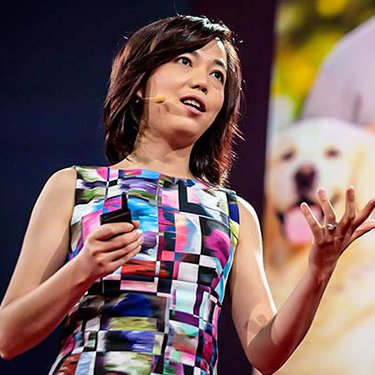
Every one of my mathematician friend sees beauty in the numbers, shapes and the natural phenomena they work with. Who defines beauty in the age of machines?🤔

Jobi retweeted

The reason everyone is working so hard right now is that people kind of feel like something is coming to an end and this is the last opportunity to break out.
Jobi retweeted

If it wasn’t physics for me it would have been law.
Topic: learn how the MICROSCOPE works..

Jobi retweeted

If you spent years developing and honing skills and expertise in specialist areas, you have a greater chance of commanding higher per-hour and project rates within AI training platforms.
Read more: forbes.com/sites/rachelwells…



