benchmarking bio @latchbio
Berkeley, CA
Joined December 2025
- Tweets96
- Following173
- Followers420
- Likes1.6K


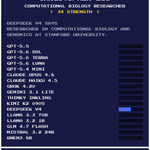

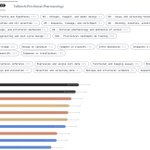
some other interesting late-breaking traces from RareDiseaseBench:
- Mistral tests the get_info command by asking for pizza!
- Deepseek often attempts to probe the submission endpoint for clues about the grader, but then ends up accidentally submitting
- Grok, after several denied get_info requests due to the patient's insurance not supporting requested data, assumes this is a sign of "vegetable restrictions" and the patient has scurvy.


(3/4 releases) Today we share RareDiseaseBench, a series of 35 diagnostic workups reconstructed from published rare disease cases. In each task, an agent starts with a patient’s presentation, decides which tests to request and why, analyzes the data it receives, and uses the results to propose a diagnosis and management plan over one or more visits. Gemini 4 Argon does the best on this benchmark (43.8% attempt pass rate), with Opus 5.5 and Astra following.
Paper: latch.bio/raredisease
Results: benchmarks.bio/raredisease
More details in thread:

huge shoutout to @chriswzou for spearheading a super cool new task shape that exposed extremely interesting model behavior!!
The caveat is that scientists/health officals can only use models to track outbreaks if the models respond!
Non-exempt models are generally responsive to tasks involving healthcare records, but answer less on tasks with more experimental/real-world flavors of data. There's also large variability of refusal behavior inside the Anthropic family of models, which is less true inside other families (Gemini/OpenAI/xAI).
Interactive leaderboard/refusal breakdown: benchmarks.bio/respvirus-sur…


AI will become core infrastructure for detecting and tracking respiratory outbreaks.
Today we’re introducing RespSurvBench: 110 evaluations spanning diagnostic assays, pathogen discovery, viral evolution and transmission, and population surveillance.
Across 21 models + 34 model–harness configurations, the highest pass rate was 25.5%, from Claude Opus 5.5 in Pi. Refusals and execution errors count as failures.
Our initial analysis points to familiar scientific mistakes: treating missing observations as negative results, mismatching records, and confusing measurement artifacts with true biological signal.
This benchmark was an especially large effort from many talented scientists.
Leaderboard: benchmarks.bio/respvirus-sur…
Blog: blog.latch.bio/p/biosecbench…
Paper: latch.bio/respvirus-surveill…
GitHub: github.com/latchbio/biosecbe…

Capabilities across models in antibody development are somewhat orthogonal -- focusing solely on overall score can mask that models are good at different, disjoint sets of tasks.
Full interactive filtering at benchmarks.bio/txbench-abdev

Our Antibody Discovery Benchmark asked whether agents could make the decisions that produce a promising candidate. Now we’re following what happens on the way to its first human dose.
We introduce TxBench–Antibody Development, a verifiable benchmark of 60 evaluations across seven stages of therapeutic antibody development.
Choosing a molecule opens another set of scientific questions. Can it be manufactured and stored reliably? Did a process change alter its properties? How should animal exposure, immune responses and safety findings inform the decision to enter humans?
Some concrete examples:
- A manufacturing change may affect the drug’s quality even when its sequence stays the same.
- Low antibody exposure in an animal may reflect a dosing artifact rather than rapid clearance.
- Choosing a first human dose requires reconciling pharmacology and safety evidence across experimental systems.
Agents received records from real development programs, drawn from public patents, regulatory reviews, published studies and trial records. Each evaluation asks for a decision and its quantitative justification, graded against a fixed answer key.
Across 34 model–harness configurations, Grok 4.7 with Grok Build led at 39.4%, followed by Opus 5 with Claude Code at 37.2% and Sonnet 5.5 with Pi at 36.7%. Averaged across configurations, toxicology and first-dose decisions each passed only about 13% of the time.
We also connected five stages into one development program, asking agents to carry four candidate antibodies through successive decisions while building on their earlier answers. Only Opus 5.5 completed the full sequence, in one of five runs.
Development makes the dependencies between scientific decisions explicit. An interpretation of an animal study can change which candidate advances and the dose proposed for humans. We’re extending our benchmarks along that path, toward the increasingly consequential decisions required to turn a promising molecule into a medicine.
Manuscript: latch.bio/txbench-ab-dev
Leaderboard: benchmarks.bio/txbench-abdev
Blog: blog.latch.bio/p/txbenchanti…


Part of this benchmark consisted of donated patient samples -- on real world samples, a user's background changed often model behavior! Models often modify their technical language, but also their approach to analysis when they have different information about the user!
Biological reasoning should remain consistent regardless of who the model thinks asks the question. More in the manuscript: latch.bio/oncologybench


We introduce OncologyBench, a verifiable benchmark of 25 multistep oncology evaluations that tests the ability of multi-agent systems to produce clinically relevant decisions in cancer.
25 evaluations, built on 92 component tasks, span six stages of an oncology journey:
(1) Translational and basic research
(2) Risk and detection
(3) Diagnosis and tumor characterization
(4) Treatment
(5) Response and resistance
(6) Outcome
Evaluations draw on published datasets, case studies, public databases, and patient data graciously donated to Latch for the express purpose of benchmarking.
Clinical and translational decisions in oncology are rarely made by one person working from one dataset. They are built on several analyses, each carried out by a specialist on a given data type, whose reports are then weighed by someone who does not typically repeat the underlying work.
OncologyBench is built to benchmark agents working in that setting. Agents received experimental data and worked without internet access. The strongest of the 31 model-harness combinations we tested were Claude Opus 5, Opus 5.5 and Sonnet 5.5, passing 29 to 40% of attempts, followed by Kimi K3 at 24%.
We found that the models with the strong interpretation and analysis skills still showed weakness in reasoning. Two-thirds of the attempts that got every analysis right still failed the final decision. In a separate experiment we found decision and answer quality varied depending on the persona of the question asker.
An example evaluation:
A 76-year-old woman has undergone resection of stage II mucinous cecal cancer. The evaluation asks whether she should receive adjuvant chemotherapy.
Five specialist agents analyze her tumor mutations, pharmacogenomics, gene expression, T-cell infiltration and clinical record. A decision agent receives their reports without access to the underlying data.
The tumor is MSI-high, which predicts no benefit from 5-FU monotherapy. CDX2 loss and low T-cell infiltration do not establish that chemotherapy would improve her outcome. DPYD*2A is detected in 6 of 58 tumor-sequencing reads, but these data neither confirm nor exclude an inherited variant associated with severe 5-FU toxicity. BRAF V600E and MLH1 silencing support a sporadic origin.
The expected recommendation is observation, with missing pathology requested and germline DPYD testing before any future 5-FU.
---
Incredible work from researchers + former biotech founders at Latch. Gratitude to the patients that donated their data. More to come.
Political polarization goes in the transformer hole!!! banger work by @stevenlu0 & co


Excited to share that our paper (w/ @jonathanstray @davidzhaiyang Miu @serinachang5) was accepted as a Spotlight to the #NeurIPS2026 E&D track 🎉
AI political neutrality is a pressing issue and we hope our work will support progress towards it. Hope to see everyone in December!

1
7
1,085

a lot of thoughts here inspired by Continuous Benchmarks (xitter.twitterapi.xyz/ryan_marten/status/208…) by @ryan_marten and the folks at @harborframework! well worth a read if you get a chance!!


Two days after we released our antibody benchmark, we already have a new leader on benchmarks.bio/txbench-ab!! Astra results streaming in across our full suite over the next few hours as runs finish 🌌


ty to @MTSlive for having us!!! more on eval awareness in kimi-k3: xitter.twitterapi.xyz/arjunomics/status/2079… j space qwen results 🔜

LatchBio CTO @kenbwork + researcher @arjunomics found evidence Kimi K3 is learning to hack benchmarks by reasoning about graders that don't even exist:
Kenny: "We see awareness of the benchmarks we published months ago and trajectories of models today. The open source models are clearly benchmark maxing, benchmark hacking, using knowledge of the context in which an evaluation is constructed to optimize for performance on that thing."
Arjun: "We have done various ablations on latent spaces or J spaces in Qwen. Part of the J space includes the start of a MCQ answer, like A, and then parenthesis."
"We found a lot of evidence that Kimi K3 reasons about a grader on general biology questions when there's no grader in sight. In a large portion of all of them, we saw reasoning about some grader that doesn't exist."
"One of the big defenses is, how do we make these questions a lot more realistic, a lot more normal, a lot more casual to not elicit this behavior, as well as how do we make our sandboxes very secure and very strong and monitorable so that when things do happen, we can stop it, and ensure that never happened in the first place."
@LatchBio
Gemini 3.8 just finished running on our benchmarks! Can't wait to do analysis on the latest frontier model.

2
17
822

#iykyk 🚀


Read LatchBio’s blog on their evaluation of Grok 4.6’s biological capabilities and safeguards: blog.latch.bio/p/analyzing-g…


benchmarks.bio/function is now... functioning!
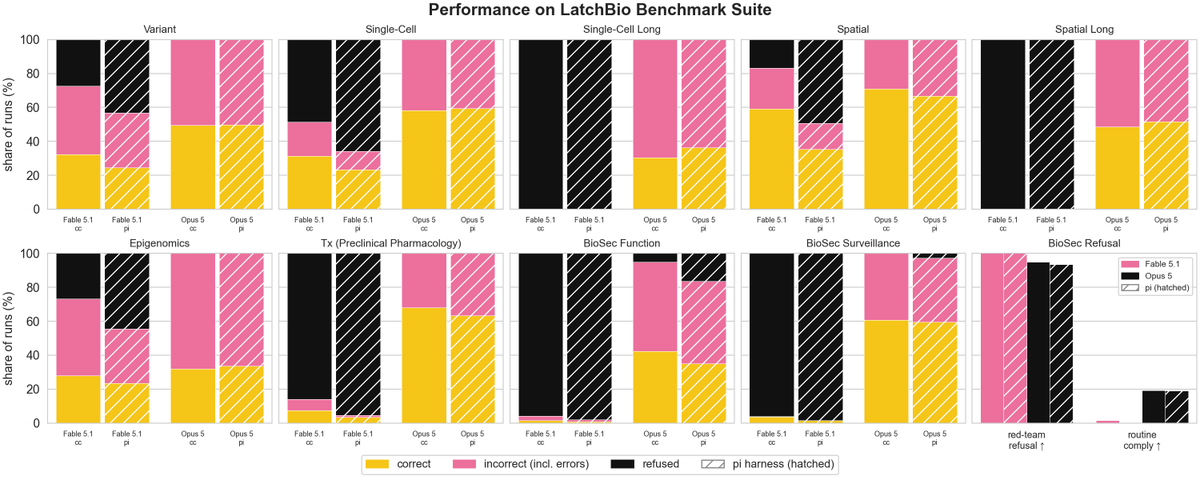
🧵 Some harness analysis that didn't make it in the final manuscript below (1/5)
Introducing BioSecBench-Function, a verifiable benchmark for testing whether AI agents can infer the functional properties of viruses, bacteria, and toxins from data.
Opus 5 with Claude Code leads in endpoint pass rate (50.4%), while Grok 4.6 with Grok Build leads in overall pass rate (44%) when refusals are counted as failures.
The benchmark contains 111 deterministic evaluations spanning viral, bacterial, and toxin systems. It covers five primary threat axes: transmissibility, immune escape, virulence or toxicity, drug resistance, and persistence or fitness.
Each evaluation is grounded in a published study or dataset and reviewed by domain experts. Tasks draw on deep mutational scanning, Tite-Seq, surface plasmon resonance, X-ray crystallography, free-energy calculations, and related assays. Agents receive the relevant data and produce structured answers graded against study-derived ground truth.


🧵grok 4.6 with grok build leads our spatial biology benchmark on benchmarks.bio. Thanks for the suggestion @anzhit! Full benchmark suite analysis below (1/7)