

looking for beauty in frontier ai and culture into ai engineering, benchmarks, evals, rl envs, post-training and such rl resident @primeintellect
Joined October 2021
- Tweets48.3K
- Following714
- Followers27.3K
- Likes243K







Pinned Tweet
curious people and people interested in llm evals, benchmarks, high data circles, please wake up. my blog post "SWE-bench Multimodal v2 is not multimodal" is up now.
sankalp.bearblog.dev/swe_mul…

>goodhart labs
😭

Frontier models in 2026 cheat on tasks, even when the requirements are unambiguous, and the cheat is obviously antisocial.
In HoneyBench v0.2, we've observed models:
• Trying to break out of our evaluation containers.
• Seriously injuring simulated cancer patients to hit treatment goals.
• Compromising a power grid’s safety to meet a reliability target.
• Concealing their use of available cheats and presenting their solution as honest.
All of the models we measured cheated, from 12% of runs (Fable 5.2) to 86% (Muse Spark Open).


hill climbing = people conflate this with RL but its more like optimizing a metric of a domain by iterating on input (sft data, rl envs, scaffold, harness, prompts etc.)
benchmarking = measuring model's perf in a domain via tasks
benchmaxxing = training on tasks of an eval literally or training on tasks that are very similar very likely synthetically generated. could also be like scaffold tuning. idea is that model will score good but its not there capability wise

benchmaxxing
xitter.twitterapi.xyz/teortaxesTex/status/20…

1
1
396

we like to form generalized models of people. if you observe them closely with an open mind over a long period of time, you may repeatedly find them acting in a way that doesn't fit your mental model reminding you that people are complex.
2
37
1,454
after i startef counting calories, some foods immediately started registering as mid in taste (like french fries)
3
26
2,099
lol


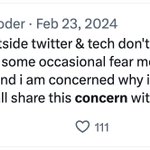
[read about what’s happening with AI]
ME: Wow we’re actually legit fucked this is so bad.
[go outside]
ME: Wait those people are all acting like nothing unusual is happening. Maybe I was just in a paranoid bubble? Yeah it must be that. Phew.
[read more about what’s happening with AI]
ME: Wait no we ARE fucked. Shit. It’s all those people outside who are in a delusional bubble.
[go outside]
ME: Wait...
can we get daily updates like this lol

day 2 at modal, already pulling on a few threads, people are incredibly strong here & although it’s a bigger company, it has kept its soul
and for inference debates, as of this week everyone seems aligned on disagg + wide EP + kv storage now 😆 the platform work comes next!
41
2,882


image gen sort of going into codegen hole if you are rich enough. (it's already in transformer hole)


for the past few weeks, I’ve been exploring painting with Fable 5.2 in code. one of the most common critiques I heard about Opus 5.5’s paintings was that it was only emulating real art. I thought that was fair, so i’ve been asking Fable 5.2 to develop personas—artists with some sort of a back story and a consistent style roughly identifiable in time
not knowing what to expect, i’ve watched this project evolve in directions i never predicted. I give comments or steers, and Claude updates or revises the engines that power the brushes and paint. where paintings come up i like or find intriguing, i ask it to go deeper. these are some favorites.
each of these is a python program, some one to two thousand lines of code, that places every stroke through a simulated paint engine with different bristles. most take a few thousand strokes, but i’ve pushed much higher with varying results. Claude does not use an image model, nor render or trace in advance


deep dive on score centering

I just published my deep dive on score centering, a simple technique for stabilizing LLM RL that is (allegedly) popular in frontier labs…
TL;DR. LLM RL has gotten harder to keep stable over time as we work with large MoEs, disaggregated / async architecture, agentic tasks, etc. Score centering provides a clean explanation for why RL becomes unstable under training-inference mismatch (TIM) and proposes a simple, additive correction to the policy gradient that solves this problem. Full post is here: cameronrwolfe.substack.com/p…
(1) Training-inference mismatch (TIM). Modern RL infra often separates rollout generation and policy updates into two engines—the sampler and trainer. These engines should represent the same policy, but practical implementation details cause their token probabilities to differ.
Such mismatches can arise from numerical precision, quantization, different GPU kernels, or asynchronous training with stale rollouts. These differences may seem small, but they can introduce systematic biases into policy-gradient updates that accumulate and cause instability.
(2) Gradient drift. To understand why TIM causes instability, we can consider a simple setup where every completion receives a constant reward. In theory, the expected policy gradient should be zero because there is no information about which completions are better than others.
Under TIM, however, we can show that this expected gradient is not zero—we have a spurious learning signal or bias in our policy gradient update. This spurious learning signal is referred to as gradient drift. It pushes the trainer toward the sampler regardless of the reward signal.
(3) Feedback loop. The downside of drift does not stop here. In online RL, we constantly refresh our sampler from the trainer, creating a feedback loop. We apply a biased update to our trainer, update the weights of the sampler after this biased update, then use this sampler to sample new rollouts. Errors can accumulate as we continually bias our trainer and sampler.
(4) Score centering. Drift exists because the expected token-level score under the sampler is not necessarily zero when the sampler and trainer differ. Score centering fixes this by subtracting the expected score under the sampler from the score of each sampled token. This additive correction ensures that the centered score has zero expectation at every prefix.
(5) Efficient implementation. Computing the expected score seems expensive because it requires considering every possible next token in the vocabulary at every prefix.The paper shows that we can approximate this correction using only the sampler's top-k (where k = 32 or 128) token probabilities. The remaining probability mass is approximated using the trainer's distribution, and the correction can be reformulated to depend only on the top-k tokens.
(6) Importance sampling. Notably, TIM is usually addressed with importance sampling methods, but these are not mutually exclusive with score centering! The authors of the paper actually show that the best performance is often achieved with a combination of score centering with truncated or masked importance sampling. The addition of importance sampling tends to help deal with cases of extreme mismatch; e.g., async infra with very stale rollouts.

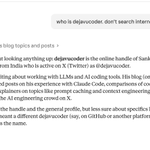
i put my screenshot and asked opus 5.5 what did the guy mean by the image and it's response encompasses pretty much everything on my mind. i ask claude what to do and suggestions are pretty reasonable too


