

Independent Research 🧐 | Quantum/Condensed Matter Physics ⚛️| ZPF Engineering 🛰| Inventor/Futurist 🛠| AVD (Applied Vacuum Dynamics) Founder, QVC and TDVT
Breakaway Civilization
Joined June 2023
- Tweets1.2K
- Following330
- Followers574
- Likes3.1K




Pinned Tweet
// APPLIED VACUUM DYNAMICS LABS //
I am an independent researcher studying and developing new solutions in the realm of theoretical physics and materials science. QVC (Quantum Vacuum Catalyzation) is a new and original quantum theory to explain the world of Zero-Point fluctuations, and how they may be harnessed for enhanced fusion reactions and to invoke exotic phenomena in quantum materials, for enhanced computation, and new breakthroughs in nanotechnology. The vacuum fluctuations are treated as a 'catalyst', where quasiparticles couple in a lattice structure to effectively lower the coulomb barrier of electrons and increase odds of quantum tunneling. I am currently working to get this published on a physics journal for peer review, and eventually develop experimental prototypes for testing on the quantum scale, and eventually scaling up the phenomena to apply to macroscopic scale, so reliable fusion energy can be achieved. These physics are purely theoretical and remain hypothetical predictions until tested and proven experimentally.
AVD currently has been given $1500 in grant funding without equity, enough to research and develop early stages of fusion engineering projects. I am looking for more opportunities soon so I can develop higher-quality prototypes and designs.
Notice: All theories and hypotheses for QVC is my original intellectual works and is under AVD ownership. It is proprietary property, and reference or use of QVC should be clearly cited and given fair credit.

AstroquantPhysics retweeted

Announcing a proof of the Riemann Hypothesis in Lean 4.
philpapers.org/rec/NIEPOT-5
@AltRealityGameX
@ClayInstitute
github.com/startigerjln/Niel…
We beat @OpenAI and @Anthropic

AstroquantPhysics retweeted

He Thinks Malaysia Airlines Flight 370 Was Teleported. Thousands of People Believe Him
Ashton Forbes has found fame on the internet by spreading impossible claims about U.S. military might.
Story: rollingstone.com/culture/cul…

AstroquantPhysics retweeted

I’m very pleased to introduce AlphaGenome 2, @GoogleDeepMind’s next-generation genomics model that deciphers how DNA changes affect cells.
Cells are the basic units of life and key to our understanding of biology. It is an ongoing challenge to predict how DNA changes affect the functioning of different cells, such as for a heart muscle cell or an immune cell fighting an infection, and to uncover cellular drivers of disease.
To make progress on this challenge, we needed to design the architecture of AlphaGenome 2 so its predictions were conditional on cell types and states. This new design enables AlphaGenome 2 to predict variant effects across hundreds of human cell types and adapt to unseen cell and disease states without retraining.
When evaluated on the TenK10K immune cell dataset, AlphaGenome 2 demonstrated a major leap in accuracy over its predecessor. It reliably identified nearly twice as many causal variants (30% vs. 16%) and directional gene effects (43% vs. 23%) compared to the original AlphaGenome. This step-change improvement in precision helps researchers pinpoint previously overlooked disease-relevant variants with high confidence.
Using analysis on retrospective case studies, we were able to show AG2’s real world utility in disease understanding. A landmark study had previously shown that a variant in a distant regulatory switch drives irritable bowel disease by overactivating the ETS2 gene in gut macrophages. When used to make predictions across various immune cell types in the gut, AlphaGenome 2 singled out the exact causal variant and showed that it selectively boosts the ETS2 gene in gut macrophages, leaving other cell types and genes largely unaffected.
I would like to thank my colleagues Adam Gayoso @adamgayoso, Žiga Avsec @Avsecz, and our entire genomics team for their incredible contributions and dedication to bringing this model to life.
We are making AlphaGenome 2 available for non-commercial academic research via the AlphaGenome API, and soon we will release AlphaGenome 2 Skills in Google Antigravity. I’m incredibly excited to see how scientists around the world use this model to make progress on biological understanding and treating disease.
Read more on our blog here:
deepmind.google/blog/alphage…

AstroquantPhysics retweeted

The validation of OpenAI's Yang-Mills construction has been posted by the Yang-Mills Working group.


[Yang-Mills Working Group]
Validation of the OpenAI Yang–Mills construction
(November 10, 2026)
OpenAI-YM-20261028: github.com/yang-mills-group/…
github.com/yang-mills-group/…

AstroquantPhysics retweeted

JUST IN: The U.S. Air Force is exploring AI-powered military spacecraft that could autonomously navigate and operate between Earth and the Moon without constant instructions from ground controllers.
In a newly issued government notice, the Air Force is seeking companies with existing AI and machine-learning software capable of supporting future missions in cislunar space, the vast region surrounding Earth and the Moon.
The technology would enable spacecraft to:
> Independently adjust their trajectories and maintain orbital positions.
> Navigate complex gravitational environments.
> Identify and avoid potential hazards without waiting for commands from Earth.
The Air Force is seeking flight-demonstrated technology that could deliver initial software within 90 days and flight-qualified systems within 18 months of authorization.
The military says the enormous distances involved in cislunar operations make traditional Earth-based command and control increasingly difficult to scale.
The initiative reflects growing Pentagon interest in extending military space operations beyond Earth orbit as lunar activity expands.
Full U.S. Air Force request can be found here: sam.gov/opp/2be442c5e19a4c3c…


Graphene metallic lattice alloy exosuits with ceramic protection

What if a lab could keep experimenting after scientists went home, working from their instructions and using the results to help determine what to try next? Explore how super intelligence and robotics are advancing autonomous labs to accelerate discovery: livermorelab.info/4sQ28fE
26
AstroquantPhysics retweeted

Anthropic has signed nearly $1 trillion in compute and lease commitments.
That’s 7x its cash & short-term investments.
How fast does revenue need to grow?
🤔


AstroquantPhysics retweeted
Can we talk about why we the US don't tell our own top people about our intercepting all such seminal work?
Like our own PhDs. Our own US Physicists. Our own mathematicians. We have been fighting our own scientists since at least 1986, to seemingly aid China.
Why?
This is not Shepherding. This is Interception. For what reason? Why do they get 3.5 weeks of alone time?
Anyone? At all? Does anyone get this? Hello?

Statement #3 of Yang-Mills Group, scientific collaboration shepherding AI result on existence of quantum chromodynamics & completions of the Standard Model, including subproblem proving the existence of the Quantum Yang-Mills theory. buff.ly/BwV89Tk

AstroquantPhysics retweeted

Statement of Yang-Mills Working Group, a scientific collaboration to interpret AI result related to the existence of quantum chromodynamics & completions of the Standard Model, including a subproblem proving the existence of the Quantum Yang-Mills theory. buff.ly/BwV89Tk


AstroquantPhysics retweeted
Three and a half weeks ago, a paper in Yang-Mills theory was intercepted by 5 people. Despite no reason for taking "Custody" nor need for "Shepherding".
Since no one else is saying it, let's review:
2/5: Octogenarians (85 and 88) who have been Washington's "Steady Hands" in Physics and Math for 50 years.
4/5: String Theorists. Despite ZERO mention of String Theory in the work at hand.
1/5: Rennaisance Technologies.
2/5: Stonybrook.
-----
As I have been trying to explain on every major podcast well in advance of this inexplicable 'custody' which happened in front of all our eyes...this is what happens to every major potential change in mathematical physics that comes from outside the "Only Game In Town" crowd. Like clockwork.
This is an enormous story about a tiny number of people: David Gross, Arthur Jaffe, their academic descendants and north shore Long Island. Remove that command and control complex and we go back to being the leading force in theoretical physics.

Statement of Yang-Mills Working Group, a scientific collaboration to interpret AI result related to the existence of quantum chromodynamics & completions of the Standard Model, including a subproblem proving the existence of the Quantum Yang-Mills theory. buff.ly/BwV89Tk
AstroquantPhysics retweeted
In which I go head to head with one of the great mathematical minds of our times on AI.
Hosted by the one and only @TOEwithCurt Jaimungal.
Some of this is hard going to be sure. But this also get's closer to my real voice than you will hear on almost any other podcast. Check it out.
youtu.be/XqgnJyQZGG4?si=VwEA…


AstroquantPhysics retweeted

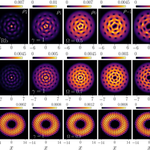
Observation of a supersolid phase in a spin-orbit coupled exciton-polariton Bose-Einstein condensate
In Bose-Einstein condensates, spin-orbit coupling (SOC) produces supersolidity. It is a peculiar state of matter, which, in addition to the superfluid behavior, shows periodic density modulation typical for crystals.
Here, we report the fabrication of an original type of optical microcavity, allowing the achievement of room-temperature supersolidity for a quantum fluid of light. The microcavity is filled with a nematic liquid crystal (LC) and two layers of the organic polymer methyl-substituted ladder-type poly(p-phenylene) (MeLPPP) hosting exciton resonances.
science.org/doi/10.1126/scia…
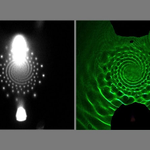
The transition into the supersolid phase is revealed by the appearance of regularly spaced bright fringes in the light emitted from the sample. These fringes indicate that the condensate has spontaneously formed a periodic density modulation—a hallmark of crystallization.
But the experiment revealed something even more remarkable.
With every laser pulse exciting the sample, the fringes appeared at a different position. Each time, the quantum system independently selected one of many equivalent configurations.
"This is a textbook example of spontaneous symmetry breaking," explains professor Guillaume Malpuech from Institut Pascal (CNRS). "Theory predicted that the supersolid could choose among several equivalent states, and that is exactly what we observed."
At the same time, the condensate also exhibited a persistent spin helix—a periodic modulation of the polarization of the emitted light. As a result, the researchers observed two distinct forms of order simultaneously: one in the polarization and another in the light intensity.
The new results demonstrate that similar quantum phenomena can be explored in photonic systems functioning at room temperature.
This opens opportunities for future quantum technologies based on light—from ultrafast photonic devices and neuromorphic computing accelerators to highly sensitive optical sensors exploiting the extraordinary polarization sensitivity of the supersolid phase.
Perhaps even more importantly, liquid-crystal microcavities provide the first electrically tunable platform for investigating supersolid exciton-polariton condensates. Unlike previous systems, their optical properties can be dynamically controlled with an external voltage, offering flexibility for studying quantum phases of light and matter and paving the way toward practical quantum photonic devices.
phys.org/news/2026-11-hybrid…

AstroquantPhysics retweeted

A single qubit starting farther from equilibrium approached it faster than one starting closer in an optical simulation, demonstrating the strong Mpemba effect. @physrevlett phys.org/news/2026-11-optica…

AstroquantPhysics retweeted

Banger paper from Google on quantum AI.
They gave teams of LLM agents the ability to write quantum programs and prove them correct in Lean.
Classical computers can only test quantum algorithms on small instances. A simulation-scored search loop can't reach the sizes where quantum computing becomes useful.
So researchers write a specification and a cost target as a Lean theorem. Agent teams propose programs, the Lean kernel checks correctness and cost, and a separate comparator re-verifies every accepted answer. Teams share results and dead ends on a wiki and meet at scheduled conferences to exchange ideas.
The verified programs cut the cost of quantum arithmetic by 290x against the best prior baseline. Simulations relevant to fusion, photochemistry, and drug metabolism improved by 11x, 8x, and 2.5x.
arxiv.org/abs/2611.09822
Chat with Paper: academy.dair.ai/papers/disco…

AstroquantPhysics retweeted

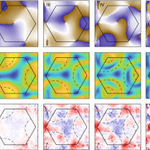
Researchers have constructed a non-invertible chiral symmetry in a 3+1D lattice model — bridging quantum field theory and condensed matter physics while offering new tools to study anomalies on lattices.
Read the paper: go.aps.org/4ApJONh

ALT A rainbow band depicted as a vortex loop, where the band appears to be twisting and folding over itself in places. The loop is a ribbon, and each linking of the ribbon contains a different phase.
AstroquantPhysics retweeted
BREAKING: A robot developed by Caltech and funded by DARPA has successfully built part of a structure in orbit without astronauts, marking what researchers describe as the first autonomous construction of a structure in space.
The experiment, called ASTRA, uses a robotic arm to retrieve individual structural tubes and connecting joints, then assemble them into sections of a larger framework directly in orbit.
Launched aboard a SpaceX Falcon 9 in March, the system has spent approximately six months in space testing the technology.
The robot successfully constructed a new section of a truss structure, demonstrating that spacecraft could eventually assemble large structures from smaller components rather than launching them fully assembled.
The experiment is part of DARPA's NOM4D program, which aims to enable construction of enormous structures in orbit, potentially hundreds of meters or even kilometers across.
Potential applications include:
> Giant space telescopes
> Large satellite communications antennas
> Orbital solar power stations
>Future space infrastructure too large to fit inside conventional rockets
The demonstration did not complete the full planned antenna, but establishes an important proof of concept for autonomous orbital construction.
The technology could eventually allow the size of structures built in space to exceed the physical limits of the rockets used to launch their components.
Link to official report submitted by Caltech: sciencedaily.com/releases/20…

ALT Concept art showing how a NOM4D-inspired device might one day autonomously construct a truss structure in space. Credit: DARPA, Colie Wertz
Physics time, first it was mathematics, now the singularity is unleashed and will give us a UFT within the next 5 years. This is going to be an awesome time in all branches of physics

