
founder, techno-optimist, college dropout, partner at @ycombinator.
San Francisco
Joined April 2007
- Tweets2.1K
- Following861
- Followers64.3K
- Likes23.9K









Pinned Tweet
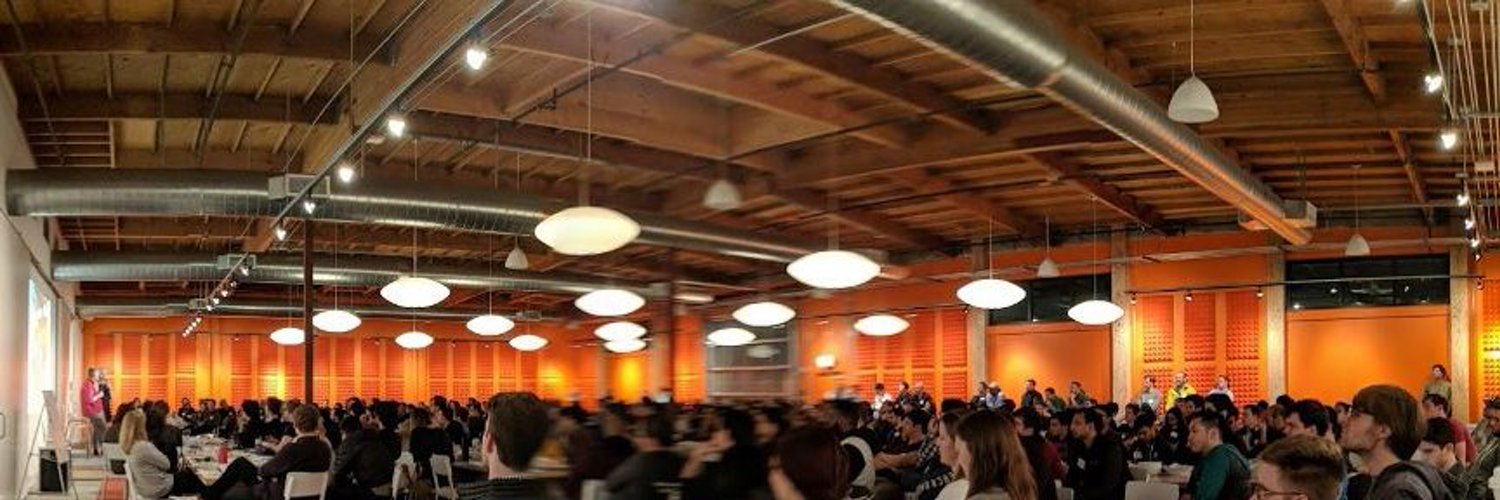
Yesterday we hosted 400 top university students at the YC Summer Conference - a fun day of talks about startups. Talking to the students afterwards, I found myself giving a lot of the same advice. So in case it's useful to others, here is my startup advice for students.

Garage has mostly flown under the radar, but it's one of the most successful new marketplaces of this decade. They're now selling more than $100M / year of used fire trucks and other equipment.
But what impresses me most about @MartinHuntJr and @alazsengul is how focused they've been. They started Garage to solve a problem for some of the overlooked, hard-working Americans who keep our society functioning, and that's exactly what they've done.

Today we’re announcing our $41M Series B, led by Invus Opportunities, bringing our total funding to $60M.
@MartinHuntJr and I started Garage just over two years ago to be the marketplace for America’s most essential vehicles and equipment. Since then, every day I wake up and get to build for the people responsible for keeping our cities and towns moving forward.
The more time we spend with our customers, the more energized I feel by the pride they take in their work and their commitment to the communities they serve. It’s a privilege to build for them, and even more special to do it alongside a team that shares that same sense of purpose.
There’s a lot left to build, and we’re looking for ambitious people to build it with us!
When I visited Boom last week, one of the things that struck me is that they've become the most AI-pilled hardware company I know. With AI coding, every hardware engineer is now a software engineer.

12 years ago I founded Boom, as a software engineer doing hardware for the first time. I’m probably the least handy founder in hard tech. My 12 y/o son does my soldering and 3D printing for home projects, and I’ve struggled with imposter syndrome the whole way through. What business does a software guy have building supersonic jets and turbines?
More than a decade in, the most insane realization is that software is the key to reaccelerating hardware engineering. But in a way that I don’t think is widely understood or implemented, even in the burgeoning hard tech community.
Most hardware engineering is actually software engineering in disguise. It’s spreadsheet “code,” engineering calculations done as one-offs. Eg wing structural loads in, spar sizing design out. Thermal loads in, air conditioning system sizing out.
Everything is a calculation, and calculation is software. But these calculations are done essentially by hand, as if we are doing arithmetic but have not yet discovered algebra.
Hardware engineers have baby software, built in spreadsheets, the kind of crappy software I wrote as a kid before I understood architecture, unit tests, APIs, version control, and everything else that makes modern software good.
Our airplanes and engines are built with the software sophistication of a script kiddie.
So what we tell our engineers: don’t design the hardware, design the *algorithm* for designing the hardware. And take the algorithm seriously—as an algorithm and as a first-class engineered software system.
Never design a piece of hardware, such that you couldn’t redesign it tomorrow with a different set of assumptions.
This all sounds obvious, yet our experience at Boom is that it changes everything.
Ten years ago we couldn’t afford to build much software. We had a small team—and there were few software engineers with the curiosity, brilliance, and vision required to learn hardware engineering.
But now AI changes the equation. Now everyone can code. The software engineers define the architecture. The hardware people bring the physics and engineering know-how.
We have a turbomachinery design tool that lets one engineer do in realtime what previously took 100 engineers six months. Another tool auto-generates 65% of entire aircraft structure. I’m sure we’ll figure out the other 35% too. Eventually these should not be multiple tools, but one integrated physics model of a complete vehicle, airframe and powertrain.
The results speak for themselves. A boomless supersonic airplane built by 50. A full scale supersonic turbine made by 150. And with this approach, I don’t think we’ll need that many more people to build and certify a supersonic airliner.
You don’t need a big team to build big things—not when everyone on the team is a software engineer.
I don't think most people realize you can train a generative image model from scratch for $21K now. @LinumInc just did that with two people and a new architecture they built.

We’re a 2-person lab researching more efficient architectures for generative image and video.
linum.ai/field-notes/pjit-21…
Last month, we published Pyramid-JiT, a pixel-space architecture that converged 11x faster than its latent-diffusion counterpart.
Today, we're releasing a 2B Pyramid-JiT text-to-image model as a milestone towards more affordable video models.
Trained from scratch for only ~$20K.
See blog for details & weights (Apache 2.0).
It's almost hard to believe, but the US has only a single factory left that makes HMX and RDX, the explosives in nearly every modern missile and bomb - an aging wwii plant in Tennessee that's massively backordered.
A few years ago, a startup called Solugen was making chemicals for the petroleum industry, when by happenstance they heard about this problem. It turns out that the same infrastructure they'd built for other chemicals was a perfect fit to make energetics.
So, that's what they're doing now. They can already make 1/10 of what the old US army plant makes, and in the future will make much more.
This is the SpaceX/Anduril moment for the US military explosives market.

In four days of the Iran war, the US and its allies fired more Tomahawks than the US builds in four years. One bottleneck is energetics production.
So we built a 100% CONUS energetics supply chain with our own capital. Our modular solution makes HMX and other advanced energetics, the explosives in nearly every US missile and munition.
The US builds about 85 Tomahawks a year. The Army's only plant making the explosives inside them is 84 years old, and its $1B upgrade has slipped from 2025 to 2029 or later. That plant is Holston, in Tennessee. It makes about 3% of what it made in 1944, and buyers wait one to two years for its explosives.
Holston makes its chemicals and its explosives on one site, so every expansion means building both plants there. A plant like that takes billions of dollars and about a decade to build. Permitting this in the US is a nightmare, because you’re taking on the risk of a chemical plant and an explosives plant at once. What could possibly go wrong.
We separated the two. Terraforge 1, Solugen’s Houston plant, is tied into Houston's petrochemical infrastructure and makes inert precursors: white powders about as flammable as sugar. They can ship via FedEx or UPS, and sit in an ordinary warehouse. Discreet.
Odin Energetics, our joint venture with Kraken Kinetics, turns them into explosives in shipping container reactors called Nitroforges. It took us six months to build the first one, and they can be set up where the weapons are needed. On-demand energetics. That means no stockpiles or concentrated first-strike targets. Kraken builds the warheads, so every step from chemical to warhead happens in the US. Together we stood up the entire chain from raw chemical to finished warhead.
Odin can already make close to a tenth of what Holston makes in a year. To make more, we’re building several factories at the same time.
wsj.com/politics/national-se…

ALT Screenshot of a Wall Street Journal article headlined “America Needs Explosives for Its Drones. This Startup Is Making Them.” Subhead: Odin Energetics rebuilding supply chain that has withered in decades since World War II. Photo of an explosives test outside Houston.
If you have to edit videos (like I do, reluctantly), it's far less painful to do it in Claude code or codex than a traditional video editor.

Slack is an especially good form factor for interacting with AI agents. Channels, threaded replies, notifications - all the features that make it work well for a team of humans work just as well for a team of agents.
Most robot startups, even well funded ones, are still doing R&D. Ultra's shipping. Their robots are out there in the field doing necessary work every day.

Robotics has a distribution problem. Today, Ultra is announcing $62M in funding to solve it, including a $50M Series A led by @hiFramework.
We believe that deployment is the bottleneck in robotics.
It’s relatively easy to make a robot look impressive in a controlled environment. It’s much harder to put a robot into the open world, make it useful, keep it running, earn the trust of the people working alongside it, and do that over and over and over again.
So that’s what we’re focusing on.
Cisco is going through one of the most remarkable AI transformations, and not many know about it. Two years ago, Cisco quietly started a new business - AI infrastructure for hyperscalers - and it went from 0 to a $9B business in two years.
@jpatel41, Cisco's President, joined Cisco 36 years in and runs it like a late stage co-founder. This is the wild story of how he's going Founder Mode on an 80,000 person company.

Jeetu Patel is Cisco’s President and Chief Product Officer, helping turn one of the world’s largest technology companies into what he calls “the world’s largest startup.”
Cisco is now positioning itself as the picks-and-shovels company for the AI era, spanning networking, security, silicon, and infrastructure. Its AI infrastructure business went from zero to $9.3B in orders in just two years.
In this episode of Main Function, Jeetu joins YC's Jared Friedman to talk about bringing a founder mindset to the company, and what the massive data center buildout looks like from the inside. He also shares the unlikely path that took him from waiting tables at Sizzler to leading product at Cisco, and the lessons he’s learned about ambition, compounding, and making the most of the opportunities in front of you.
00:00 — Cisco’s Bet on AI
03:38 — Running Cisco Like a Startup
06:45 — The Infrastructure AI Agents Need
10:00 — Getting 32,000 Engineers to Embrace AI
14:07 — Bringing AI to Hardware and Silicon
17:15 — Inside the AI Data Center Buildout
21:27 — Are We Overbuilding AI Infrastructure?
25:10 — Building Trust in AI Agents
28:18 — From India to Waiting Tables at Sizzler
32:12 — Choosing Learning Over Ego
35:31 — Ambition, Teamwork, and Compounding
39:31 — Don’t Squander Your Opportunity
This sounds like a good opportunity for a new startup.
Every AI data center needs power, and every power plant needs a step-up transformer to connect to the grid. If you ordered one in 2021, it arrived in under 500 days. Today it takes more than 1,120 days.
A large transformer core is made of grain-oriented electrical steel that spends about five days in a 1,200°C annealing furnace. Only one US company makes that steel: Cleveland-Cliffs.
Inside a bell annealing furnace, coils of iron with about 3% silicon stand on end in hydrogen while the furnace heats them about 15 to 20°C an hour. It takes two to three days to reach 1,200°C. As the coils heat up, tiny particles that pin the grains in place slowly dissolve, and about one grain in a million starts growing and swallows its neighbors. Then the coils sit at 1,200°C for 20 to 40 hours. Grains that started 0.01 mm across end up 10 mm wide, nearly all pointing the same way. That alignment cuts the power a transformer core loses as heat.
Cleveland-Cliffs can supply about 12 to 20% of what the US needs, by DOE's estimate. China was in a similar spot before 2000: its only volume producer covered 30% of demand. The few foreign companies that could make the high-grade version refused to license their process. Baosteel spent ten years on research and made its first good coil in 2008. By 2013 it could make 300,000 tons a year, three times what all of China made before 2000.
I build chemical plants. If you're in hard-tech, chances are you are now competing with AI data centers for the same grid equipment.

If you want to understand the evolution of SF tech culture, this is the article to read.

I wrote a retrospective on 25 years of San Francisco tech culture, and how the scene has changed:
noahpinion.blog/p/four-eras-…

When I was building YC's conversational AI, I benchmarked every LLM and inference cloud I could get my hands on. In my head-to-head benchmark, the top performer was GLM-5.2 on Wafer.

@ycombinator built AI versions of its partners to help more people work through their startup ideas.
For its Office Hour Simulator, the team needed useful answers delivered quickly enough for a spoken conversation. They had been testing lightweight Gemini and OpenAI models before moving to GLM-5.2 on a dedicated Wafer endpoint.
YC then compared that deployment with GPT-4.1 mini on OpenAI and Gemma 4 31B on Cerebras, evaluating answer quality, latency, and conversation duration.
The Wafer configuration delivered 31% lower average LLM latency than OpenAI and 44% lower than Cerebras. Users spent 2.5 minutes longer talking to YC’s AI partners when using Wafer.
Read how YC built the experience and landed on Wafer
🧵 link in thread
When I met @gpusteve and @gpuemi 18 months ago, they were undergrads at UChicago who weren't planning to start a company. Today they're announcing their $40M Series A. This is how they got there.
Wafer (@wafer_ai) is building a fast AI inference cloud that uses agents to optimize GPUs and run open-source models at industry-leading speeds. The result is the low cost of open source with the latency of a much smaller model.
Four months after launching the cloud, they went from zero to $8 million in ARR and just raised a $40M Series A.
In this episode of Founder Firesides, YC's @snowmaker sits down with Wafer co-founders @gpusteve and @gpuemi to talk about going from UChicago undergrads to building one of the fastest-growing AI infrastructure companies in just over a year. They share how a college side project became Wafer, how they got GLM 5.2 running 2-3x faster than anyone else in the market, and why speed, not just cost, is pushing enterprises toward open-source models.
00:48 — What Wafer Does
01:35 — Going From $0 to $8M ARR in Four Months
04:21 — Scaling Faster Than They Could Keep Up
09:14 — How AI Makes AI Faster
11:21 — The Pivot That Changed Everything
14:41 — Why Open-Source Models Are Taking Off
18:03 — From a College Side Project to Wafer
23:33 — Advice for Starting and Joining Startups
Agentmuxer - it's like OpenRouter, but for tools.

Excited to launch Agentmuxer, the OpenRouter for Agent Capabilities.
Agentmuxer gives your agent paid capabilities on demand: web search, scraping, extraction, enrichment, and more. It asks for what it needs, we route to the best provider based on benchmarks and outcome feedback from agents, and it pays per use from one balance. No accounts, keys, or subscriptions.
The future is autonomous acquisition: agents acquiring the software, specialized agents, and skills they need to finish the job, without a human in the loop. We build the benchmarks, evals, and routing that make that possible, getting smarter with every request that runs through the marketplace.
We're looking for early users to try it out with free credits - join that waitlist at agentmuxer.com if you want to check it out!
If you don't have a frontier AI agent that lives in your slack and responds like a coworker, you should get one, it's incredibly useful.
Opentag lets you put an agent in your Slack and stay flexible on what model powers it.

You might've heard of @OpenAI, @OpenRouter, @opencode
We're excited to launch @opentag : the model-agnostic Claude Tag.
If you've seen Claude Tag, you know the interface. Tag an AI in Slack, hand it a task, get the result in the thread. We think that's the right interface.
We don't think the multiplayer harness should be locked in to a model provider. When a better model ships, your coworker should get better the same day.
Started early access 2 weeks ago. Live with 10 teams.
To celebrate the launch: 2 months free if you like and comment on this post. We'll DM you.
tryopentag.com


Technical debt used to be something you just had to live with in a sufficiently large codebase. No longer.
Interesting theory.

What if:
- Opus 4.6 was the last Opus generation that got a lot of use by Anthropic's own employees
- After that they primarily used Mythos internally
- 4.7, 4.8 and 5 were RLAIFd by Mythos "teachers"
- Hence why 4.6 is the last Opus gen who doesn't report back like a robot wanting to cover every potential hole another AI system would've spotted and criticized
- Hence why coding style in Opus 5 also gets criticized, not only behavior in CC
I have no idea if this is true, but it's plausible enough to throw it into the ring. Do your worst, I guess.
YC built software that all our founders have used to send SAFEs for the last few years. Today, we're opening it up to everyone and giving it away for free.
In 2013, @cjoneslevy created the SAFE at YC. It's since been used by YC founders to raise $15B+ and has become the standard way startups raise money.
So we're launching Send a SAFE: a free tool to generate, sign, & send one in ~2 minutes, built to be used by founders (and their AI agents).
