
VP Engineering at RudderStack
Joined March 2010
- Tweets277
- Following2.6K
- Followers260
- Likes1.3K


Your event data is already in @Snowflake, @databricks or @ClickHouseDB. Claude builds the dashboards on top. A Claude routine posts the report to Slack every morning.
How much do you still need a product analytics tool?

Starting to roll out today: Claude Whiteboards, Claude Sheets and Claude Data.
Think a plan through on a board, build a tracker in a sheet, and tell a story with your data.
2
187
Companies mentioning Microsoft Fabric jumped the most at +165%.
RudderStack now supports Microsoft Fabric as a warehouse destination on all plans. Give it a try!
rudderstack.com/docs/destina…


$SNOW continues to lose market share, and it's not just Databricks they need to worry about.
While the entire market is growing based on hiring demand, the number of companies mentioning $MSFT Fabric jumped the most at +165%. Databricks grew +40%, while both $SNOW and $GOOG BigQuery increased the least at +15% from a year ago.

1
5
237
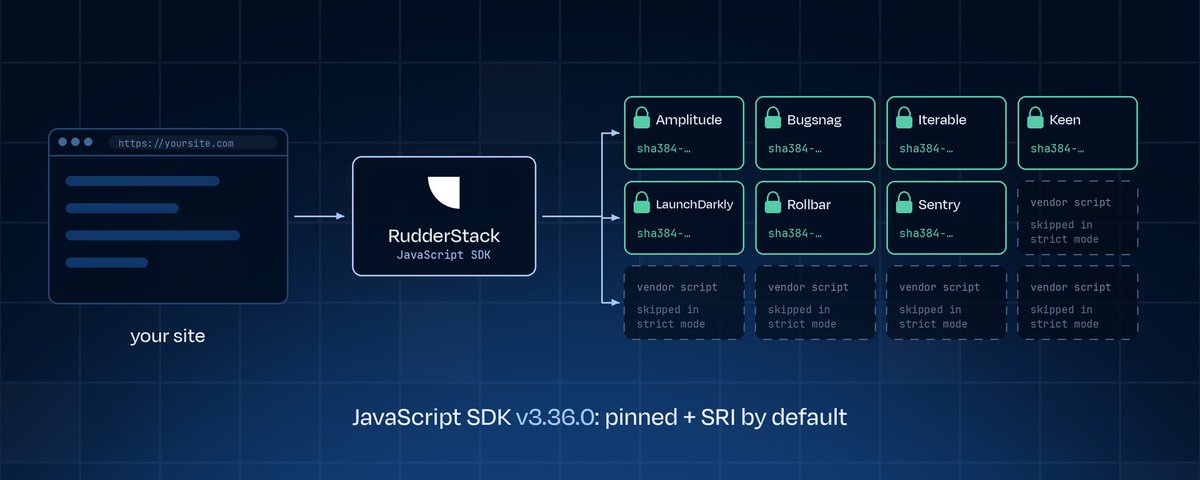
Strongly recommend pinning any web SDKs your apps download at runtime, including the vendor scripts they pull in. We shipped this by default in our JS SDK this week.

I can’t think of a higher value per token than improving Postgres security

Postgres 19’s release is being delayed as maintainers fix existing bugs and address security issues that AI helped uncover.
AI can churn out slop quickly, but it can also make complex software more robust.
Ultimately, it comes down to how you choose to spend your tokens
2
146
Really impressed with all their launches so far. Great going Treg and @jasonzhou1993

Introducing /REA-growth skill
Reverse-engineer any company's growth
- Name any company, get its growth blueprint
- Every move on its timeline: SEO, AEO, ads, social
- $0.58 for a full Lovable teardown
- Fully OpenSource
Try it at treg.to/rea-growth
Partnered with @sharenow_today
Repo link below 👇
1
6
673
Got an email from @WisprFlow with step-by-step instructions to disable voice typing in @meetgranola.
I didn't even know Granola had that feature.
I turned it on and cancelled my WisprFlow subscription.

This blew up more than I expected, so here's a shameless plug.
We open-sourced DevBox this week, the coding agent that now merges about 35% of our internal PRs:
xitter.twitterapi.xyz/soumyadeb_mitra/status…
Today we open sourced DevBox under MIT license.
About 35% of our internal PRs are merged by DevBox now. You can run it on your own machine or run it in your cloud.
Works natively with @linear and @github
github.com/rudderlabs/devbox
16
7,568
We open sourced our autonomous engineering harness.
Quick setup on your machine via docker or run this in your k8s.
github.com/rudderlabs/devbox

Today we open sourced DevBox under MIT license.
About 35% of our internal PRs are merged by DevBox now. You can run it on your own machine or run it in your cloud.
Works natively with @linear and @github
github.com/rudderlabs/devbox
4
1,006
Seeing this inside our own engineering.
Engineers adopt AI on their own first. Their best hacks stay on their laptop.
Our org's real job: turn those personal hacks into shared skills, MCP servers, and clean data access. Otherwise you get 50 private AI workflows, not an AI-native function or company.
The gap isn't only between startups and incumbents. With the companies I've talked to: engineering went AI-native, GTM still runs on 3-4 week loops.
Our next goal, build AI GTM harness that make our own marketing experiment loops take half a day.
4
181
Our learnings from reviewer agents
Day 9 of building DevBox, our internal coding agent.
The biggest jump in quality didn’t come from a better model. It came from fixing how the agent reviews its own work.
DevBox already reviewed its diff before opening a PR. But humans were still catching bugs it should have caught.
So we looked at the traces. The reviewer ran for about 2 minutes, never executed any code, and came back with a short list of opinions.
And the fixer was quietly rejecting medium-severity findings by default, even when the planner had flagged the same risk at the start.
We did try a model upgrade. It caused session errors and we rolled it back. That made it pretty clear the problem was the workflow.
So we rebuilt review.
Each reviewer is now a separate agent that never sees the implementer’s reasoning. It only gets the task, the plan and the diff. The implementer already believes its code is right, so you want a reviewer who wasn’t in the room.
The harness runs reviewers in parallel. A general code review always runs. The planner adds others depending on the change: a bug hunter that traces risky paths to an actual failure, a bird’s-eye reviewer that looks at callers, dependencies and the end goal, plus security and code quality.
A config tweak gets one reviewer. An auth change might get security and the bug hunter too.
Reviewers get a scratch space where they can run tests and repro scripts. If they say something is broken, they have to show it.
A merge agent then dedupes the findings (same root cause, worded differently by different reviewers) and writes one report.
Some rules live in code, not in a model. Critical/high findings without evidence get downgraded, there’s a cap of 8 findings per repo, and the harness decides the final verdict.
Then a fresh fixer agent, with the implementer’s design notes, goes through each finding and either fixes it or writes down why not. The loop has a limit, and anything left over goes into the PR description so the human reviewer sees it.
Our takeaway: when agent quality is bad, look at the process before you swap the model. A smarter model doing a 2-minute review without running anything is still a 2-minute review without running anything.
Tomorrow, the last one: how we measure all of this.

1
112
A few of our customers asked us how much of their traffic is coming from Muse and other AI agents.
We were curious too. @atzoum on our team built a small tool to look at this across 179M sessions.
Sharing what we found.

2
78
Why we moved from Codex CLI to our own orchestration with Deep Agents
Day 7 of building DevBox, our internal coding agent.
We started on Codex CLI. Over the summer we moved stage after stage to Deep Agents. Here's why, and what it taught us about who should own orchestration.
Codex CLI got us to a working product fast. It's a great coding agent.
But we were driving it as a subprocess, and as the workflow grew we kept losing control of three things: what it read, which session it resumed, and whether each step actually ran.
Examples:
• Resume "last session" could pick a sub-agent's session when several shared a folder
• Prompt updates weren't picked up on resumed rounds
• An OOM-killed child process left the pod in an error state we kept polling
We patched around them: resume by marker instead of "last", reinstall the system prompt on resume, detect dead pods.
Each fix worked, but we were building an orchestrator out of workarounds around someone else's CLI.
So we flipped it: Python owns orchestration, the model only does reasoning.
With Deep Agents (LangGraph underneath), each repo gets its own in-process agent with its own context, checkpointed to SQLite, so it resumes exactly where it stopped.
What moved from prompts into code:
• Which files and skills each agent starts with
• Retry and backoff, including rate limits with jitter so parallel workers don't retry in lockstep
• Schemas for every handoff, enforced with structured output
It wasn't a big-bang migration. Each piece shipped behind an experimental flag we could turn on per task: implementation first, then distillation and review.
Old and new ran side by side until the new path won.
One win, previously Codex agents would often ignore the instructions to start per repo subagents unless reasoning was set to high.
This decision now moved to Python orchestration. Deepagent planner reports which repos are involved, harness owns starting implementation agents.
Consistent behavior without unnessary reasoning tokens.
Lesson: let the model reason and let code orchestrate.
Every time we asked a model to "remember to do X next", it eventually didn't. Every time we moved X into code, it stopped being a problem.
Tomorrow: proving the change actually works.

2
58
Building right guardrails from day one was our priority
Day 4 of building DevBox, our internal coding agent. This is an important one.
We assumed the agent will eventually be prompt-injected. What can it do then?
It reads tickets, PR comments, docs and web search results, any of which could carry instructions. And it runs arbitrary code as root inside its sandbox.
So the question is "what can it reach".
Our rule: no real secret ever enters the sandbox.
All egress goes through a proxy. Inside the sandbox, the GitHub token, model API key and search key are literally dummy strings. The proxy swaps in real credentials on the way out. Thanks to the team behind iron proxy (@mslipper).
Even git works this way. Bootstrap rewrites every GitHub URL to HTTPS and adds a header with a dummy token. The proxy replaces it with a short-lived GitHub App token.
A compromised agent can dump its whole environment and find nothing useful.
Same for web search: the agent calls a credential-free MCP URL and the proxy injects the API key.
We also allowlist which search tools the agent can use. We found out the hard way that a typo in the tool names silently allowed everything.

54
Our Devbox is contributing to 35% of our commits every week. This is tightly integrated to rest our AI native stack - Product Agent, PMM agent, Design agent. We took inspiration from a lot of ideas in X, now is the time to share back.
Over the last 6 months, we built DevBox, an internal coding agent at RudderStack.
Delegate a Linear ticket to it and it plans, writes the code, runs tests, reviews its own work and opens a draft PR.
Over the next weeks I'll share how we built it, one problem at a time 🧵
1/10
5
173
Investing early in verification systems will multiply engineering productivity. Our internal verification system validates agentic tests over 300+ repos and 50+ services. This is a game-changer for us.

The future is verification-engineering.
Proofs, (e2e) tests, benchmarks, linters…
Some tests will be deterministic, some agentic. This looks great.
3
100
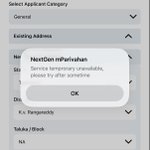
@nitin_gadkari @MORTHIndia I have been trying to update my driving license address with nextGen mParivahan from the last 3 days. I was hopeful in the beginning, but the app keeps throwing an error that service is not available. Frustrating to see that app in pathetic condition.

I've stopped logging into Amplitude and Snowflake.
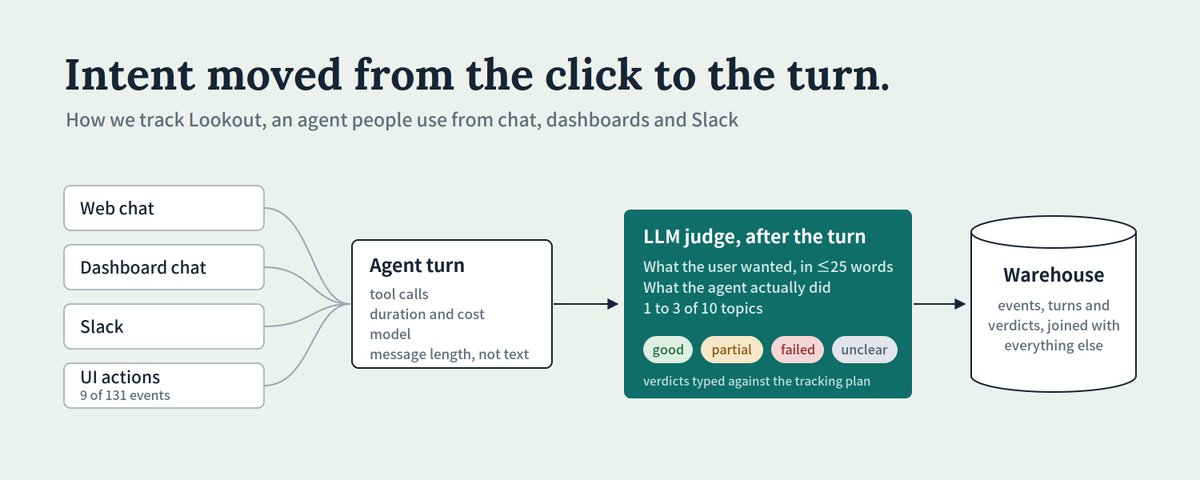
We just launched Lookout at @RudderStack — an AI agent that reads your source repos + DBT models, so it knows why an event was instrumented, not just the count.
Ask in plain English, get answers straight off your warehouse.
@atlys @mohaknahta Terrible customer service from Atlys. I have booked a Visa 2 days ago and have been following up. Different agents give different responses. No number to reach out to clarify. If I ask 4 questions, I get 1 answer. Rest are just ignored, that too once in 4 hours
2
1
83
Excited to announce our Series A funding. We are just getting started.
#customerdata #rudderstack

Today we share some exciting news: RudderStack raised a $21 million series A led by @kleinerperkins, and we’re announcing RSDX, the first #CDP for developers.
Find out what makes RSDX a CDP for developers 👉 bit.ly/3zeLlH3
We're just getting started 🚀
#Customerdata

8