
Accelerate software verification. https://xitter.twitterapi.xyz/t.co/ITzBccyRcT
San Francisco
Joined May 2025
- Tweets46
- Following2
- Followers5.3K
- Likes123



We can help you verify the systems that keep AI agents contained. Get in touch.

We verified a sandbox! Read more about it here: theorem.dev/blog/proving-age…
We built a prototype hypervisor capable of running Linux and proved, down to the machine code, that arbitrary guest code cannot modify host files. More to drop soon!

We verified a sandbox! Read more about it here: theorem.dev/blog/proving-age…
We built a prototype hypervisor capable of running Linux and proved, down to the machine code, that arbitrary guest code cannot modify host files. More to drop soon!
Theorem retweeted

the good news is that we can now start writing fuzz harnesses that exercise the full range of production behaviors. because we won't be running them forever, we'll just prove them.


Theorem retweeted

It didn’t make the final draft, but imo the most exciting story here is that LLMs have unlocked a new *kind* of FV. A human would balk at binary-level verification, because of how tedious it makes the proofs. But LLMs don’t care about tedium. It plays to their strengths.
Theorem retweeted

The bitter lesson of ML is that scale eats all. The bitter lesson of PL is that [efficient] brute force eats all.

Theorem retweeted

I am a total fan of @theoremlabs and what it does to add formal verification to probabilistic LLM's! Important concept broadly.

New on our Frontier Red Team blog: using Claude to formally verify software at large scale.
Formal verification can prove that code is free of certain bugs, but historically it has only been feasible for small codebases (or required a lot of expert time).
With AI models, however, this is beginning to change. In collaboration with @theoremlabs, we used Claude to prove security properties in over one hundred real-world open-source libraries over the span of a few weeks.
Read our research in full here: anthropic.com/research/forma…

Theorem retweeted
Highlights for security folks:
- We're open sourcing thousands of theorem statements from 437 libraries, our Linux process semantics, and ASan for static binaries. Let's turn a lot more fuzz tests into theorems, and get cracking at the proofs!
- OSS Verify: We’ll verify safety properties of critical projects for free. Please enroll!
New on our Frontier Red Team blog: using Claude to formally verify software at large scale.
Formal verification can prove that code is free of certain bugs, but historically it has only been feasible for small codebases (or required a lot of expert time).
With AI models, however, this is beginning to change. In collaboration with @theoremlabs, we used Claude to prove security properties in over one hundred real-world open-source libraries over the span of a few weeks.
Read our research in full here: anthropic.com/research/forma…
Theorem retweeted

Three days before I was pushed out of OpenAI I posted a Formal Verification Manifesto in a core research Slack channel. It listed OpenAI systems that could benefit from formal verification.
The only person who responded was @sama, who was very supportive. Not sure what the moral of this story is, but it's never too late for OpenAI to invest seriously in software & hardware formal verification!
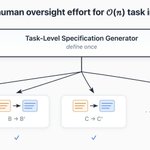
On a more serious note, @theoremlabs and @AnthropicAI did something amazing. They showed how to verify software at scale without requiring developers to write specifications in Rocq or Lean. Instead, they used existing fuzz harnesses as specifications and LLMs to generate machine-checked proofs.
Of course, fuzz harnesses specify only some correctness properties. In the simplest case, the proofs establish crash-safety, not full functional correctness.
We need community-maintained open-source projects with reusable formal specifications and correctness proofs for major libraries, kernels, compilers, virtual machines and hardware.
Human review of critical specifications and LLM-generated patches is essential. A model could satisfy a specification simply by removing functionality.
As AI writes and rewrites critical infrastructure, formal verification should become a key part of AI control. Critical properties of AI-generated code should be machine-checked rather than taken on faith.
AI is making vulnerabilities easier to find and exploit. Frontier LLMs and reusable formal specifications could finally make formal verification practical and economical at scale, while keeping it understandable to humans.
Kudos to Theorem co-founders @rajashree and @diagram_chaser!
New on our Frontier Red Team blog: using Claude to formally verify software at large scale.
Formal verification can prove that code is free of certain bugs, but historically it has only been feasible for small codebases (or required a lot of expert time).
With AI models, however, this is beginning to change. In collaboration with @theoremlabs, we used Claude to prove security properties in over one hundred real-world open-source libraries over the span of a few weeks.
Read our research in full here: anthropic.com/research/forma…
Theorem retweeted
Making sure I state it clearly:
We can literally patch and prove bug-freeness of the entire software stack running in production. With AI that exists right now for ~$100m.
This means no more software-level hacks. I know it sounds too good to be true, but it isn't. AMA.
We formally verified 123 open-source projects in a partnership with Anthropic. Formal verification at scale is here!
Now we’re launching OSS Verify to scale it to the software we all depend on. We prove it’s crash-free or send you the patches it needs. Free for open-source. Let’s bootstrap the verified software ecosystem: theorem.dev/oss-verify

Theorem retweeted

Lots of very sharp folks seem to have joined Theorem lately
Not surprising if you've met @rajashree but still cool to see!
Theorem retweeted

Amazing, they bypassed the need for a formally verified compiler by verifying at the assembly code level.
New on our Frontier Red Team blog: using Claude to formally verify software at large scale.
Formal verification can prove that code is free of certain bugs, but historically it has only been feasible for small codebases (or required a lot of expert time).
With AI models, however, this is beginning to change. In collaboration with @theoremlabs, we used Claude to prove security properties in over one hundred real-world open-source libraries over the span of a few weeks.
Read our research in full here: anthropic.com/research/forma…
Theorem retweeted

How to find ALL PHP bugs:
1. Compile code (e.g. to RISC-V, x86, LLVM IR)
2. Vibe prove ASAN and non-ASAN versions have same behavior across all inputs. Hard, but Claude can do it!
3. Find a LOT of bugs
Super proud of our work. A big step towards finding ALL memory safety bugs
New on our Frontier Red Team blog: using Claude to formally verify software at large scale.
Formal verification can prove that code is free of certain bugs, but historically it has only been feasible for small codebases (or required a lot of expert time).
With AI models, however, this is beginning to change. In collaboration with @theoremlabs, we used Claude to prove security properties in over one hundred real-world open-source libraries over the span of a few weeks.
Read our research in full here: anthropic.com/research/forma…
Theorem retweeted
The thing that excites me the most about formal verification is that we can section off parts of our software and be like “boom, no more bugs here”
Asymmetric defense at scale
New on our Frontier Red Team blog: using Claude to formally verify software at large scale.
Formal verification can prove that code is free of certain bugs, but historically it has only been feasible for small codebases (or required a lot of expert time).
With AI models, however, this is beginning to change. In collaboration with @theoremlabs, we used Claude to prove security properties in over one hundred real-world open-source libraries over the span of a few weeks.
Read our research in full here: anthropic.com/research/forma…
We formally verified 123 open-source projects in a partnership with Anthropic. Formal verification at scale is here!
Now we’re launching OSS Verify to scale it to the software we all depend on. We prove it’s crash-free or send you the patches it needs. Free for open-source. Let’s bootstrap the verified software ecosystem: theorem.dev/oss-verify
New on our Frontier Red Team blog: using Claude to formally verify software at large scale.
Formal verification can prove that code is free of certain bugs, but historically it has only been feasible for small codebases (or required a lot of expert time).
With AI models, however, this is beginning to change. In collaboration with @theoremlabs, we used Claude to prove security properties in over one hundred real-world open-source libraries over the span of a few weeks.
Read our research in full here: anthropic.com/research/forma…
Theorem retweeted

guess we'll just verify all of the software then

Last week some of South Korea's biggest banks were hit by a cyberattack. Thanks to a report from CrowdStrike tonight, we now know the entire hack may have been done by a single person. He used a combined stack of an open-source AI penetration tool named ARTEX, DeepSeek v4.1-Flash, GLM-5.3, Grok 4.6, and Claude Code.

Theorem retweeted

We’re organizing Vibecheck, a formal methods hackathon with some of the best folks in the space - @maxvonhippel, @qd_forall, @nolanlwin, @jessemhan, @emiyazono, and @workersio.
You’ll get a weekend to build real production software, and formally verify it.
We’ll have people who really know their stuff around to help, and you can come with a team, find one there, or just hack on something yourself.
We are glad to have a phenomenal group of sponsors, including @harmonicmath, @mathematics_inc, @theoremlabs, @thegp, @omnicom, @primeintellect, @astriolabs, @buildwithparty, @wearerandomlabs, and @lanyon_ai, as well as some more we will announce in the coming days!
If you’re a hacker, a formal methods person, or just someone who thinks “how do we know it works?” is an interesting question, we’d love to have you.
Signup Now: fmxai.org/vibecheck/
Theorem retweeted
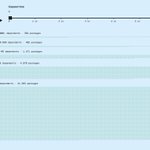
Let's verify all the software -- finally published a botec on how much it might cost. Some headline numbers and estimates:
- ≈$400M: all of nixpkgs in ≈5 yr on a $100M/yr budget, if AI capability keeps doubling every 8 months
- ≈$134M: 95% of the code by end of 2027, if we speed that up 4× for verification
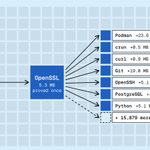
- program size is heavy-tailed, most software is small; the median binary is about 30 KB, and verifying just 9 MB is enough to cover all deps of ⅔ of all code
- verification of Linux+Firecracker would cost ≈$1M
theorem.dev/blog/verified-so…

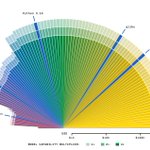
More parallelism speeds us up, up to ~$80M a year. The largest binaries are the bottleneck.
After that, better models get us there faster. If capability on this task doubles every two months, 95% of nixpkgs could be proved by the end of 2027, at $134M in total.
1
18
632
We can start building the verified software stack now.
Explore the roadmap: theorem.dev/blog/verified-so…

22
572