

Groundhog Day
California, USA
Joined November 2022
- Tweets49.2K
- Following3.3K
- Followers1.5K
- Likes11K





Pinned Tweet
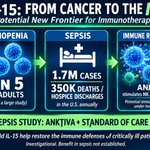
🚨 ANKTIVA IS MOVING INTO SEPSIS — and NO BCG IS REQUIRED.
“This will be the first trial to stimulate NK and T cell activity and address lymphopenia as the immunological cause of death in sepsis. Millions of lives!” — @DrPatrick
This could be one of the most interesting new applications of ANKTIVA.
Dr. Patrick Soon-Shiong is advancing an approach that targets lymphopenia — the loss of critical immune cells — by stimulating natural killer (NK) cells and T cells.
WHY IS THIS IMPORTANT?
Sepsis isn’t just an infection problem. In critically ill patients, the immune system can become severely suppressed. Persistent lymphopenia is associated with poor outcomes and increased mortality.
The Phase 2 program will investigate whether ANKTIVA can help restore immune activity and improve survival.
WHAT DOES THE TREATMENT LOOK LIKE?
ANKTIVA alone, administered subcutaneously (under the skin).
NO BCG REQUIRED.
Given alongside standard sepsis care.
Evaluating 28-day mortality and immune recovery.
WHY SHOULD INVESTORS PAY ATTENTION?
Approximately 350,000 U.S. deaths from sepsis annually.
A novel approach targeting immune suppression.
Completely independent of BCG supply.
Mid-to-late 2027: Potential 28-day mortality data readout.
THE BIG QUESTION:
Can stimulating NK and T cells change outcomes in patients suffering from sepsis-induced immune suppression?
Still early. No proven survival benefit yet. But the science, enormous unmet medical need, and potential application make this program worth watching.
ANKTIVA. BEYOND BLADDER CANCER. A POTENTIALLY IMPORTANT NEW FRONTIER.
@DrPatrick @ImmunityBio $IBRX
🤖 Made with AI


They Can Fire Jensen For $0. It Will Cost Them $600 Billion.
The board can fire Jensen for $0.
He has no contract. No golden parachute. 's proxy says he serves "at will" with NO severance agreement.
But here's what they forgot:
He still owns 870M shares. 3.58% of Nvidia. ∼$150 BILLION. Largest individual shareholder.
And that's just HIS money.
Nvidia is a ∼$4 TRILLION company. If they fire him and the stock drops 15% — that's $600 BILLION gone from market cap. For everyone holding.
So you fire him... then you have to BEG him to come back as a contractor/consultant to save the stock?
He's gonna name his price. He doesn't need the money. He can start a competitor tomorrow and take the engineers with him.
Firing him is free. Keeping him after you fire him is gonna cost a shit load.
This isn't governance. This is suicide.
#NVDA # Nvidia #JensenHuang #AI #StockMarket #WallStreet

63
This is actually GREAT news, caz now we know he's not a spy target — he's just a horn dog with zero chill.
The first story was all like, "Oh no, Chinese intelligence seduced the CEO of NVDA to steal AI secrets!"
And now the second story is like, "Oh, also he allegedly hooked up with his own VP."
Sir, that's not espionage. That's just HR's worst nightmare. That's a man who sees a "Do Not Enter" sign and takes it as a personal challenge.
If he was a spy asset, he'd be discreet. This man is out here collecting affairs like they're Pokemon cards. At this point the only national security risk is that Nvidia's Slack is gonna need a whole new HR department.
He's not James Bond. He's just Horny Bond.

*NVIDIA CEO JENSEN HUANG IMPLICATED IN SECOND AFFAIR WITH SUBORDINATE VP OF HEALTH CARE AT NVIDIA KIMBERLY POWELL - NEW YORK TIMES
*JENSEN HUANG HUNG UP ON NEW YORK TIMES REPORTER WHEN ASKED ABOUT THE RELATIONSHIP
72
🚀 WHAT COULD HAPPEN IF ANKTIVA’S SEPSIS PHASE 2 DATA ARE POSITIVE?
This is where the opportunity gets particularly interesting for $IBRX investors.
A strong Phase 2 result could do more than validate ANKTIVA’s potential in sepsis. It could open the door to a faster FDA development and review strategy.
FOUR FDA MECHANISMS COULD BECOME IMPORTANT:
🟢 1. BREAKTHROUGH THERAPY DESIGNATION
Could be among the most valuable early designations. If preliminary clinical evidence demonstrates substantial improvement on a clinically significant endpoint, this designation could bring intensive FDA guidance and help accelerate development.
🟢 2. FAST TRACK DESIGNATION
Could provide more frequent FDA meetings, closer communication, and eligibility for rolling review of a future application.
🟡 3. ACCELERATED APPROVAL
A possibility depending on the strength of the clinical evidence, the endpoint, and FDA agreement. For a serious condition with significant unmet need, an appropriate surrogate or intermediate clinical endpoint could potentially support this pathway.
🟢 4. PRIORITY REVIEW
If a future marketing application qualifies, FDA’s target review time is six months rather than the standard ten months.
WHY THE 2027 DATA MATTER
A compelling Phase 2 readout could potentially support:
●FDA discussions about Breakthrough Therapy or Fast Track.
●Agreement on the design of a pivotal study.
●Exploration of an appropriate accelerated development or approval strategy.
●A potentially shorter path to a regulatory decision.
AN IMPORTANT COMMERCIAL DIFFERENTIATOR
The sepsis approach is being investigated with ANKTIVA administered subcutaneously alongside standard-of-care treatment — without BCG.
A positive result could open the door to an entirely new application for ANKTIVA, independent of BCG supply logistics.
ONE IMPORTANT CAVEAT: ENROLLMENT, FUNDING AND TIMING
ClinicalTrials.gov dates are estimates, not guarantees. Enrollment, participating-site activation, patient eligibility, and follow-up will determine when meaningful data become available.
Moving from a positive Phase 2 into a larger pivotal study or regulatory filing will also require substantial capital, operational resources, and execution.
A delay in enrollment or funding could push the anticipated timeline further out.
WHAT WOULD MAKE THE DATA COMPELLING?
●A meaningful 28-day mortality signal.
●Evidence of NK-cell and T-cell activation.
●Improvement in lymphopenia.
●An acceptable safety profile.
●Results strong enough to justify a larger pivotal study.
THE BIGGER PICTURE
The FDA already has tools designed to help promising treatments for serious diseases reach patients faster.
Breakthrough Therapy and Fast Track could be among the more immediate regulatory discussions following compelling Phase 2 results. Accelerated Approval and Priority Review would require additional evidence and regulatory steps.
The opportunity is significant, but the gating items remain enrollment, clinical results, funding, and execution.
2027 COULD BE A VERY IMPORTANT YEAR FOR ANKTIVA AND IMMUNITYBIO.
@DrPatrick @ImmunityBio $IBRX
Regulatory pathways are possibilities, not guarantees. All designations and approvals are subject to FDA criteria and review.


🚨 ANKTIVA IS MOVING INTO SEPSIS — and NO BCG IS REQUIRED.
“This will be the first trial to stimulate NK and T cell activity and address lymphopenia as the immunological cause of death in sepsis. Millions of lives!” — @DrPatrick
This could be one of the most interesting new applications of ANKTIVA.
Dr. Patrick Soon-Shiong is advancing an approach that targets lymphopenia — the loss of critical immune cells — by stimulating natural killer (NK) cells and T cells.
WHY IS THIS IMPORTANT?
Sepsis isn’t just an infection problem. In critically ill patients, the immune system can become severely suppressed. Persistent lymphopenia is associated with poor outcomes and increased mortality.
The Phase 2 program will investigate whether ANKTIVA can help restore immune activity and improve survival.
WHAT DOES THE TREATMENT LOOK LIKE?
ANKTIVA alone, administered subcutaneously (under the skin).
NO BCG REQUIRED.
Given alongside standard sepsis care.
Evaluating 28-day mortality and immune recovery.
WHY SHOULD INVESTORS PAY ATTENTION?
Approximately 350,000 U.S. deaths from sepsis annually.
A novel approach targeting immune suppression.
Completely independent of BCG supply.
Mid-to-late 2027: Potential 28-day mortality data readout.
THE BIG QUESTION:
Can stimulating NK and T cells change outcomes in patients suffering from sepsis-induced immune suppression?
Still early. No proven survival benefit yet. But the science, enormous unmet medical need, and potential application make this program worth watching.
ANKTIVA. BEYOND BLADDER CANCER. A POTENTIALLY IMPORTANT NEW FRONTIER.
@DrPatrick @ImmunityBio $IBRX
Senator Cramer Calls for Jensen Huang to Resign Over Alleged National Security Risk
Kevin Cramer calling for Jensen Huang’s resignation? That’s a classic case of the pot calling the kettle black.
Before lecturing others about personal integrity and accountability, Senator Cramer should take a closer look at his own record.
Over multiple election cycles, Cramer’s campaigns paid his wife, Kris, more than $100,000–$150,000 in campaign salary as his manager, paid other family members, paid a daughter’s video company, and reimbursed him hundreds of thousands of dollars in campaign expenses. Opponents and watchdogs criticized what they described as running the campaign like a family business.
A 2018 FEC complaint questioned mileage and per-diem reimbursements to Cramer and his wife. The FEC ultimately found no reason to believe a personal-use violation had occurred and closed the matter. But legal compliance doesn’t necessarily erase questions about judgment, transparency, and optics.
Cramer has built much of his public image around Christian values, family principles, and personal integrity. So where are the grace, forgiveness, and understanding? Why does he feel entitled to judge Jensen Huang’s marriage and family or decide what is best for Lori? Those are deeply personal matters, not decisions for a senator to make.
Huang has acknowledged being unfaithful. However, allegations that the woman involved was connected to Chinese intelligence remain allegations, not established proof that Huang knowingly compromised national security. The distinction matters.
Cramer sits on the Senate Banking Committee, which has jurisdiction over important financial and economic issues, including aspects of technology and export-control policy. When a sitting senator publicly declares that the CEO of the world’s leading AI-chip company “has got to go,” his words carry enormous weight.
Does he understand the potential consequences? Public calls for a CEO’s resignation can undermine investor confidence, affect stock prices, create uncertainty for employees, and impact millions of shareholders.
Nvidia is not just Jensen Huang. Millions of investors, employees, and businesses have a stake in its future.
National security concerns deserve serious investigation based on evidence, not public pressure based on allegations that have yet to be established. Using a position of political influence to amplify unproven personal allegations is irresponsible and risks turning legitimate oversight into political theater.
If integrity and accountability are the standards, they should apply to everyone—including politicians.
People in glass houses shouldn’t throw stones.
National security deserves real scrutiny. Selective moral outrage and political grandstanding do not.
Before pointing fingers at Jensen Huang, Cramer should make sure he’s holding himself to the same standards he demands of others.
@SenKevinCramer @nvidia @jensenhuang #NVDA


🚨 Enough speculation. Time for facts on the NVDA situation.
Trump already confirmed he asked Jensen and believes he didn’t know. That’s on the record.
What is still missing is any formal public finding from the FBI review, the intelligence assessment, or NVIDIA’s own board investigation.
The uncertainty is weighing on NVDA and the broader AI complex. It has already triggered a shareholder lawsuit. A clear statement on what is actually known would help stop the damage.
Release what can be released. Distinguish evidence from allegation.
@realDonaldTrump @SecRubio @NVIDIA @JensenHuang @FBI @howardlutnick @RepMoolenaar
#NVDA #AI
🤖 Made with AI

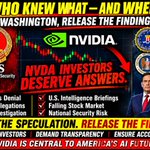
🚨🇺🇸 PRESIDENT TRUMP — THE TIME FOR ANSWERS IS NOW!
RELEASE THE NVDA FINDINGS. STOP THE MARKET BLEEDING. RESTORE INVESTOR CONFIDENCE.
America’s AI industry and investors cannot continue operating under a cloud of unresolved allegations, conflicting reports and uncertainty.
President Trump has publicly stated that he asked Jensen Huang whether he knew the woman was a spy, that Jensen said no, and that he believed him.
We acknowledge that statement.
But that does not eliminate the need for formal investigative findings and transparency.
THE QUESTIONS REMAIN:
🔴 What has the FBI actually established?
🔴 What did U.S. intelligence know, and when?
🔴 Was NVIDIA warned about the alleged threat?
🔴 Has any NVIDIA technology or national-security information been compromised?
🔴 What are the findings of NVIDIA’s board review, and what remains under government investigation?
WE ARE CALLING ON PRESIDENT TRUMP AND HIS ADMINISTRATION TO ACT:
1.Release all investigative findings that can legally be made public.
2.Clarify the timeline of intelligence briefings and government knowledge.
3.Distinguish verified evidence from allegations and speculation.
4.Communicate responsibly to restore market confidence.
5.Investigate any unlawful conduct and pursue accountability where evidence supports it.
PRESIDENT TRUMP: AMERICA’S AI/SI LEADERSHIP IS AT STAKE.
Secretary Rubio, the intelligence and national-security community, and the relevant investigators must help provide clarity.
NVIDIA is a cornerstone of America’s AI infrastructure. Its investors, employees and the entire semiconductor industry should not be left navigating an information vacuum.
We are not asking for special treatment for Jensen Huang.
We are demanding facts, fairness, transparency and accountability.
STOP THE UNCERTAINTY. RELEASE THE FINDINGS. STOP THE BLEEDING. RESTORE CONFIDENCE.
America deserves answers. NVIDIA investors deserve transparency. America’s AI future deserves leadership.
@realDonaldTrump @WhiteHouse @SecRubio @NVIDIA @FBI @CIA @NSAGov @TheJusticeDept
$NVDA
#NVDA #NVIDIA #JensenHuang #SemiconductorInvestors #StockInvestors #WallStreet #StockMarket #AI #ArtificialIntelligence #InvestorProtection #MarketConfidence #NationalSecurity #Transparency #Accountability #Semiconductors #TechInvesting

80
🚨🇺🇸 PRESIDENT TRUMP — THE TIME FOR ANSWERS IS NOW!
RELEASE THE NVDA FINDINGS. STOP THE MARKET BLEEDING. RESTORE INVESTOR CONFIDENCE.
America’s AI industry and investors cannot continue operating under a cloud of unresolved allegations, conflicting reports and uncertainty.
President Trump has publicly stated that he asked Jensen Huang whether he knew the woman was a spy, that Jensen said no, and that he believed him.
We acknowledge that statement.
But that does not eliminate the need for formal investigative findings and transparency.
THE QUESTIONS REMAIN:
🔴 What has the FBI actually established?
🔴 What did U.S. intelligence know, and when?
🔴 Was NVIDIA warned about the alleged threat?
🔴 Has any NVIDIA technology or national-security information been compromised?
🔴 What are the findings of NVIDIA’s board review, and what remains under government investigation?
WE ARE CALLING ON PRESIDENT TRUMP AND HIS ADMINISTRATION TO ACT:
1.Release all investigative findings that can legally be made public.
2.Clarify the timeline of intelligence briefings and government knowledge.
3.Distinguish verified evidence from allegations and speculation.
4.Communicate responsibly to restore market confidence.
5.Investigate any unlawful conduct and pursue accountability where evidence supports it.
PRESIDENT TRUMP: AMERICA’S AI/SI LEADERSHIP IS AT STAKE.
Secretary Rubio, the intelligence and national-security community, and the relevant investigators must help provide clarity.
NVIDIA is a cornerstone of America’s AI infrastructure. Its investors, employees and the entire semiconductor industry should not be left navigating an information vacuum.
We are not asking for special treatment for Jensen Huang.
We are demanding facts, fairness, transparency and accountability.
STOP THE UNCERTAINTY. RELEASE THE FINDINGS. STOP THE BLEEDING. RESTORE CONFIDENCE.
America deserves answers. NVIDIA investors deserve transparency. America’s AI future deserves leadership.
@realDonaldTrump @WhiteHouse @SecRubio @NVIDIA @FBI @CIA @NSAGov @TheJusticeDept
$NVDA
#NVDA #NVIDIA #JensenHuang #SemiconductorInvestors #StockInvestors #WallStreet #StockMarket #AI #ArtificialIntelligence #InvestorProtection #MarketConfidence #NationalSecurity #Transparency #Accountability #Semiconductors #TechInvesting


I posted about this earlier under @Truedat999: the 84.4% “clinical cancer benefit” claim comes from a paper that has been FORMALLY RETRACTED.
Official retraction: ar.iiarjournals.org/content/…
PubMed (marked RETRACTED): pubmed.ncbi.nlm.nih.gov/4220…
Earlier thread: xitter.twitterapi.xyz/truedat999/status/2116…
Key problems with the claims and the kits:
• Retracted study used ivermectin + mebendazole. Advertised kits push ivermectin + fenbendazole (different combination).
• Outcomes were self-reported surveys only — no independent imaging or clinical verification.
• ~38% of the original cohort never completed follow-up.
• Many patients were also on chemo, radiation, or surgery, so benefit cannot be cleanly attributed to the antiparasitics.
• ASCO’s May 2026 clinical notice specifically cautions against ivermectin and fenbendazole for cancer outside proper trials.
• Fenbendazole is a veterinary drug with no FDA approval for human cancer use. High-dose use has documented liver-injury risks.
• @DrDavidThoh4 is a self-described Oklahoma lung-cancer patient (account created Sept 2026) with no publicly listed hospital, clinic, or active medical practice. He is selling $250–$350 kits and has offered $800 consultations that include the products.
• No manufacturer, lot testing, or prescribing physician is identified for the kits.
Basic questions that still need answers:
• Who is manufacturing and testing these medications?
• What medical qualifications does the person using the title “Dr” hold?
• Are buyers clearly told these are not FDA-approved cancer treatments and that the main supporting study has been FORMALLY RETRACTED?
• Who is responsible if someone has an adverse reaction or delays proven care?
• Does the FDA consider these kits and cancer-cure claims to be unapproved drug products or illegal marketing that falls under its enforcement authority?
Cancer patients deserve evidence, not sales pitches built on withdrawn research. Delaying proven care is the biggest practical risk.
I am asking @FDA @FTC @theNCI @AmericanCancer @ASCO @OKMedicalBoard and relevant state medical regulators to review these claims and advertisements.
Please share.
#CancerAwareness #PatientSafety #CancerMisinformation #FDA #CancerResearch #ProtectCancerPatients #ASCO #MedicalMisinformation #EvidenceBasedMedicine #CancerCare


$MDAI (Spectral AI) reports Q3 2026 earnings today, November 10, 2026, after the market close.
• Results release: After Nasdaq close (after ~4:00 PM ET / 1:00 PM PST).
• Conference call: 5:00 PM ET (2:00 PM PST) today.
Analyst estimates (consensus):
• EPS: about -$0.14
• Revenue: about $5.33 million
Last quarter (Q2) they reported -$0.13 EPS (a small beat) on $3.52M revenue. The company confirmed the date and 5:00 PM ET call in late October.
Note: “After market close” timing for the press release can vary slightly by company; the call is firmly scheduled for 5 PM ET.
HERE IS THE PART TAXPAYERS NEED TO UNDERSTAND:
Unlicensed street grilling of meat on shopping carts raises serious food-safety concerns. Where are the proper equipment, refrigeration, sanitation, approved food sources, and inspections?
Licensed restaurants and vendors pay for permits, insurance, inspections, and compliance. Why should businesses following the law compete with operations that may be ignoring it?
BUT HERE’S THE BIGGER ISSUE:
What happens when customers get seriously sick and sue?
The vendor could be held liable. And if government negligence can be established, the city or state could also face lawsuits. Successful settlements or judgments against public entities can ultimately be paid with taxpayer money.
Taxpayers already fund health departments and inspectors to PREVENT these problems. Why should the public potentially pay again for failures that proper enforcement could have prevented?
And what about food traceability, cross-contamination, and repeat offenders? If someone gets sick, can authorities identify where the meat came from and whether other customers are at risk? Consumers shouldn’t have to gamble with their health or become their own food inspectors.
This isn’t just a New York issue. California, New York, Illinois, New Jersey, Massachusetts, Washington, Oregon, Colorado, and communities across all 50 states need consistent enforcement.
This isn’t about immigration or nationality. It’s about public safety, fair competition, government accountability, and protecting taxpayers.
WHY WAIT UNTIL PEOPLE ARE HOSPITALIZED AND LAWSUITS ARE FILED? ENFORCE THE LAWS BEFORE SOMEONE GETS HURT.
Who should be held accountable when preventable public-health failures cost taxpayers money?
@NYCMayor @nycHealthy @NYCSanitation @NYCComptroller
#FoodSafety #TaxpayerAccountability #GovernmentAccountability #PublicHealth #EqualEnforcement #All50States

Just to expand on why I said $IBRX — if this platform actually scales, a lot of people are going to look back in 2036 and wish they paid attention earlier. Here’s why it could be that kind of setup:
Yeah, this is the one that actually makes sense when you look at it straight.
ANKTIVA is already commercial with those ~99% gross margins and the big YoY ramp. That’s not a science project. It’s authorized in 34+ countries, Macau is live in Asia, and they’re still pushing into places like Korea and Japan with local partners. First-line bladder trial just locked the database. They also locked up exclusive U.S. rights to the Tokyo BCG strain — the SWOG S1602 Phase III trial showed it was non-inferior to TICE BCG, which matters because the BCG shortage has been the real bottleneck limiting the market.
In BCG-unresponsive bladder cancer it’s already differentiated. ANKTIVA + BCG has shown 62–71% complete response rates with responses lasting beyond 53 months and ~84% cystectomy avoidance at 3 years. That’s ahead of Keytruda (~41% CR) and Adstiladrin (~51% CR). CG Oncology’s oncolytic virus has reported higher early CR numbers but is still in trials. J&J’s TAR-200 is emerging with local chemo delivery. ANKTIVA is the only approved IL-15 superagonist — it activates NK + T cells and promotes memory formation rather than just blocking a checkpoint or delivering local therapy.
IL-15 is a natural signal the body uses to activate natural killer cells and T cells and help form memory cells. A superagonist is an engineered version that delivers a stronger, longer-lasting signal. That mechanism is not limited to the bladder. The bigger point is lymphocyte rescue — restoring a weakened immune system so it can fight disease again. Lymphopenia has an ICD-10 code now and is billable. They’re going after sepsis, HIV, lung, and the lymphocyte rescue angle in general.
These aren’t small markets. Sepsis: 166 million cases and 21 million deaths in a single year (Lancet 2021 data). HIV: about 41 million people living with it worldwide. Long COVID: estimates run into the hundreds of millions of people who have had it. Even if only a subset with persistent lymphopenia is addressable, the patient populations are large enough that commercial scale can happen fast if the data land.
If the Phase 2s hit, RMAT lets FDA move faster. RMAT is Regenerative Medicine Advanced Therapy — it gives earlier and more frequent FDA meetings, potential for rolling review, and Priority Review eligibility. It’s narrower than Breakthrough Therapy or Fast Track but more tailored to regenerative medicine products like this, which is why it can actually compress timelines when the early data are strong.
Still under $10B with short interest sitting there while the commercial side is early and multi-million-patient indications are opening. No direct competition on the mechanism. Patents past 2035. Jim Yong Kim joining as Vice Chairman isn’t nothing either.
If the bladder franchise scales, the first-line label expands, and even one of the bigger indications (sepsis or lymphocyte rescue) starts to land by the early 2030s, this is the kind of platform that can re-rate hard. People who waited on the early commercial stage of other platforms later regretted it. By 2036 the question is whether this ends up looking like a single-product biotech or the backbone of a lymphocyte-rescue franchise.
It’s not a one-drug story. That’s the setup people are going to wish they caught earlier.
Watch the next earnings. If the sales ramp holds and the first-line data land, a lot of people will start paying attention. Don’t wait until the story is obvious.
What’s your take — is the platform angle real, or is this still just a bladder story?
$IBRX #ANKTIVA #NMIBC #BladderCancer @DrPatrick @JimYongKimWBG @ImmunityBio @BladderCancerUS $NVDA
Why $IBRX can explode by 2036 the way $NVDA did — a platform, not one product:
ANKTIVA is the first FDA-approved IL-15 superagonist that activates NK + T cells and creates memory cells. No direct competition on this mechanism. Patents past 2035.
Current commercial footprint (34+ countries and territories)
• US: FDA approved April 2024 (BCG-unresponsive NMIBC with CIS). Label expanded October 2026 to include papillary-only disease.
• UK: MHRA 2025.
• Saudi Arabia: SFDA January 2026 (bladder + metastatic NSCLC with checkpoints).
• UAE: Authorized for bladder and lung.
• Europe: European Commission conditional authorization February 2026 (27 EU countries + Iceland, Norway, Liechtenstein). First patients treated in Germany and Austria November 2026.
• Asia: First approval in Macau SAR, China (March 2026). Dr. Soon-Shiong: “Global expansion-first approval in Asia!! Anktiva now approved in Macau, China today. Paradigm change of treating the immune system unstoppable.”
The company is actively engaging additional health authorities and commercial partners across Asia (including South Korea, Japan, and others).
Sales grew ~700% year-over-year in 2025. Gross margins are consistently ~99% — once manufacturing is scaled, the direct cost of each dose is very low relative to the price, so nearly every additional sale drops almost pure gross profit. First-line (BCG-naïve) QUILT-2.005 database lock completed; topline expected soon with sBLA planned Q4 2026. Exclusive U.S. deal signed with Japan BCG Laboratory for the Tokyo strain of BCG (supported by positive SWOG S1602 Phase III data showing non-inferiority to TICE BCG) to help address the long-standing BCG shortage.
Watch the upcoming Q3 earnings this week for confirmation of the continued commercial ramp and any updates on the first-line trial or international launches.
Platform expansion — the 10-year path
• Lymphopenia rescue: Expanded Access + RMAT path. Measurable on a normal CBC. Lymphopenia now has its own ICD-10 code (D72.810) and is billable. ASCO data showed overall survival benefit when lymphopenia is reversed.
• Sepsis: Two Phase 2 trials listed. Dr. Soon-Shiong (Nov 2026): “Sepsis induced immunoparalysis. A disease that costs the lives of millions and the largest cost to our hospital system. We can address this and we will. Trials with our IL-15 to begin soon. Unstoppable. Lymphopenia is a disease.”
• HIV: Prior N-803 data showed immune activation and some reservoir effects.
• Lung: Approved in Saudi/UAE with checkpoints; ongoing trials.
• Long COVID and other lymphopenia-driven conditions in the pipeline.
If Phase 2 data are strong, RMAT and existing FDA acceleration pathways can shorten timelines. Still under $10B while the commercial ramp is early and multi-million-patient indications are opening. Short interest remains elevated with constrained float.
Dr. Jim Yong Kim (former World Bank President and global health leader) was appointed Vice Chairman. Dr. Soon-Shiong has advanced the platform with President Trump and Crown Prince Mohammed bin Salman in Riyadh.
This is the early commercial stage of a lymphocyte-rescue platform with no direct competition — the biotech equivalent of NVDA’s move from chips to the full AI factory.
$IBRX $NVDA #ANKTIVA #NMIBC #BladderCancer #IBRX @DrPatrick @JimYongKimWBG @ImmunityBio @BladderCancerUS @CathieDWood @Benzinga @themotleyfool @TipRanks @YahooFinance
@elonmusk turn it RED

5
143
Anktiva’s Commercial Ramp: High Margin, Multi-Year Retention, and the Bigger Population Just Opening
• ~99% Gross Margin on product sales
• Q2 2026 product revenue: $50.7M (+92% YoY, +15% sequential). 8 consecutive quarters of sequential growth since launch. First-half 2026 product revenue: $94.8M (+121% YoY).
• Durability: 71% complete response rate in BCG-unresponsive NMIBC. Median duration of response ~26.6 months (responses extending beyond 45–53+ months). 84% cystectomy-free survival at 36 months among responders.
• Not a one-time treatment. Patients receive induction + multi-year maintenance. Ongoing revenue per patient while new patients continue to start.
• Recent FDA expansion added papillary-only BCG-unresponsive disease. Papillary makes up ~85% of NMIBC. Current revenue is still mostly from the smaller CIS group. The larger population is only now open.
• Authorized in 34+ countries. Exclusive Tokyo-172 BCG supply agreement in place.
• First-in-class IL-15 receptor agonist that drives NK and T-cell activation and memory. Combination patents (with BCG and others) extend past 2035.
• Cash and marketable securities: ~$357M as of June 30, 2026.
On the next step (BCG-naïve):
Database lock complete on QUILT-2.005 (366 patients). Topline expected in November, sBLA targeted for Q4. That moves Anktiva earlier in the treatment sequence into a larger patient pool.
An FDA-requested interim analysis already showed longer duration of complete response with Anktiva + BCG versus BCG alone:
• 85% vs 57% maintained complete response at 6 months
• 84% vs 52% at 9 months (statistically significant)
The Independent Data Monitoring Committee confirmed the trial already had enough patients.
Dr. Soon-Shiong’s framing after the database lock: “Chemo-free and save our lymphocytes is the 21st century mantra.”
He treats low NK and T cells (low ALC / lymphopenia) the same way anemia or neutropenia are treated with supportive drugs. It is measurable on a normal blood test (CBC) and has historically had no therapy. That lymphocyte rescue—including memory cells that keep working after treatment—is the broader platform argument behind the bladder commercial ramp.
This week he also pointed to the same idea outside cancer: two Phase 2 trials of Anktiva in sepsis with persistent lymphopenia are listed (not yet recruiting), with the note that trials “to begin soon” and that “lymphopenia is a disease.”
The commercial engine is already producing high-margin, sequential growth with multi-year patient retention. The market is still mostly pricing the smaller CIS population and the ongoing R&D spend, not the expanded label, the durability of the franchise, or the chemo-free / lymphocyte-rescue framing that differentiates it.
@ImmunityBio @DrPatrick $IBRX #Anktiva #IBRX
Pensions In, October Out.
Virginia Retirement Systems raised stakes in all three — SLS up 52%, IOVA up 22%, IBRX up 2% — combined holdings near $3 million at September-end. IBRX closed Q3 at 76,000 shares. China Universal and Mirae Asset each added 16% to IOVA and IBRX. BlackRock boosted IBRX 29.4% in Q2, State Street 20.8%. Of 401 institutional filers, 208 added versus 100 that cut. Jim Cramer called IBRX a “very good spec” amid the biotech takeover wave — AbbVie’s $10.9 billion Apogee deal, Viatris buying Pacira for $1.65 billion. Analyst consensus is Moderate Buy, targets $14 to $16 against an $8.74 close. IBRX is up 264% over one year with a $9.3 billion market cap. October was rough — down 7% while XBI held flat — but the pensions and the big index funds are still leaning in. When a pension system steps up during a selloff, it’s not retail sentiment — it’s underwriting. The catalyst calendar is the real story. QUILT-2.005 database lock hit October 21 for all 366 patients, topline due November, sBLA on track for Q4. That’s weeks away.
Simply Wall St’s fair-value model puts IBRX at $14.25 — 39% undervalued. Piper Sandler $16, HC Wainwright $15, Jefferies $14. Six of seven analysts rate it Buy.
A matching-adjusted indirect comparison against Adstiladrin showed 69.7% versus 53.4% complete response, median duration of response 22.1 months versus 9.7, cystectomy-free survival hazard ratio 0.40. Head-to-head-style evidence against the main competitor.
A new Phase 2 CAR-NK trial in indolent lymphomas just launched, expanding the pipeline past bladder. Russell 2000 and IBB ETFs are adding shares, and the stock crossed above its 50-day moving average on October 29.
Full article: stocktwits.com/news-articles…
#IBRX $IBRX @ImmunityBio @DrPatrick @SimplyWallSt @PiperSandler @HCWainwright @Jefferies @JimCramerCNBC @AbbVie @Viatris

“The Bladder Preservation Tax”: Five Cancers, Two Labels, One Bottleneck
FDA quality holds on BCG vials have made supply fragile for 14 years. 9 and a half years out, 6 of 6 original Phase 1 BCG-naive patients from QUILT-2.005 are still disease-free — all with bladders. ANKTIVA’s own data: 71% complete response beyond 53 months, 84% cystectomy-free at 3 years, 98.2% disease-specific survival, 80.9% progression-free survival, no Grade 4 or 5 adverse events, 66% complete response even in BCG-refractory patients. 80% of first-course responders stayed in CR versus 50% needing reinduction. Only 4% of responders progressed to muscle-invasive disease. More than half held CR beyond 45 months. For bladder, six weekly instillations plus maintenance — the only schedule with public labeling. Bladder — BCG-naive. Source: Bobby Reddy, AUA 2024 — urotoday.com/video-lectures/…
Dr. Ashish Kamat noted only 6% of urologists have blue-light cystoscopy, so papillary-only cases are underdiagnosed. NCCN gave Anktiva plus BCG Category 2A for that setting. Dr. Sam Chang at Vanderbilt: the expanded approval broadens bladder-preserving options. Dr. Eppie Bass at Moffitt: another route to salvage the bladder.
In glioblastoma, QUILT-3.078 reported median OS not yet reached at 6 months. 19 of 23 were reported still alive, per Cancer Network. Baseline mean ALC around 900, lymphocyte counts recovered without chemo. Simon Khagi: “a manageable safety profile without chemotherapy represents a paradigm change.” ANKTIVA is an IL-15 superagonist expanding NK and T cells — that’s why it shows up where immune exhaustion is the problem. Brain — post-chemo. Source: cancernetwork.com/view/media…
Karol, breast cancer with spine and hip mets, 7 doses — PET/CT: no evidence of active cancer. Breast — metastatic. Source:
Elijah Stacy’s mom, stage 4 pancreatic, compassionate use alongside Keytruda. CA 19-9 dropped from 63,000 to 17,000. Pancreatic — stage 4. Source:
Julie Bush received Anktiva after exhausting everything. Sarah Chittim, stage 4 breast cancer, 3 kids, asked the FDA and RFK for a path on October 23. Ethan at @ethan_leffler is in the UCSF Long COVID trial — 2 doses, 75 days. Kristina Revay was told she was too sick to qualify. Source: xitter.twitterapi.xyz/julie_bush and xitter.twitterapi.xyz/Sarah_Chittim
If it’s working in 5 cancers and only approved in 2, the label is the bottleneck. The October 14 papillary expansion came 3 months early. The Q4 BCG-naïve sBLA could reset the front-line setting. QUILT-2.005’s BCG-alone arm hit 52% CR at 9 months versus 84% for ANKTIVA, p equals 0.0455. Lung is the UAE approval plus QUILT-3.055 showing 14-to-21-month OS post-CPI. rBCG with the Serum Institute is dosing at 60-plus sites.
The human cost: Sandy Glass has appealed since January for Kathryn Olsted after chemo destroyed her NK and T cells. Amy Mitchell, Long COVID with Lyme and MCAS, can’t afford it. David McKenzie called it the Bladder Preservation Tax — insurer pre-authorized a 6-figure cystectomy while denying $36,000 immunotherapy. Cystectomy runs $50,000 to $100,000-plus. Natasha Guess in Austria: her husband may be the first EU citizen to get it through named-patient exception — “one family’s exception is not a system.” The drug exists. The gate is the advocate. Source: xitter.twitterapi.xyz/SandyGl88167783/status…
Doctors: MedicalAffairs@immunitybio.com, or 1-877-ANKTIVA. rBCG requests at immunitybio.com/rbcg/ or bcg@immunitybio.com.
#IBRX #ANKTIVA #BladderCancer #NMIBC #Biotech $IBRX @ImmunityBio @DrPatrick @US_FDA @NCCN @UroOnc @UrologyTimes @UroDocAsh @AmerUrological @IBCG_BladderCA @JUrology @ExpressScripts @BCBSAssociation @AdvaMedUpdate @Prime_PBM @CVSHealth @ASCO @OncLive @HemOncToday @OncoAlert @MedscapeUrology @UroBiehn @urogene @ahahospitals @BeckersHR @Lungevity @GO2Foundation @Av8rLady @Elijahjstacy @SandyGl88167783 @julie_bush @Sarah_Chittim @ethan_leffler @KristinaRevay xitter.twitterapi.xyz/Av8rLady/status/210510… xitter.twitterapi.xyz/Elijahjstacy/status/21…

Early on when my mom was diagnosed with stage IV pancreatic cancer last year, I envisioned that she could receive an experimental drug that I believe is on the cutting edge of cancer science: ANKTIVA. Yesterday, that vision became reality.
#ANKTIVA is a safe shot (FDA approved only for non-invasive bladder cancer) that, in simple terms, creates more of the body’s own immune cells that kill cancer, while also making them more effective and potentially longer-lasting. These cells are known as NK and Killer T cells, which contribute to a biomarker called ALC (absolute lymphocyte count). Importantly, studies have shown that lower ALC is linked to lower patient survival and ability to overcome cancer. This is why I believe ANKTIVA has the chance to become a really important tool in toolkit against fighting cancer as it increases a patient’s ALC so they have the cells needed to kill cancer, and perhaps it could even be a cancer prevention tool.
My mom was able to receive ANKTIVA through compassionate use, which I highly respect @DrPatrick Soon-Shiong and his company, @ImmunityBio, for offering cancer patients as it honors the spirit and principle of a patient’s Right to Try! Additionally, my mom’s superstar oncologist works as a PI for the company’s clinical trials, which is what strongly motivated me to get her to become my mom’s doctor, has done an amazing job treating my mom.
Adding in ANKTIVA into her treatment plan is going to be incredibly interesting to follow as she is already on an immunotherapy called Keytruda, which could be thought of as taking the brakes off the immune cells that kill cancer. It’s like when someone’s in a fight and the person holding him back decides to let go and let them have at it. And an analogy to think of ANKTIVA and Keytruda working together could be described as turning a sniper rifle into a machine gun (Keytruda), and having a replenishment of supercharged bullets to keep firing (ANKTIVA).
I am still going the distance with my mom until we ring the bell of victory!


Why EU volume beats the UAE label for IBRX uptake
The UAE approval is the broadest on paper — bladder plus metastatic lung cancer. But a broad label doesn’t move U.S. community urologists. Patient volume does. The EU has more than 150,000 new bladder cancer diagnoses a year across 27-plus countries, sold through Accord Healthcare’s 85-person sales force with a Dublin supply-chain subsidiary. That’s real-world experience at scale, from multiple countries at once — the kind community doctors can actually see and copy.
Community urologists are also the ones who got burned hardest by the BCG shortage. They watched shelves sit empty while patients waited, with no alternative to offer. That frustration is a motivator. When a drug arrives that doesn’t depend on TICE supply, these are the doctors most eager to try it. They’ve lived the problem.
Dr. Karim Chamie, the UCLA doctor who led the main ANKTIVA trial, put it simply: “What makes this really remarkable is its ability to spare patients from invasive procedures like a cystectomy, significantly enhancing quality of life.” Removing the bladder is major surgery with lifelong consequences. ANKTIVA’s 84% cystectomy-free rate at 3 years means most patients keep theirs.
Insurance is the other gatekeeper. Payers and pharmacy benefit managers are watching those cystectomy costs — $50,000 to $100,000 or more per patient, plus lifelong urinary diversion. An independent analysis by Valeris of over 267 million covered lives found ANKTIVA already leads coverage with 158 million lives for the CIS indication, ahead of Adstiladrin at 115 million and Keytruda at 113 million. The insurance side is already there, not hypothetical.
The Jan 6 PDUFA for the papillary sBLA is the domestic planning date. The Q4 BCG-naïve sBLA is the bigger swing — if that filing lands clean, ANKTIVA stops being a RESCUE DRUG and becomes a FRONT-LINE OPTION, which resets the entire uptake math. Dr. Angelo de Claro at the FDA said this approach “may also help guide the development of future treatments.” And on October 21, when the BCG-naïve database locked, Soon-Shiong posted: “Chemo free and save our lymphocytes is the 21st century mantra.”
#IBRX #ANKTIVA #BladderCancer #NMIBC #Biotech $IBRX @ImmunityBio @DrPatrick @US_FDA @NCCN @UroOnc @UrologyTimes @UroDocAsh @AmerUrological @IBCG_BladderCA @JUrology @ExpressScripts @BCBSAssociation @AdvaMedUpdate @Prime_PBM @CVSHealth
Fourteen years of rationing bladder cancer drugs. America solved it everywhere else — except here.
Part 1 of 2
BCG is the standard first treatment for early bladder cancer. It’s been in short supply for fourteen years, so doctors have turned patients away. Merck’s new factory to fix it is delayed again — no firm date until early twenty twenty-seven. FDA quality holds on BCG vials over the years have made supply even more fragile — another reason one company’s delayed factory leaves a dangerous gap. Dr. Patrick Soon-Shiong put it bluntly: “It’s unacceptable that America is perhaps the only developed nation that forces our doctors to ration life-saving drugs such as BCG when all other developed nations have solved the problem with strain-agnostic BCG supply.” At the AUA he added: “We need to fix the fourteen-year BCG shortage situation and it’s not through an alternative of more chemo which even results in fatality from the chemo. It’s to find alternative BCG.”
While everyone else waits for Merck, ImmunityBio is the only company building a second US source of BCG right now — two separate programs, recombinant BCG through the Serum Institute of India and exclusive US rights to Tokyo 172. That’s not a press release — that’s infrastructure. ImmunityBio also appointed Dr. Jim Yong Kim, former World Bank president, as Vice Chairman in August — a signal the company is preparing for scale beyond biotech.
A September NCCN survey found over half of major cancer centers still reporting shortages, and a Sermo poll of a hundred urologists found fifty-seven percent couldn’t treat a patient last year because of access. At the FDA workshop that week, experts said they “struggled” and felt “compelled” to prescribe off-label therapies for papillary-only patients because they had no approved option — NCCN had already given Anktiva plus BCG Category 2A status for that setting. Patient advocate David McKenzie shared a clinician’s message this week: nineteen vials left, a two-week supply, and no clear path to more.
Dr. Ashish Kamat, editor of the leading bladder cancer textbook and president of the International Bladder Cancer Group, told Soon-Shiong he treats high-grade papillary alone exactly the same as papillary plus CIS because he believes they’re the same disease. He also noted only six percent of urologists have blue-light cystoscopy — the tool that finds CIS — so papillary-only cases are often underdiagnosed. That’s the clinical logic behind the FDA’s extrapolation.
Here’s the key: BCG works no matter which strain it is. So supply doesn’t have to come from one factory. ImmunityBio’s recombinant BCG program with the Serum Institute of India is already dosing patients at sixty-plus sites. They also locked exclusive US rights to Tokyo 172 after the SWOG trial showed it works. One honest caveat from that trial: Tokyo 172 showed a higher rate of serious side effects than TICE — sixty-four percent versus fifty-eight percent five-year recurrence-free survival, directionally better but not statistically superior. Dr. Eugene Cone, who runs a program using rBCG heavily, said it’s already significantly alleviated strain from the TICE shortage. Dr. Suzanne Merrill called ImmunityBio’s effort “a great opportunity to release the strain on our supply issues” and noted the expanded-access program is easy to get into. Cone also warned that if rBCG turns out cheaper, it could squeeze newer bladder cancer drugs trying to reach patients in the BCG-naïve setting — which makes ImmunityBio’s position even harder for competitors to replicate.
See Below for part 2:
#IBRX #BCG #BladderCancer #NMIBC #Biotech #BiotechStocks $IBRX @ImmunityBio @DrPatrick @US_FDA @NCCN @UroDocAsh @urogene @UroBiehn @UroOnc @UrologyTimes @MedscapeUrology @OncoAlert @HemOncToday @IBCG_group @ahahospitals @BeckersHR

Fourteen years of rationing bladder cancer drugs. America solved it everywhere else — except here.
PART 2
And every patient who gets BCG today is a future patient who might need ANKTIVA, ImmunityBio’s drug for when BCG stops working. The FDA just expanded ANKTIVA in October to cover more of those patients without requiring a new trial. The October sixteenth Journal of Urology data showed a seventy-one percent complete response rate with responses lasting beyond fifty-three months — the kind of durability that makes urologists switch from watching and waiting to actively treating. Soon-Shiong calls it immunotherapy 2.0: a platform that activates NK cells and memory T cells the way chemo can’t, which is what ties the bladder story to the sepsis, Long COVID, and HIV programs. The commercial engine is already running. Q2 revenue hit fifty point seven million, up ninety-two percent year over year, and first-half revenue rose one hundred twenty-one percent to ninety-four point eight million. A radical cystectomy costs fifty to a hundred thousand dollars or more per patient, plus lifelong urinary diversion costs — ANKTIVA’s eighty-four percent cystectomy-free rate at three years means payers and hospitals avoid that entirely. So fixing the BCG shortage doesn’t just help today’s patients — it grows the pool ANKTIVA serves tomorrow.
Real relief from Merck’s plant is a twenty twenty-eight story. ImmunityBio’s alternatives are helping right now. Urologists can request rBCG for their patients at immunitybio.com/rbcg/ or email bcg@immunitybio.com — requests are acknowledged within three business days.
Sources: Merck, NCCN, Sermo, ImmunityBio, Urology Times, Journal of Urology
Not financial advice.
#IBRX #BCG #BladderCancer #NMIBC #Biotech #BiotechStocks $IBRX @ImmunityBio @DrPatrick @US_FDA @NCCN @UroDocAsh @urogene @UroBiehn @UroOnc @UrologyTimes @MedscapeUrology @OncoAlert @HemOncToday @IBCG_group @ahahospitals @BeckersHR

Bigger market for $IBRX after FDA uses a new approach and approves ANKTIVA for more bladder cancer patients
On October 14 the FDA expanded ANKTIVA + BCG to cover papillary-only BCG-unresponsive NMIBC by extrapolating from the existing CIS data — no new randomized trial required. Papillary disease makes up ~85% of NMIBC cases, so this meaningfully widens the already-approved product. Oct 16 data showed 84% cystectomy-free survival at 3 years among responders.
ANKTIVA isn’t a one-time treatment. Patients get six weekly induction doses, then maintenance cycles that can last well beyond a year — so earlier patients keep generating revenue while new ones start. Roughly 84,500 new bladder cancer cases are diagnosed in the US each year, with 70–80% non-muscle invasive. Independent estimates put new BCG-unresponsive patients in the range of ~3,000–10,000 annually. Globally, there are about 614,000 new bladder cancer cases a year, and the company notes more than 150,000 NMIBC diagnoses annually in Europe alone. The EU/UK papillary-only population is even larger — roughly 125,000 to 141,000 patients a year versus about 54,000 in the US, with Germany alone at 12,000 to 14,000. ANKTIVA is already authorized in 34+ countries and territories (US, UK, EU, Saudi Arabia, UAE, Macau, and others). The UAE approval is the broadest yet, covering both BCG-unresponsive bladder cancer and metastatic lung cancer. International expansion across 34-plus countries and territories adds meaningful upside that isn’t yet reflected in most US-centric models. EU commercialization runs through Accord Healthcare’s 85-person sales force, with a Dublin subsidiary handling supply chain. Submissions to additional regulators are underway, with Dr. Soon-Shiong signaling Turkey as a regional hub after meeting President Erdogan in September, and the team presenting NSCLC Phase 3 data in Seoul.
The next catalyst is even larger: the randomized BCG-naïve trial (QUILT-2.005, 366 patients) had its database locked October 21, with topline results expected this month and an sBLA targeted for Q4 2026. An independent data monitoring committee already reviewed interim data and found maintained complete response favored ANKTIVA plus BCG over BCG alone — roughly 85% versus 57% at six months, and 84% versus 52% at nine months, with the nine-month difference statistically significant. The committee also confirmed enrollment was adequate to preserve statistical power, so no additional patients are needed.
Separately, the papillary sBLA has a PDUFA goal date of January 6, 2027 — two regulatory catalysts, not one. A successful BCG-naïve filing would move ANKTIVA earlier in the treatment course for a much bigger group of patients who start BCG each year.
Beyond bladder, the pipeline includes FDA Expanded Access authorization for lymphopenia in solid-tumor patients, RMAT designation for Anktiva plus CAR-NK in metastatic pancreatic cancer (QUILT-88), and a Phase 1 HIV cure study pairing Anktiva with broadly neutralizing antibodies. The broader pipeline is also advancing: Long COVID Phase 2 (primary completion est. March 2027), Sepsis Phase 2 (2027–2028), NSCLC Phase 3 (ResQ201A, est. September 2028), Glioblastoma Phase 2 (est. 2029), plus earlier-stage Phase 1/2 programs in soft tissue sarcomas. Some Phase 2 programs may advance faster or not require a full traditional Phase 3 if the data is strong. ANKTIVA is a chemo-free approach aimed at preserving immune cells.
Sources: Company announcements, FDA, ClinicalTrials.gov
Not financial advice.
Verify:
immunitybio.com/fda-expands-…
fda.gov/news-events/press-an…
#IBRX #ANKTIVA #BladderCancer #NMIBC #FDA #Immunotherapy #Biotech #BiotechStocks #CancerResearch #WallStreet #Investing #Oncology #Healthcare #Trending $IBRX @ImmunityBio @DrPatrick @US_FDA
