

Asimov programs living cells to advance the design and manufacture of next-generation therapeutics
Boston, MA
Joined May 2017
- Tweets262
- Following157
- Followers6.7K
- Likes216






Asimov retweeted

big news for asimov today: we're partnering with lonza on in vivo lentiviral vector manufacturing. i'm pretty excited about this one for a lot of reasons.
ex vivo CAR-T has now treated tens of thousands of patients, and many of them have been cured of their cancer. but it requires extracting and engineering human cells outside the body, which means every dose is its own batch. it's an impressive manufacturing effort, but it's hard to scale.
in vivo approaches skip the cell extraction step. you dose the gene delivery vector directly into the patient, and it engineers the target cells inside their body. this means one drug product can serve many patients, but the catch is that the vector is now the actual drug, not just a reagent, so consistency and a well-defined product profile matter a lot more.
traditionally, lentiviral vectors are made by large-scale transient transfection of a production host cell line, which is plagued by scalability and consistency problems. every cell in the bioreactor can receive a different number of plasmids, anywhere from zero to thousands.
stable producer cell lines take a different approach. they're clonal engineered lines with the production genetics integrated into the genome, so no transfection is needed during manufacturing. the whole process starts to look more like antibody manufacturing, which is highly controllable and scalable.
(as an aside, refactoring the lentivirus genome to gain tight control over the multi-step molecular process it encodes is one of the most technically impressive feats i've seen since starting asimov)
we're seeing order of magnitude higher titers and infectivity with our stable producer systems compared to transient transfection. with lonza, we're pairing that with their process development, analytics, and GMP manufacturing expertise to support drug developers.
we think in vivo cell and gene therapies are the future, and that they'll bring many more drugs to patients in the years to come.

Today we are announcing a strategic collaboration with @LonzaGroup to advance in vivo lentiviral vector manufacturing.
In vivo lentiviral therapies turn the vector from a manufacturing reagent into the drug itself, raising the bar for titer, product quality, and scale. While traditional transient production systems limit scalability and consistency, stable cell lines have the potential to enable scalable, reproducible and controlled product profiles for lentiviral vectors.
To provide developers with a scalable path from sequence to clinic, we’re bringing together Asimov’s LV Edge stable cell lines with Lonza’s expertise in process development, scale-up, analytics and GMP manufacturing. By connecting early design decisions with development and manufacturing considerations, we are creating a stronger foundation for clinical and commercial production.
Learn more here: asimov.com/news/lonza-and-as…

Asimov retweeted
Pretty sure I have PTSD from reading The Hot Zone in middle school. Ebola is scary
Glad to be working with BARDA to rage against it


Announcing our project with the Biomedical Advanced Research and Development Authority (BARDA) to improve manufacturing of antibody therapeutics for Ebola and other deadly viruses.
This three-year project aims to optimize production of a monoclonal antibody cocktail targeting filovirus disease caused by Ebola virus or Sudan virus, which are associated with mortality rates as high as 90 percent. Asimov will use its CHO Edge system to amplify the production of mAbs against these pathogens, ultimately enabling greater availability of these treatments.

Asimov retweeted

I'll be live-tweeting (live-posting?) notes from the Boltz-2 release event at MIT.
Initial observation: there's a big turnout! Almost every seat is taken at this event, which is rare for academic software releases.

Asimov retweeted

Edward Jenner administered the world's first vaccine, for smallpox, in 1796. At the time, smallpox caused nearly 1/5 of ALL deaths in London.
But it was the unsung scientists, Gaston Ramon and Alexander Glenny, who discovered adjuvants and made modern vaccines possible.
Story🔻

Asimov retweeted

We're now shipping out the second book from @AsimovPress (the first commercial book sold in DNA + print). We're packing and shipping thousands of books today!
Here are some photos from our at-home assembly line. We think the final product turned out really well.


Asimov retweeted
A human body is built from 30 trillion cells, which come in a multiplicity of shapes and sizes. The smallest cell, a sperm, fills a volume of just 30 µm³, whereas an oocyte boasts a volume of 4,000,000 µm³, making it the largest cell in the human body.
Why the huge range?🧵

Asimov retweeted
Beyond excited to announce our deal with Novo Nordisk! Proud of our team who made this possible.
The market and molecular complexity of biologics are both growing. Cell engineering tech needs to keep pace to support production of next-gen biologics at global scale.
We’re proud to share that our CHO Edge System has been licensed by Novo Nordisk, a global leader in healthcare innovation.
Forward-thinking companies like Novo Nordisk recognize the importance of accessing cutting-edge technologies to advance therapeutic development.
We’re committed to continuing innovation in biologics production and empowering our partners with the tools they need.

Asimov retweeted

.@AsimovBio and RevOpsis Therapeutics Ink Licensing Deal for Multispecific-Expressing Cell Line
RevOpsis says it is committed to the rapid discovery and development of novel multispecific therapies utilizing its modular RevMod™ Platform.
hubs.li/Q02YVHdw0

Asimov retweeted
Lord Rayleigh was the first person to experimentally determine the size of a single molecule.
He did it using little more than oil and water. His experiment was based on another performed by Ben Franklin 120 years earlier.
My latest Column for @AsimovPress tells the story.🔻


Asimov retweeted
Today we're launching our third biopharma product line, AAV Edge, to empower gene therapy developers.
A big part of why Asimov exists is to enable biotechnologies with outsized societal benefit – and AAV gene therapies are a prime example. /1
Today we're announcing AAV Edge, our AI-powered suite of tools for gene therapy design and manufacturing.
It's the first comprehensive platform for AAV manufacturing that enables end-to-end optimization, from payload design to tissue-specific control of gene expression to model-guided process development.
With dozens of gene therapies now approved by the FDA, and more than 500 more in the pipeline, it's time to solve challenges in safety, manufacturability, and cost so that these treatments can reach more patients.
AAV Edge includes:
- Our AI-designed & animal-validated tissue-specific promoters.
- DNA optimization tools to boost expression levels in vivo.
- Silencing of genes of interest during production to minimize toxicity.
- GMP-banked HEK293 host cell line.
- An optimized two-plasmid system that is compatible across many different capsids.
The platform achieves unconcentrated bioreactor titers up to E12 viral genomes per milliliter.
Learn more & contact us to get access: asimov.com/aav-edge-system

Asimov retweeted

LLMs *seem* powerful for biology but how do we best steer them for design?
Introducing proseLM: atomic-level control with additional biological context. Lots of cool experimental results!
Blog: profluent.bio/blog/generatin…
GEN: genengnews.com/topics/artifi…
Paper: biorxiv.org/content/10.1101/…
Asimov retweeted
This story has it all:
- Self-modifying AI
- Quantum mechanical protein design
- Automated genome editing
- Bacteria that extrude carbon nanotubes
- Next-gen chip fabrication
What more could you ask for? An incredible sci-fi short by @RichardMCNgo for @AsimovPress

Tinker is a short story about an AI that designs the chips needed to train its successors.
Written by @RichardMCNgo, it weaves together themes in synthetic biology and chip fabrication to imagine a plausible future.
Read & subscribe: press.asimov.com/resources/t…
Asimov retweeted

Calling on @iGEM and @iGEMCommunity 📣
I'm inviting you to join @AsimovBio's webinar to learn about Kernel, our computer-aided design software tool for engineering biology.
Details below:
- Friday, March 29: 12:00-12:45 UTC
- Register here: asimov.zoom.us/webinar/regis…
Asimov retweeted
Scaling Phage Therapy 📈
Bacteriophages are viruses that kill bacteria.
For 100+ years, many have hoped that they could save us from the growing threat of untreatable, drug-resistant infections.
So why haven't they? 🧵

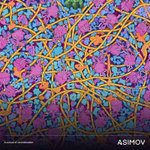
ALT This image is adapted from David S. Goodsell, RCSB Protein Data Bank and Scripps Research. doi: 10.2210/rcsb_pdb/goodsell-gallery-048
Asimov retweeted
Making the Micropipette
A seminal tool for every wet-lab scientist, a micropipette is used to transfer small volumes of liquid. It laid the foundation for modern biology.
Our first essay uncovers the inventors and lawsuits that made it all possible.🧵
open.substack.com/pub/cell/p…
Asimov retweeted

The 2023 Grand Jamboree is supported by our Platinum Partners @AsimovBio @idtdna @Ginkgo @TwistBioscience. Come thank them in-person for their support at the #20thYearofiGEM World Expo of #SynBio this Nov 2-5 at the Paris Expo Porte de Versailles. 🎟️jamboree.igem.org


Asimov retweeted
Excited to finally announce... The MIT-Broad Foundry has joined Asimov!!
The team and infrastructure are now embedded at our Boston HQ. We're also changing the name to Asimov Labs (inspired by Bell Labs) to reimagine the tech tree for genetic design.
What's the backstory? 🧵
Today, we announced that the MIT-Broad Foundry team has joined Asimov and set up shop in our main office.
We are retiring the name "Foundry" and switching to Asimov Labs.
Our moonshot, as a team, is to solve genetic design.
Here's what that means...
asimov.com/news/asimov-labs
*****
We think of genetic design as applying biophysical insight to compose and layer genetically-encoded functions to achieve a cellular behavior.
It means working backwards from, say, synthetic photosynthesis or the eradication of a cancerous cell in the body to a DNA sequence that encodes all the biochemistry to make it happen.
We'd like to do this with zero implementation risk. And Asimov Labs will help us get there.
Asimov Labs is taking all the capabilities of a typical biofoundry — the robots, people, and high-throughput tools — and applying them to the genetic design moonshot. The team collects multi-modal measurements on transcription and translation rates, protein folding, protein-protein interactions, and energy consumption across different cell types for thousands of different DNA sequences.
These data are then used to build biophysical cell simulations, which incorporate into generative design algorithms: think of it as a "compiler" that can automatically design multi-gene plasmids. We’re also training deep-learning models to predict DNA functions from sequences in vivo. As these models mature, we’ll give them to scientists via Kernel, our software to design, simulate, and optimize biological systems.
This will be difficult, of course, but our ability to design biology is improving quickly.
As one example: Asimov Labs has used AI models and simulations to make tissue-specific promoters for gene therapies (asimov.com/news/ai-promoters). We did not do any screening for that work. We give additional examples in the blog.
In short: We’re fusing experimental data with biophysical models to design biology in silico. Come join us!

Asimov retweeted
AI hype has reached a fever pitch lately, but that doesn't mean the real world impact is imaginary
Transformer-based AI models exhibit remarkable abilities in language, images & video. Can they help design DNA sequences for gene therapy? We're excited to announce our talk at @ASGCTherapy where we use AI to design promoters that achieve tissue-specific gene expression 💻🧬

Asimov retweeted

Great resource for any @iGEM teams working on mammalian part designs...
@AsimovBio *will build the parts for you*!
Application ⬇️

Calling all #iGEM2023 teams!
The @AsimovBio team grant is now open for @iGEM teams: You submit mammalian part designs and Asimov will build and characterize those parts for you! Interested in applying? Details (deadline is May 19):
competition.igem.org/sponsor…
