

Picower Professor of Neuroscience at MIT https://xitter.twitterapi.xyz/t.co/UoEeD2FzEY Co-founder, Neuroblox https://xitter.twitterapi.xyz/t.co/o6wosMSGen
Cambridge, MA
Joined May 2011
- Tweets11.2K
- Following1.8K
- Followers47.4K
- Likes10.6K
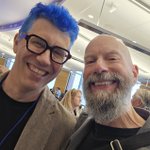


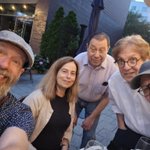


Miller Lab at the 2026 Society for Neuroscience meeting. Come by and say hi.
#SfN2026

Whatever is unifying consciousness also must be organizing it Thoughts are organized – at Somerville, MA
Data Colada turns up more evidence of fraud by Gino. Cheaters tend to be serial offenders.
datacolada.org/141

To me, it suggests that low-dimensional manifolds act on multifunctional (mixed-selectivity) neurons to route information at the mesoscale.
I agree about the distribution but a holographic model lacks the organizational mechanisms needed for coherent, goal-directed thought.
Shared fluctuations in neural activity mark which information the brain passes along, allowing the same circuit or brain area to serve different purposes. This is consistent with the widespread mixed selectivity observed in cortex.
doi.org/10.1073/pnas.2523217…
#neuroscience

When monkeys “count out” a number of actions, they seem to decide when to stop the same way brains make other decisions. Evidence builds up step by step until it hits a threshold.
doi.org/10.1073/pnas.2620933…
#neuroscience

Thanks. Also see work by Nicholas Schiff. Thalamic stimulation on minimally conscious patients partially restores consciousness.
1
1
241
I don’t follow the logic. Thalamic nuclei differ. Evidence that one isn’t involved doesn’t rule out others. Medial thalamic stimulation “awakened” anesthetized NHPs and reversed the electrophysiological features of unconsciousness.
doi.org/10.7554/eLife.60824

I go with evidence. Even the most beautiful theory lives and dies with evidence. – at Somerville, MA
ILN damage can produce minimally conscious states, not just locked-in syndrome. This and other evidence point to a central role for the thalamus, including that thalamic stimulation can restore consciousness in minimally conscious patients and reverse anesthetic effects.
The Earl K. Miller First Generation Scholarship helps first-generation college students who face financial barriers. You too can support these students by making a gift.
kent.edu/alumni-and-giving

High-frequency thalamic stimulation restored consciousness in subjects under deep propofol anesthesia. Something is going through it.
doi.org/10.7554/eLife.60824
1
19
948
Timely, far-reaching theta waves help organize cognition, study shows
picower.mit.edu/news/timely-…
#neuroscience – at Cambridge, MA

Brain Biomarkers
Brain disorders are notoriously mysterious. To improve diagnosis and to better measure treatment efficacy, Picower Institute labs are developing objective and minimally invasive indicators of brain health.
picower.mit.edu/news/brain-b…
@MIT_Picower

19-45 Hz rhythm in the central thalamus looks like a signature of “conscious-like” brain states (awake and dreaming) as opposed to unconscious ones.
Thalamic oscillations distinguish natural states of consciousness in humans
nature.com/articles/s41562-0…
#neuroscience

Earl K. Miller retweeted

Direct human central thalamus recordings have identified a 19-45 Hz oscillation specific to conscious states (Chowdhury et al., 2026, nature.com/articles/s41562-0…).
Theories of the neural correlates of consciousness need to consider the thalamus.


