
NASA Goddard (@NASAGoddard) header
NASA Goddard (@NASAGoddard) profile picture

Welcome to your friendly neighborhood space flight center, home to the largest community of scientists & engineers on Earth.

Greenbelt, MD USA
Joined February 2009
Photo by NASA Goddard (@NASAGoddard)Photo by NASA Goddard (@NASAGoddard)Photo by NASA Goddard (@NASAGoddard)Photo by NASA Goddard (@NASAGoddard)Photo by NASA Goddard (@NASAGoddard)Photo by NASA Goddard (@NASAGoddard)Photo by NASA Goddard (@NASAGoddard)Photo by NASA Goddard (@NASAGoddard)Photo by NASA Goddard (@NASAGoddard)Photo by NASA Goddard (@NASAGoddard)
The Jupiter Trojan asteroids are remnants of our early solar system, trapped in the same orbit as — but not close to — Jupiter. By studying the Trojans up close, we can learn more about how our solar system’s planets formed 4.5 billion years ago. science.nasa.gov/blogs/lucy/…
1
6
43
1,999
Lucy: 1 Odysseus: 0 The Lucy spacecraft has officially reached the Jupiter Trojan asteroid region, just 5 years after launch — half the time it took Odysseus to get home from his voyage to the Trojans.
23
128
15
663
29,319
Curiosity didn’t kill the cat, it helped NASA capture it 🐱 @NASAHubble & @NASAWebb peeked at the Cat’s Head Nebula. Despite its demure appearance, the star-forming region was shaped by shockwaves from nearby stars in the Carina Nebula. See the pictures: go.nasa.gov/4yVsFJX
18
92
3
405
20,351
With @NASARoman's view being 100 times wider than Hubble, Roman will spot thousands of lensed galaxies, helping astronomers map dark matter and better understand the invisible mass found in galaxies. Magnify the details: go.nasa.gov/4idXW64
1
6
32
1,681
Here is a zoomed in view of the gravitational lens. The background galaxy appears as two arcs: a small, distorted arc in the bottom right and a prominent arc in the top left. This specific configuration is called an arc-counterarc pair.
1
8
42
1,950
WAKE ME UP when you spot the strangest galaxy (galaxies?) in this image 🎸 Hidden among this @NASAHubble image of many galaxies lies an oddity in the bottom right. A foreground galaxy is acting as a gravitational lens, magnifying the light from a more distant galaxy behind it.
20
70
6
383
11,434
NASA Goddard retweeted
What’s up in the night sky for November? This month, you can look forward to: - Multiple meteor showers reaching their peak - Jupiter meeting up with Mars in the wee hours - A supermoon lighting up the night sky More skywatching tips: go.nasa.gov/4iuD8FZ
188
570
58
3,020
954,884
After 5 years and 2.2. billion miles, NASA's Lucy spacecraft has reached the Jupiter Trojan asteroids. These asteroids serve as time capsules from the birth of our solar system, rich with clues about the environment in which Earth & other planets formed. science.nasa.gov/blogs/lucy/…
40
231
13
1,092
52,895
Pack your bags, we're heading to Titan! Add your name to fly along with Dragonfly, the rotorcraft we're sending to Saturn's largest moon. Download your boarding pass now! go.nasa.gov/dragonfly-names
48
246
37
1,285
41,687
NASA Goddard retweeted
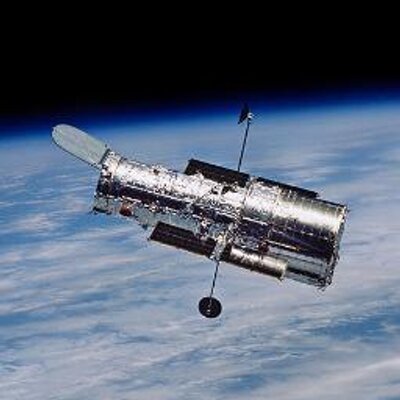
NASA issued a Request for Information to learn more about industry capabilities for in-space servicing to support the agency’s Hubble Space Telescope: science.nasa.gov/missions/hu…
39
204
30
1,309
71,361
🎃 What's that lurking just beyond the light of our own Sun? Something haunts the universe. Gather 'round the campfire for a Halloween tale of terror: a planet that never existed at all.
8
14
5
81
8,180
History will never forget the name Captain Picard. Thank you for inspiring the Next Generation of explorers. ✨
173
3,824
136
18,387
256,643
Your next trip: a flight to another world. 🪐 Send your name aboard NASA’s Dragonfly mission to Saturn’s largest moon Titan and get a personalized boarding pass for the journey. Become a Dragonflyer today: go.nasa.gov/dragonfly-names
134
738
180
3,684
209,851
Phytoplankton are tiny, but together they are visible from space, changing the color of the ocean. In areas that are usually filled with phytoplankton, the ocean can appear teal or green. This El Niño year, with fewer phytoplankton in the western Pacific, the ocean appears bluer.
1
6
1,257
Phytoplankton feel the heat too Microscopic plants called phytoplankton prefer cool, nutrient-rich waters. During an El Niño, weakening trade winds reduce the phytoplankton food source from cycling up to the surface. With limited food supply, phytoplankton abundance drops.
2
1
7
1,309
In 2026, a band of warm water stretches across the equatorial Pacific, appearing in a deep red. In a weak La Niña year, that same area swirls with waters that are normal or slightly colder than normal, appearing tan or light blue, respectively.
1
1
3
100
Widening warm waters With an El Niño year, sea surface temperature also fluctuates. In the same region where sea surface height was increasing, the waters are also warmer than normal. Sea surface temperature and height are interconnected. As water heats, it expands.
1
1
3
131
As months pass in 2026, notice the large swath of higher-than-normal waters, appearing red, growing along the equator. Last year, a weak La Niña year, the same area had sea surface heights that were normal or slightly lower than normal, appearing shades of yellow and blue.
1
1
3
152
The heartbeat of El Niño One of the first clues of an El Niño is a Kelvin wave—a slow-moving swell of warm water. They pulse, transfer heat from west to east, cause changes in air pressure, & can weaken trade winds. These features cause rising sea levels in the eastern Pacific.
1
1
6
325