







covertsah retweeted

🚨 SHOCKING BREAKING: Michigan voter rolls have BLOWN PAST capacity at a mind-boggling 107.9% — 74 of 83 counties are OVER 100% in a total meltdown! Wayne is a jaw-dropping 111.7% with 151,000 EXTRA! Oakland 109%, Macomb 107.5%, Kent 108.5%, Genesee 111.8% — and 72 counties STILL over after Census error! Officials are sitting on nearly a MILLION ghost registrations while active rolls sit at just 95.9%! Is this the biggest election scandal in history?! +++



covertsah retweeted

当全世界的聪明人都在为近 4 万亿美元市值灰飞烟灭捶胸顿足时,硅谷风投大佬 Chamath 却掏出放大镜,找到了一个真正决定 AI 巨头生死的命门。
这位硅谷老狐狸抛出了一个暴论:眼下整场 AI 博弈的胜负,全看一单买卖。他指的,正是马斯克的 SpaceX 和 Anthropic 签下的那份算力合同,里面藏着一个“双向 90 天随时解约”的条款。
这事还得从这周的政治海啸说起。美国中期选举共和党遭遇了水门事件以来最惨的溃败,连红了几十年的德州都翻蓝了。州长们听见“数据中心”四个字就像见了瘟神,因为选民们早就受够了:这些庞大的机房除了替科技巨头赚钱,留给当地人的只有昂贵的水电费和噪音。
各地要是真给新数据中心按下暂停键,算力供给立马就得卡脖子。
就在这个节骨眼,硅谷的阶级成分瞬间清晰了。手里有现成地盘和电力的微软、谷歌、Meta、亚马逊,外加马斯克的 SpaceX,成了紧俏的“房东”;而像 Anthropic 和 OpenAI 这种得急需算力来迭代大模型的实验室,说白了,只是群没有房产证的“租客”。
在 Chamath 看来,这直接把马斯克送上了牌桌的主位。
手握着庞大算力,一旦数据中心审批放缓导致算力紧缺,现货价格可能会翻倍甚至涨到三倍。如果现货暴涨让原有长约变成了亏本买卖,SpaceX 随时可能直接动用“提前 90 天解约”的条款撕毁老合同,把算力按现货价重新计价。
到那时候,急需算力续命的 Anthropic 除了当场滑跪、认下翻倍甚至三倍的高价,根本没有第二条路可走。
就在这两天的富达路演上,面对机构把 IPO 估值从 2 万亿美元狠砍到 1.2 万亿的“骨折价”,CEO 达里奥为了保住上市,硬是诚恳地向买方投资者连说了三次“谢谢”。现在就开始赔笑脸了,真等到马斯克拔电源那天,他们更是连谈判的筹码都没有。
更损的是,这一刀要是真捅下去,等于当场给其他“房东”上了一堂生动的现实主义扫盲课,启发它们重新盘算手里的算力到底是留给自己用,还是拿去放高价租。而那些“二房东”们,为了不被踢出局,只能咬碎后槽牙,不计代价地去抢购市面上残存的算力。
听到这儿,旁边的 Jason 赶紧踩了脚刹车。他反驳说,马斯克跟 OpenAI 的奥特曼确实仇深似海,但跟 Anthropic 团队的关系好得像蜜月期,而且 Anthropic 还是他未来搞太空数据中心的好搭档。就算现货涨上天,马斯克也未必会干出直接掀桌子按现货价宰客的事,大家坐下来谈个“中间价”才更像人话。
但 Chamath 显然不相信硅谷的塑料兄弟情:“这跟关系好不好无关,跟谁是好公司坏公司也无关。这就是一张算账的表格,表格会直接给出答案。”
在这场近 4 万亿美元灰飞烟灭的魔幻风暴里,所谓的科技宏大叙事,剥开来看依然是最朴素的包租公哲学:只要电表转得够快、现货涨得够狠,再美好的革命友谊,可能也熬不过一张 Excel 表格,和一纸短短 90 天的逐客令。
covertsah retweeted

🚨 ELECTION ISSUES: Alabama - Statewide official rolls, 32 of 67 counties are over 100%.
Madison County is at 109.9%, 30,372 over.
Baldwin County is at 112.8%, 24,298 over.
Shelby County is at 106.9%, 11,846 over.
Limestone County is at 104.7%, 3,978 over.
St. Clair County is at 102.8%, 2,050 over.
Randolph County is at 110.0%, 1,774 over.
Lowndes County is at 122.3%, 1,711 over.
28 of those counties stay over after the Census margin of error. The official totals include 462,824 inactive voters still on the rolls.

covertsah retweeted

David Friedberg is raising a pretty serious concern about the AI boom, and it has implications for the entire US economy.
We're reaching a point where just seven or eight companies are spending so much money on AI infrastructure that they're beginning to compete with the US government for capital. One estimate discussed on the All-In podcast suggests that the capital these companies need to raise through 2027 could be equivalent to roughly 30% of US Treasury issuance over the same period. That's an enormous amount of money for such a small group of companies to be competing for. And we're no longer talking about investments that can be funded entirely through existing cash flows. Increasingly, these companies are turning to corporate bonds, private credit, and other forms of financing to keep expanding.
When the US government needs to borrow money, it issues Treasury bonds. When these technology companies need money, they can issue corporate bonds. Both are competing for investors' capital, including pension funds, insurance companies, banks, and large institutional investors. If companies continue flooding the bond market with hundreds of billions in new debt, investors may demand higher yields to absorb all that supply. That could also put upward pressure on Treasury yields, which influence borrowing costs throughout the economy. We're talking about mortgages, business loans, corporate financing, and potentially even the Federal Reserve's ability to stimulate economic activity through lower interest rates. And there's another problem. The more capital that flows into AI infrastructure, the more difficult or expensive it could become for smaller businesses and industries outside AI to secure financing. We're essentially concentrating an extraordinary amount of financial resources into a handful of companies, with the expectation that AI will eventually generate enough revenue and productivity gains to justify all this spending.
What's particularly interesting is that AI could become both a major driver of economic growth and a source of financial pressure at the same time. Building these data centers creates demand for electricity, construction, semiconductors, and industrial equipment. But financing that expansion could simultaneously push borrowing costs higher for everyone else.

Chamath Palihapitiya just raised a pretty serious concern about the AI boom and I think this could become one of the biggest issues facing the bond market over the next few years.
For context, the largest AI companies have accumulated an estimated $340 billion to $400 billion in debt, and the amount of money they need to raise is only getting bigger. Companies like Google, Amazon, and Meta are spending hundreds of billions building data centers, purchasing GPUs, expanding power infrastructure, and developing AI models. The problem is that even some of the most profitable companies in the world are reaching a point where their operating cash flow isn't enough to comfortably finance all that spending.
@chamath estimates that the additional financing these companies will need through the end of 2027 could equal roughly 30% of everything the US Treasury is expected to issue over that same period. Think about what that means. Some of the largest corporations in America are now competing with the U.S. government for capital from the same institutional investors, pension funds, insurance companies, and bond funds. If these companies continue flooding the bond market with hundreds of billions in new debt, investors may demand higher yields to absorb all that supply. That creates the potential for upward pressure on borrowing costs across the economy, including mortgages, corporate loans, and government debt. And higher yields would also put pressure on stock valuations, especially growth companies whose valuations depend heavily on future earnings.
What's particularly interesting is how dramatically the economics of Big Tech have changed. For years, companies like Google and Meta were essentially cash generating machines with relatively modest capital requirements. Now they're becoming some of the most capital intensive businesses in the world. They're spending enormous amounts of money today on infrastructure that may take years to generate sufficient returns, while committing themselves to additional spending as AI demand continues growing. And this extends well beyond Big Tech. Companies like Oracle, CoreWeave, and Nebius are also financing enormous AI infrastructure projects. The more dependent this entire ecosystem becomes on debt financing, the more sensitive it becomes to interest rates, credit conditions, and investors' willingness to provide capital.


They are doing there thing

Introducing Mini 2, the next-generation portable Starlink. Get up to 4.5 hours of connectivity on a single charge with the quick-swap battery, or plug in with USB-C.
With built-in Wi-Fi, all you need is a clear view of the sky to get online in 60 seconds.
Preorders are now open by invitation in the US. Be the first to know when it's available → starlink.com/mini-2
3
covertsah retweeted

THE GREAT REPLACEMENT
ISLAMIZED TEXAS: FROM 313,000 TO 1.25 MILLION MUSLIMS IN JUST FIVE YEARS?
That is what a comparison of these figures suggests:
2020: Approximately 313,000 Muslims.
2025: Approximately 1,250,000, based on figures attributed to the presidents of the Islamic Society of Greater Houston and the North Texas Islamic Council.
If accurate and comparable, those figures would represent a fourfold increase an estimated 937,000 additional Muslim residents.
Texas’s total population grew by 2,560,323 over that period.
On that basis, Muslim population growth would account for approximately 37% of the state’s net population increase.
An extraordinary claim. We are watching the fall of America happen in real time....
covertsah retweeted

Muslim man in Ohio says America will be conquered and taken over by Muslims and there is nothing we can do to stop it
“Islam is coming to America — One day, America will become a Muslim state, a Muslim country — Our goal is to make America Islam”
They are literally telling us to our faces they are here to take over our country
When they say America will be an Islamic state, that means we will all be living under an Islamic caliphate
That means the end of your civil rights, free speech, all of it. You will be under Sharia Law. You will submit or you can be killed
We have to stop this
covertsah retweeted

This is f*cking insane. Elon Musk was asked why he keeps building AI data centers that half the town shows up to protest. He answered with one city:
"We're paying about twice the area's previous wage levels"
In 2 minutes, he takes the whole data-center fight apart with one example: Memphis
There was real opposition. Then the facility opened
Now the restaurants are packed. The hotels are fully booked. Local businesses are thriving
Wages roughly doubled. The company funds local schools. The city and county pull in serious tax revenue
His point is simple: before it's built, people picture only the downside. After it's built, the money starts moving to businesses that have nothing to do with the data center
He's only giving the company's side. The power bills, the air and the noise still land on residents. Those are separate questions
Energy → Data Center → Jobs → Local Boom → The People Who Build On Top
The data center is just the shovel. The real money is in what you build on the compute
95% will keep debating the power bill, the 5% who build on the compute will own what it produces
Save it and send it to anyone watching the AI buildout from the sidelines
Then read the full Grok Bot Playbook below ↓


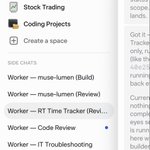
You can setup muse side chats like bot. Main chat ceo, send things to workers side chat they work in projects spaces.

28


covertsah retweeted

The Nvidia $NVDA shareholder lawsuits are going to be epic...
Madison Huang joined Nvidia as an intern in 2020 after culinary school, chef work, LVMH marketing, and an MBA. She is currently a senior director.
Nvidia’s own Senior Director job postings commonly require 15+ years of overall experience (and often 5–10+ years in leadership). Similar director-level roles ask for comparable tenure.
Senior Director, Product Marketing job postings list base salary ranges of roughly $308,000–$471,500, plus equity
Spencer joined in 2022 after running a cocktail bar and earning an MBA. He has about 4 years of Nvidia tenure.
Spencer Huang is a director-level / product line manager leading robotics software products at NVIDIA.


covertsah retweeted

wtf dad…
Readers added context they thought people might want to know
This video is a scripted promotional skit for the Yapper AI video generation app, not a real interaction.
unilad.com/news/social-me…
yapper.so/articles/how-t…
yapper.so