
Building @Underline_Cap, @AutographHQ, and @AbstractOpsCo. Prev @Forge_Global. Dogfather. I used em-dashes before AI liked them, and I refuse to stop.
Miami, FL
Joined March 2019
- Tweets9.9K
- Following957
- Followers13K
- Likes31.1K







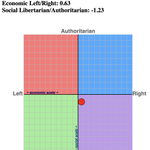


This post absolutely nails a concept I've been noodling on for a while.
A major dimension that separates the left and right is the "O" on the Big 5 personality traits: liberals tend to be high on openness to new experiences, conservatives tend to be low.
This means that creativity, variety, art thrive in left leaning areas. Visiting SF, NYC, Toronto, LA... Damn, the food and drink is incredible. There's also just so much to do, experiences to take in. It's a real vibe.
The cities, however, are almost unlivable day to day.
On the other hand: Miami has middling food, (the 99th percentile restaurants in Miami are like 70th percentile in NYC / 80th in SF), no great theater, just-okay coffee, and virtually no great ethnic food (besides Latin American, for obvious reasons). There is like one good Thai restaurant, one decent Indian restaurant.
But boy is it a joy to live here. The streets are pristine. City inspectors during a remodel can be scheduled next day, not in 2 weeks. I've accidentally left my garage door open overnight. Nothing missing. In SF I had thieves sneak into a secured garage, use bolt cutters to on a bike cage, and a saw to cut off my bike lock to steal it.
There is no state income tax, and yet: it draws far less from federal coffers per capita, because it spends far less per capita and... It all just kind of works. It works FAR better than it ever felt in California.
Yeah. I think the left is better at beauty because they are more open to new experiences, and the right is better at order and governance because they are not.
Separately: I can't believe Spencer Pratt -- this poet, this philosopher, this absolute king -- didn't win the LA mayoral election.
I can't believe he didn't even make the runoff.
What an indictment of direct democracy. What an indictment of the LA electorate.

If you’re right wing and you can’t admit liberals (not communists) are way better at art and design and boutique coffee shops and restaurants, you’re not living in reality.
If you’re left wing and you can’t admit conservatives are way better at running cities and businesses and police departments, you’re not living in reality.
You step inside a beautiful coffee shop in the PNW and think “man, these liberals are great at this stuff…conservatives should take notes.” Then the moment you step outside and trip over a homeless drug zombie shooting up fentanyl on the sidewalk, you think “man these liberals are terrible at this stuff…they should really take notes from conservatives”
Communists make disgusting anti-beauty art, but classical liberals aren’t like that. Put the libs in charge of the coffee shops, put the conservatives in charge of city hall. This is how you get a city that is beautiful, clean, and functional.
If you can’t accept that, you need to check your tribalism. We are never getting rid of each other, so figure out how we strike a balance or else the communists swoop in and take everything from us while we quarrel over stupid bullshit…which is exactly what’s happening now.


Hyperscalers should simply ration usage and latency (including social media) by distance to the closest data center.
I bet that would turn the tide on data center buildout amongst politicians and the electorate real quick.

The governor-elect of Texas, Gina Hinojosa, has explicitly said that all currently permitted datacenters in Texas will be allowed to finish construction. This essentially covers all of the 2027 and likely well into 2028.
She is going to pass laws that ensure that all *newly* permitted datacenters going forward for delivery in 2028/2029 will pay taxes, commit to no increase in power prices for consumers, don’t impact water availability for people, be constructed with union labor and give “Texans a seat at the table.”
Sounds reasonable. She doesn’t want to lose a lot of good blue collar jobs and property taxes for small towns in rural Texas.
Datacenter commentary starts at 6:30 in this interview.
Also attaching her official campaign position from her website in the next post.
Sidenote: After watching a bunch of her speeches and interviews, I do think she is a political talent and probably has a future in national politics.
youtu.be/D-T6H3b8ZeE?is=mEWu…

5
16
1,322
This very-incorrect premise (Notion being a Bending Spoons target, or at all comparable to Airtable) surfaces from time to time.
I don't think @NotionHQ should engage with it (it's a leading question and even the comparison to Airtable does Notion a huge disservice), but as an early investor and big Notion bull, I'm happy to do so. This is not based on any insider info / not endorsed by the company but I know them pretty well outside-in.
(I have a 3,000 article on Notion I wrote a couple of months ago that I need to finalize and publish, but in the meantime this is a brief TL;DR.)
1. Notion is growing far, far faster. Airtable was at 15-20% towards the end. Notion's is not publicly disclosed but all signs point to 70%+. I'm pretty sure they're approaching $1B in ARR.
2. Airtable's attempts at building AI into the core product mostly all sucked. Like Omni was just *really* bad. The first thing they had that sort of worked (maybe?) was Hyperagent, which was a totally different product which didn't benefit from Airtable, or pour benefit back into Airtable.
Notion AI on the other hand is fundamentally woven into Notion and actually completely changes the way Notion can be used (this is part of the longer post, but some examples below).
3. Notion has completely rearchitected the product for primitives that are AI native. MCP, CLI, API — basically every bit of Notion can be used from inside Claude / Codex etc. Airtable never got there.
4. UI is really important because most people aren't systems thinkers in their head. They're visual thinkers. I would argue UI is *more* important in an agentic era, not less.
5. Airtable's main building block was a user-friendly database... it's unlucky for them but this was the least-defensible thing in the era of agents + Supabase etc.
Notion has the building blocks needed for the context graph (company + personal) — dozens of primitives like a markdown editor (deceptively hard to build well), databases, tables, html blocks, gantts, charts, dashboards.... these would make no sense for each company to build for itself. Sure you can go use an open source thing or string together a bunch of components but this is really really annoying and <<1% of people want to build or maintain this (speaking as one of those people... I've built all of these components before for startups I founded).
6. Notion is leaning into this — the context layer / store of knowledge & skills for your agents — if you look at their announcements and new releases. TBH the main problem with Notion (as a company / product) is storytelling. They don't explain how you can use it well — to be fair, this is hard since there's so much there. But nevertheless, this is the company's responsibility to educate users. I consider myself a power user and I still feel like I'm barely scratching the surface.
7. The best products — even if they're hard to grok and use — will win in the agentic era, because agents are smart enough to understand the best tool for the need and adopt it. The importance of educating users might actually decline. This would be the best thing to happen to Notion, because a) they have an incredible product, b) their weakness has been educating users so that may gradually becoming irrelevant, and c) it's agent friendly.
8. On usage & adoption: 70% of Notion's user base is outside the US (a post by Ivan just yesterday). It has a ton of penetration and those who love it really love it (like me!). AI usage / MCP usage is rapidly ramping — 9x and 60x in the last year (again, see the post by Ivan yesterday). So I would argue all of these users are really early in the curve.
9. Look at the talent they're attracting. There have been many, many talented ex-founders who have joined the company in the last 6-12 mos. These folks have their pick — they could start a new company, or join one of the model labs, etc. They would not join a dying company! And they're choosing to join Notion.
10. Finally: Notion did a tender in Dec 2025 at $11B — this was the price investors paid for common stock. This was GIC, Sequoia, and Index, so about as blue chip as it gets. They don't raise a bunch of additional capital in tranched rounds because they've been profitable for a long time and they don't need to.

I understand why Zitron is the way he is, now.
He's British, and the accent always sounds smart (to non-British people).
He pairs this with being the purest form of midwit: someone who speaks with a great deal of confidence, and understands slightly more than the median person. Like a 103 IQ individual. But certainly not smart enough to understand second-/third-order effects (which usually kicks in around one standard deviation higher).
So he's had nearly 20 years in the US of being told "you're really smart" (I mean sure, compared to a teapot) and "you see things others don't see" (so do schizophrenics).
This leads him to be unerringly incorrect, an arrogant asshole, and utterly oblivious to those things. All at the same time, an impressive feat! — which is probably the only impressive thing about him.
(I hesitate before being mean to people on the internet, but a) he's a much more mean to others, b) I tried to engage in good faith and he resorted to name calling and blocked me, c) "public" figures like him are fair game.)

“Is this just a big circle jerk?” Jon welcomes Ed Zitron (@edzitron), host of the podcast Better Offline, to make sense of the financial house of cards propping up AI and big tech. New pod out now!
I've been waiting for Stripe to launch a closed-loop payments network for almost a decade.
But then I figured the dependence and platform risk with V/MC was too strong.
Curious what changed. I don't think it's stablecoins or agentic payments, per se. Maybe it was simply time.

I think the thing that made it *really* fuzzy is that the "is it recurring" question re: Annual Recurring Revenue doesn't always have a binary answer.
There are lots of "reoccurring" revenue companies that effectively look like recurring revenue. Stripe is a very good example.
If it's SO like-recurring, shouldn't they get "credit" for it in the business model description?
I could see a good argument for that. So that's one line crossed.
But then the thing that's changed is not usage-based pricing, but rather the weakness of the moats. One could argue that OpenAI / Anthropic *would* have had effectively-reoccurring revenue (even absent enterprise contracts) but there are no switching costs.
Another line crossed.
And then we get to things like usage-based SaaS reselling tokens at like 10% (or even negative!) margins. Ok well that's not that different from Ant/OAI.
Another line crossed.
And then when you finally get to data brokers... it's basically just GMV, but there have been too many lines crossed and nobody knows what the fuck ARR means anymore.
So here we are.

Have never understood this shift. Seems to be in the last 9-12 months.
I kept seeing ARR being thrown around by companies and then I saw a data labeling company talk about ARR and it all clicked into place.
Makes zero sense. Should be annual recurring revenue.
5
4
1,382
Sometimes entire industry norms get set in moments like this: by the right person calling out an apparent-to-insiders truth at the right time.

Best to assume anyone saying ARR means annualized revenue rate, and anyone with actual ARR will now spell out Annual Recurring Revenue. The questions are more on how they calculate annualized run rate. Some founders are annualizing weekly or daily revenue, or even pilot revenue.
2
42
20,598
This is utterly off. Ramp was a hot seed stage company out the gate. They raised capital at $40-100M within a few months of incorporation. At $100M, a 1-2% grant is $250-500K / year in preferred-equivalent terms. Early stage startups simply do not grant that. It's off by more than half an order of magnitude.
This is why benchmarks for early stage comp -- especially equity comp, when stated in percentages -- are worse than useless.
They are actively harmful, and everyone (founders, people ops, candidates) would do better to completely ignore them.
Carta and Pave are useful for base comp, but they are doing the world a grave disservice by pretending to "benchmark" equity (at early stage through Series C/D, it's objectively incorrect).
Source: I've spent easily 10,000+ hours working on comp spanning founding through Fortune 500 companies, dating back to 2013.
I can't wait to publish a new version of my open source comp tool. (It'll be free, just a public benefit.)

Today on generational wealth. Ramp's first 10 employees may well be sitting on $1B + in stock. Employee #1's initial stake alone could be worth over $300m
In 2019, Ramp was at $0.21 / share. Today it raised at $160 / share.
Startups typically give their first 10 hires ~5% of the company. @sama says it should be 10% minimum, and Ramp is the type of company to be on the generous side.
Especially given the talent density at the company. 1/3rd of its first 60 hires were ex-founders. By 2021, @tryramp had set aside ~1/4th of the company for employees. Most startups set aside closer to 15%.
If the first 10 got ~10% between them and never sold (via secondary / tender), their original grants alone would be worth over $1B now.
Hire #1, ~$340M
Hire #10, ~$41M
That's post-dilution (~80%). Share price still up ~760x from 2019. Not yet fully liquid ofc.
Once again, only from original grants (total could be higher)
We don’t know the true grant values, so these are estimates. Chart and assumptions below.

Now that The Bear is done, I think The Diplomat is the best all-round show on TV.
I've seen many of the other acclaimed shows currently running: Slow Horses, White Lotus, Severance, Foundation... Very solid shows. But nothing nearly as riveting or well-done as The Diplomat.
JFC, to everyone commenting.
1. Yes I know Tesla doesn't make internal combustion engines. Did you think all F1 teams made their own? Did you know McLaren doesn't even make their own engines?
2. Even if they needed to -- do you think SpaceX engineers couldn't figure out how to make a rinky dink F1 engine after making Raptor engines? (Yes I know that's a different company but all of his companies cross pollinate talent, whether we all think that's okay from a governance standpoint or not.)
3. The point here is simply that his hardware, fluid dynamics, propulsion, and broadly engineering teams are always S-tier. Ofc Ferrari and Mercedes people are fantastic but I still think Tesla / SpaceX engineers who *caught a fucking spaceship with clamps like chopsticks* would dominate.
4. Yes Musk doesn't like following rules, but mostly he doesn't like following stupid rules. Tesla cars do have to get cleared by the NHTSA after all. You don't build multiple trillion-dollar companies without knowing how to play the game.
4. Yes I know Elon won't <insert descriptions of crude behavior here> with me. No I don't care about the creator payout (I have plenty of money.) Maybe it's okay for someone to be simply an admirer of engineering prowess. Perhaps consider what this says about your own insecurities.

Someone in a WhatsApp chat: I have a $5M block of Anthropic.
Me: "I thought we were discussing Ant secondary blocks, not secondary blocks for ants. It's gotta be at least... three times as big!"
2
18
4,041
It's really unfortunate Elon is mostly untouchable by scandals at this point because "elongate" is just sitting there unused.
4
27
2,664
Been a customer of ampersand for a while. Great product!

Your AI is vaporware without deep integrations with your customers’ systems of record.
Introducing @WithAmpersand: integration infrastructure for enterprise agents.
We power 11x, Orb, and Square's ability to take agentic action in systems of record like Salesforce, SAP, NetSuite, and Workday.
Ask anyone serious about building AI and they’ll tell you:
- The SaaSpocalypse didn’t happen. The world depends on CRMs, ERPs, HRISs, and ITSMs.
- Your customers customized their deployments beyond recognition.
- Systems of record companies are basically monopolies. They never had to make their APIs and MCPs user-friendly.
- Docs don't explain half the weird edge cases you'll hit.
- One bad write can blow up your pilot or renewal.
- Once you finally get it working, someone changes a field and it breaks again.
The world's data lives in structured databases. AI needs a translation layer to work with it.
So, for your AI to truly transform the way enterprises work, you'll need deep integrations built for:
- scoped permissions
- bi-directional actions
- real-time speed for agents
- custom objects, fields, and workflows for each of your customers
We built Ampersand to power the future of software.
AI didn't trivialize writing integrations. It made them the critical path.
I believe that deeply, so I didn't make a launch video about Ampersand.
Instead, it's the best builders I know explaining just how big of a challenge this is.
4
1,102

"talking to a machine should feel as natural as talking to a friend or coworker"
uh, no.

The whole point of building Tavus has been simple: talking to a machine should feel as natural as talking to a friend or coworker.
It’s hard to describe all the tiny nuances that make a conversation feel human. The little expressions. Moving around in your chair. Knowing when to speak and when to listen. The dance of it all.
Griffin is by far the closest anyone has come to a model that can capture those nuances. The first time I saw it being used, I had no idea I was watching our model rather than just a normal video call.
I’m so incredibly proud of this team and what they’ve built.
5
21
2,611

This is probably how @OpenAI should monetize their soon to be released personal assistant, O. They've already laid the foundations with ads.

Sick get by @patrick_oshag + cool to hear from @noahrshinn
Got to learn more about Instinct:
- $1B+ in annualized transaction volume while still invite-only, growing 10% a day w/ $0 on marketing (apparently people selling their invites on eBay for $300)
- 50% of that is travel
- 40% of users hand the agent a credit card w/in 3 weeks, + those who share anything sensitive retain at 80%
- Goal is to stay free for life + monetize via a blanket take rate on txns, paid by merchants for distribution
- Compute needs are effectively 2xing every week, new capacity takes months to come online + buying on short notice costs 3-4x, so Noah spends ~40% of his time on compute 🤯
1
10
1,668