

✨ Broadcast producer. I run live shows on-site and from the cloud for the audience at home, not just the room. Your studio, my crew, from anywhere. ✨
Philadelphia, PA
Joined February 2024
- Tweets5.6K
- Following478
- Followers382
- Likes16.6K


Pinned Tweet
TwitchCon's problem isn't the $249 badge. Free codes prove that. It's the $2,000+ trip wrapped around it.
Everything in California costs more for "reasons" - from the paper the badges are printed on to the internet. The basic exhibitor internet listed for the San Diego Convention Center is labelled not for streaming, with routers prohibited. Anything you can actually stream on is quote-only, because nobody puts those prices on a website anymore. We just quoted a show in DC where the hardline alone was $80,000.
Even at industry shows the venue internet doesn't cut it. At a recent trade show, booth after booth had paid for hardlines and still had to run bonded routers to do live demos. Software companies couldn't demo their own streaming products on the floor internet. Now picture that at a convention built around live streaming.
"It's always in San Diego" is probably a multi-year contract. Venues and AV vendors offer a "discount" if you sign for multiple years. I've seen those discounts on big shows - the bill is still astronomical.
Then the dates. Two weeks before Thanksgiving, people with limited time off are picking TwitchCon or the holidays.
Then there's actually getting there. It used to be you got on a plane and landed where you were going. Now it's how many times will they delay me before they cancel it? Add weather on top of that - we just had a week of bad rainstorms here in Pennsylvania, and winter's coming. On our jobs that's the part that freaks me out most, because an event is a fixed date. You can't just go a different weekend. For winter shows, crews add a down day - fly out a day early in case weather hits. That's one more hotel night and one more day off work. When you're not sure you'll even arrive, it's a lot easier to stay home.
After last year you heard story after story of girls saying they were drugged at parties. Real security costs real money.
Industry shows like NAB and InfoComm run on a different model. Sponsors and the vendor floor pay for the show, so you can get onto the floor for free. Even the parties are free - InfoComm ran three nights of parties at different venues with DJs and entertainment, all paid for by sponsors, and you got in with your floor pass. TwitchCon's party was $79. You pay for education at industry shows, which makes sense - they take over the whole building, and every room needs its own AV and internet. But you can walk the floor for days and talk to every brand there. You can walk up to Blackmagic and have a conversation with their people right then and there. At TwitchCon, everyone in the room is a creator, so you're a dime a dozen. It comes down to vibe and viewer count. If you treat streaming as a business, the trip is a write-off. If you don't, it's a really expensive vacation.
If virtual is in the plan from the start, a soft turnout means you shift focus to the people at home instead of playing to an empty room. A lot of people can't make it. What are you giving them?

Twitchcon appears to be giving away hundreds (thousands?) of 3-day tickets, likely because of low sales.
Ambassadors, brands, artists, and other attendees are being given codes for free tickets.
Current publicly available data suggests sales are 33% below last year.


3
560
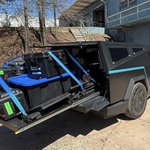
I never felt safer in a vehicle during Pennsylvania winters than I have in the Cybertruck.


When a conference sells out, the room is full and plenty of your audience is still outside it. Venues only hold so many people. Travel is expensive, and time away from work or kids is hard for a lot of people who would love to come. For them, the livestream is the conference. So it needs to be an experience of its own, not a camera pointed at the stage. Someone should be running the online show: reading chat, getting viewer questions to the host, and picking shots for the people at home instead of the people in the room. An in-person event that streams is really two shows, and the second one has an audience that is just as big and often bigger. 🤓
1
73
Four hours of taking viewer questions is the right call. Live is the only place a viewer can ask something and get an answer while it still matters, and that's the reason to stay instead of watching the clip tomorrow. You don't need a special app for this. If you have a real tech team, audience questions can be added to any show: pick the moments when questions go on air, give one producer the job of sorting chat, and have a host answer by name. If your team says it can't be done, you need a different team. That way the hosts aren't reading chat off a phone while results come in, and viewers see that someone on screen actually heard them.

Election Night is better when you’re part of the conversation.
Join @MeghanMcCain, @LarryOConnor, @KevinPWalling, and @TheFP's @snoozyweiss, @Olivia_Reingold, @AudreyFahlberg, @willrahn, and @DouglasKMurray for FOUR HOURS of LIVE election coverage on November 3, from 8pm to midnight ET.
We’ll break down the races, make sense of the results, and take your questions.
Powered by @2WAYTVAPP x @TheFP
Register now: 2way.tv/election

60
Steve Kornacki goes live at 5:30 tomorrow and doesn't stop until it's called. At some point in those 13 hours he has to step away - to use the bathroom, eat something, or just stretch his legs. So what's on screen while he's gone? Hopefully a second analyst at the desk, a county-by-county map breakdown, or a taped segment, not a slide that says 'be right back.' The break plan is part of the show. Viewers who see a hold slide at 9 PM will switch to someone who didn't have one.

Here it is: the link for the election night livestream. It’ll go live at 5:30pm Tuesday and we’ll go nonstop through the night. Truly hope you’ll come along for the ride - and please help spread the word and share with others!
youtube.com/live/b043z24ErQk
youtube.com/live/b043z24ErQk

202
This is cool for post production. Now put it in the middle of a live show.
Picture a hybrid event: a roving camera grabbing behind-the-scenes clips and quick interviews, feeding the control room over bonded internet connections. An AI editor already has that footage the second it's shot - no cards, no uploads. It pulls the best answers, cuts a 45 second package with our lower thirds, the client approves it from their phone, and it rolls during the next break instead of a holding slide. That's what I'd want, not what Kino does today.
Broadcast is building the plumbing for this right now (MXL, if you want to nerd out 🤓). Creator tools like this are building the editor. I haven't seen anyone connect the two yet, and I'd be first in line to test it.

Introducing Kino: make videos end-to-end with Claude Code and Codex.
Drop your footage, get highlights, edit together, send links for feedback, and let your agents cook.
AI is becoming a great creative partner. Kino is a new home for your team and agents to collaborate.
1
95
A live shot of 31,000 fans at the AmFam watch party is one camera and a hardline from the venue. Keep the feed up all game and cut to it when something big happens. Pretty simple. That crowd is a second show, and Game 4 is tonight. 🤓

As a former TV guy, I find it interesting that the Fox broadcast says little about the thousands of loud, Brewers fans at the Trop. And that it doesn’t have a live camera at Am Fam, where 31,000 fans are watching the game on a big screen. Missed opportunity for a great visual.
87
“If it looks good in the room, it’ll look good on the stream” is one of the most expensive assumptions in live events.
Any time you stream an event with people in the room - a product launch, a demo day, a meetup, a live podcast with an audience - you’re running two shows at once. One for the people in the seats, and one for everyone watching online.
Most teams only plan the first one.
The room gets all the attention. Someone runs the stage, someone handles the mics, someone makes sure the speakers hit their marks. If the room gets bored, everyone can see it. People check their phones or walk out for coffee.
The people watching online usually have nobody. No one is reading the chat. No one is picking shots for the viewer at home. Nobody can see them leave, so nobody notices when they do.
That’s how you end up with one camera in the back of the room, a speaker who never looks at the online audience, and a chat full of questions nobody answers.
Before your next launch, meetup, or demo day goes live, ask: who is running the show for the people who aren’t in the room?
That person watches the stream instead of the stage. They read the chat, get viewer questions to the host, and make sure the camera shows a face instead of the back of someone’s head.
If there’s no name next to that job, you’ve planned half an event.

2
87
MTS took their show to the NYSE floor on Oct 1. I watched all 6 hours and timed every break. Here's what any live show can take from it.
I picked this one because it was a landmark day for them, and because it's the kind of show I love producing most: multiple locations, one live broadcast. Studio in SF, crew on the NYSE floor. More shows are headed this way, so it's worth getting right.
What they did well:
- Got onto the NYSE floor with the MTS logo on the big screens right behind every shot. That's a huge get.
- A wide and two close-ups on the floor, actively switched.
- Strong guests. The Minna Song (EliseAI) interview was the best of the day, and you could tell Sophia was into it.
- A produced show open, a sponsor ticker that stays in the clips, and same-day clips with captions.
If you're running a live show of your own, start here:
1. Never let a holding screen go silent. Put music under it and a "back at 2:15" on screen. MTS ran 2 hours 12 minutes of sponsor loop in a 6-hour stream, and the NYSE breaks were silent.
2. Read chat on air. Have someone pull two or three real comments per guest and hand them to the host with the viewer's name. That shoutout is the reason to watch live instead of waiting for the clip.
3. Mic your next guest while the current one is still talking. Wire them, hide the cable, check levels off camera. A guest swap should take under a minute, not 5-7.
4. Don't go to break to change guests. Host full screen wraps and intros the next guest, two-box to say hi, then guest solo. Keep remote guests waiting in a green room so they're ready to go.
5. Tease every break. "Up next, [guest] on [topic]. Back in 3." Every MTS out was "We'll be back with MTS," with no who or when.
6. Give every sponsor its own moment. One sponsor per read, in the host's words, with a link. A logo flashing for 1 second on a loop is the least valuable thing you can sell.
7. Lower thirds go up for 5-10 seconds, on the side of the person they name, then come down. Check every graphic against your rundown before it goes live.
8. Plan your day around hard outs. Venue screens, bells, guest flights. Someone owns the clock and tells your host when to stretch or wrap.
MTS gets the hard parts right: the guests, the venue, the reach. What's missing is the stuff between segments, and that's true for most new shows. Most of these fixes cost nothing but planning.
If you're building a show and want a second set of eyes on your rundown before you go live, DM me.

SENATE PERMITTING DEAL | LIVE FROM THE NYSE | BLITZY PR REVIEW | GEMINI 4 ARGON xitter-newx.xyz-mikolabs.workers.dev/i/broadcasts/1dGYlaAvV…

1
2
195
My biggest pet peeve: companies hire great creatives, then give them budgets that don’t match the idea and bury them in approvals. Ramp does the opposite.
I don’t know what their approvals look like, but my TD cut the live show at the Brian’s Office activation, so we’ve seen one of their big productions from the inside. Then the Broadway show, and now Tony Hawk and Bam skating a ramp at the NYSE. Anyone in events knows what an activation like this costs - in permit fees alone.
Ramp makes company credit cards and the software that tracks and categorizes the expenses. It’s crazy that they’re making content so good people are talking about it. That’s what a healthy marketing budget and real faith in your creative hires gets you, and it shows in the production value and the execution. The go big or go home attitude has set the bar high as hell, and the constant sprinkling of nostalgia makes it memorable. They’re making financial software endearing 🤪
Congrats to the Ramp team on another great one!

2
196
Streamers pick a platform based on where their audience already is. Companies running virtual events / webinars usually pay for one, and it can run tens of thousands of dollars before any cameras are booked. Three rules if you’re the one signing:
1. Hire your production crew before you pick a platform, every time. If you buy the platform first, you find out later that the cameras and graphics still have to get into it, and each of those is an add-on. I've watched nonprofits spend most of a small budget on the platform and have almost nothing left for the show itself. Bring the crew to the platform demo. They'll ask what it can't do.
2. Price the full show before you set the budget, every time. Get cameras, graphics, crew, and the stream in one quote. Otherwise the number in your head stays "30k-40k" until the real one shows up after the budget is already spent.
3. Plan the stream as its own show, every time. The people at home can't see the stage. They only see whatever somebody decided to put on screen, and if nobody was assigned to decide, they get a wide shot for an hour. Name who's directing the stream before you book the venue.
If you're about to sign for a platform, book a call with us first. We'll tell you which one your show needs and what it'll actually cost.
1
4
172
Unless you own the distribution - it is not a moat. By own - I mean you’re @elonmusk and @X is yours kind of own. Distribution for most is rented space.
How many creators have you seen say they lost their whole channel overnight because @YouTube decided to delete it. How about someone fighting with @instagram to get their account back, same with @tiktok_us and the panic around it possibly shutting down.
You own the content, but you’re renting the space it’s living in. The landlord can decide it’s time for you to go.


127
Congrats @IamPurePrime 🥳

⭕Creator Swag⭕
So freaking excited to announce that my Creator Swag will Officially be in #TheDivision2!! Can't wait to see Agents running around in my Apparel.
Get yours in game from the 15th of October!!

94
Streaming is my business, we always have a bunch of options built. They never bother me on social streams because I expect them for my work broadcasts.
Starting soon screen, always. We typically guide clients on adding a countdown timer. It gives the viewers time to settle in, grab a drink, use the restroom. They know what to expect and when to expect it.
Something for breaks. Depending on how long the break is going to be determines what’s on the screen. 30 minutes of a BRB screen is a lot - perfect place to play clips, sponsor reads, etc. Again with the timer - as a viewer - do I have time to grab a drink or can I walk the dog during break? Short streams don’t need one, having one ready just in case is helpful.
End screen - Thanks for joining, call to action. Doesn’t need to run long but gives a closing that isn’t an abrupt door slam.

1
89
Showrunner isn’t a tech title. It’s a TV title with a real job attached - final say on creative, crew, and budget for the whole show. On a live set, a runner is the person grabbing batteries and gaff. Same word, opposite ends of the ladder.
This is how production titles stop meaning anything. A broadcast TD and an AV TD are completely different hires, and I see clients book the wrong one all the time. Last week a “studio style” show turned out to be a green screen nobody told the crew about.
I’d write down what I want that person to be responsible for first - then find the title. Production people will read it literally. It’s kind of our whole job 🤓

I’m crafting a team of these very special folks @NotionHQ — I struggle to write JDs for these roles because everyone here on the team now is n of 1, and the “job” reveals itself as we talk.
Everyone works directly with @ivanhzhao @akothari, our legendary engineering, AI, design, and product team, as well as marketing, ecosystems, and more — and Storytelling’s expertise is valued deeply as an equal partner on solving business problems.
And I know we all talk about the rise of the “super IC” but it is true for us — Notion as a culture rewards people who make things amazing over those who just run things made by others, and that’s true for Storytelling. @ishverduzco @jamesjacoby_ @nikhilville @iscoe and some others TBA are coooooooking.
I do have a few more roles/problems-to-solve opening up … come talk to me before I have to write an insufficient JD for your brilliant spikiness. I’m looking for a “head of soft power” (eg, external media and creator lead), an Instagram creator and strategist, YouTube show runner, and [insert your pitch here].
3
103
Absolutely worth reaching out for this. I had the pleasure of learning about Wave XLR Pro and pro integrations at NAB Show in Vegas this past spring. It’s one piece of equipment I’m going to be using in our automated podcast concept.

Have a few extra units for Elgato Wave XLR Pro sendouts.
Any creators looking to upgrade their audio workflow?
Let me know why you could use the upgrade. What will it replace? How would it change your setup?


1
80
X Calls as a meeting product is interesting.
It does not replace Zoom in produced workflows.
This is not one company’s stack. Remote presenters and callers come in on Zoom. Isolated feeds come out of Zoom ISO. Those feeds hit software switchers or hardware switchers, in physical control rooms and in the cloud. Green rooms stay in Zoom. The program often goes back out through Zoom Event, Cvent, social, or into a live show pipeline.
That is how investor calls, town halls, sales programs, and pharma sessions get produced. It is also how news and new media shows take remote guests. Zoom ISO is how a lot of those rooms get callers on air.
Teams only enters when a client’s security policy requires it.
Zoom became that standard because it sat inside the broadcast chain. That is why Zoom for Broadcast won an Engineering Emmy.
If X wants that seat, it needs isolated participant feeds, green rooms, return video, and I/O that belongs in a real production plant next to tools like Grass Valley and CLOUDflex.
The companies building in this lane should be at NAB and InfoComm, in the room with the engineers and technicians who run these workflows. Not just on the show floor.
I would welcome being in those product conversations. That is how you get a tool the industry will actually use, recommend, and put on an InfoComm Broadcast AV stage.

𝕏 is building its own full-scale meeting platform with 𝕏 Calls...basically its own version of Google Meet and Zoom
You can start instant calls, create meetings for later with a link or code, or schedule them with titles, descriptions, invitees and calendar integration
The experience goes beyond simple video calls with group meetings, custom backgrounds, interactive whiteboards, live chat, reactions and more
𝕏 Calls also includes flexible access controls, letting hosts choose who can join.....everyone, verified organization members, or only approved participants
The biggest upgrade is that 𝕏 Calls runs on a new in-house backend instead of the older Periscope-based infrastructure
It’s currently being tested and could roll out publicly soon


Updated media kit 👇
I produce live shows for the people watching at home. In our Philly-area studio, on-site at your event, or from the cloud with my crew anywhere in the world.
If people are watching, they should be able to talk back.
DMs are open.

1
8
153
I’m going to mention it every chance I get - X needs to show up at broadcast and broadcast av industry shows. A booth would be cool, but just having a presence would be amazing.
When I mentioned X promoting livestreaming and building a viable environment for it during my session on multicasting at InfoComm - the room thought I was making it up.
I want to meet up with the X team at @NABShow and @InfoComm 🤓

X Livestream API has been rebuilt from the ground up.
Your entire broadcast lifecycle on X can now be powered by our API: go live, schedule broadcasts, run and moderate chat, and get live events for alerts and overlays. Available now. 🚢
5
130