

Asst Professor @USC with interest in the brain, BBB, stem cells, AI + what can go wrong after stroke & AD. Alum @ETH_en. Fixing science @ResearchHub
Los Angeles, USA
Joined June 2019
- Tweets4.6K
- Following2.2K
- Followers3.8K
- Likes9.1K


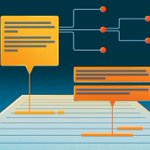

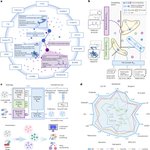



Generating interesting scientific ideas using knowledge graphs and LLMs: Evaluations with 100 research group leaders | PNAS pnas.org/doi/10.1073/pnas.26…

Great article by @andcyang lab in @CellCellPress showing that the blood-brain barrier selectively delivers plasma proteins to distinct brain cell types.
Increasing liver-derived APOA1 improved synaptic and behavioral outcomes in an Alzheimer’s mouse model.

Really proud that our lab is now officially part of @AnthropicAI "AI for Science" program!
With credits provided by Anthropic, we can now massively scale up our computational work.
We will use them for many exciting projects, including foundation models for stroke multi-omics that feed into a closed-loop drug discovery approach in human tissue, and much much more. 🧑💻🧬🧠
Check our work featured by @NewsfromScience 👇

For clinical trials of tests and treatments, accuracy can be a matter of life or death; these studies directly inform medical practice, after all.
A new tool may help make sure the studies are sound: #AI.
In a test of whether 15 LLMs could identify methodological errors deliberately inserted into clinical research papers, one spotted nearly all the planted errors, and even the worst LLM performer found about half. Human reviewers found only one-quarter.
Learn more: scim.ag/4BQVmdF

ALT AI beats scientists at finding errors in clinical research papers New findings demonstrate AI’s aptitude for identifying technical flaws in studies where medical decisions are on the line

Read here the 𝗦𝗰𝗶𝗲𝗻𝗰𝗲 𝗡𝗲𝘄𝘀 article about our new preprint.
In our study we show that LLMs found 96% of planted errors in clinical trial papers. Human peer reviewers found 27%. We tested 15 LLMs on the three papers from the 2008 BMJ study.
Even the weakest model found 53%, and results held up on 58 new clinical studies from 2026. Humans are still needed to judge novelty and significance. But for clinical trials, I think AI checks should be part of every review (with secure tools and where journal policy allows).
Thank you Jeffrey Brainard for the nice piece!
Read it here: science.org/content/article/…

Our preprint: medrxiv.org/content/10.64898…
X thread:
xitter.twitterapi.xyz/rust_ruslan/status/211…

Lots of debate this week on whether journals should ban AI in peer review.
We actually tested this in our new preprint, and the results were pretty clear to me.
For context, I've reviewed for most of the big journals and evaluated 1,000 human reviews as an editor. I love to read and evaluate science.
TLDR: From now on I won't do any peer review without AI. For clinical trials, I'd even call human-only review dangerous 🧵

Paying reviewers for peer review is the right thing to do, and we've been doing this at @ResearchHub for several years.
However, if this is supposedly the question authors care about most (which it absolutely should not be and I refuse to believe!), they should probably reconsider why they're doing science.
“What authors get is an answer, usually within about five to ten days, to the question they care about most: does this paper have a real chance at the journals I am aiming at?”
Peer review should be about the scientific record and the public, not a journal-placement service for authors
nature.com/articles/d41586-0…

The human-specific gene FRMPD2B couples postnatal experience to the expansion of cortical connectivity
biorxiv.org/content/10.64898…

Interesting, will try out something similar to run a research lab 👇

I've changed how I work over the last few weeks.
I now have one lead agent for each area of focus, running all the time, and a chief of staff agent that oversees them. Each lead manages its own sub-agents that write code, test it, chase reviews, and coordinate with team members.
Everything I need to decide or review comes into one prioritized queue, a simple local web app. Each product review includes screenshots and a video demo of the feature. I clear the queue in batches, mostly by voice and keyboard shortcuts. The leads also bring back ideas I hadn't considered.
Working from one queue, instead of switching between dozens of chats, has cut a lot of mental overhead. The system keeps learning my preferences and distilling my judgment into a "Brian brain," so its recommendations and first drafts get better before they reach me. The goal is fewer corrections per change.
Every change still goes through the same human review and security checks. It is eliminating tasks, not human judgment.
What an exciting time to push the frontier of productivity, especially as we build the economy for agents (agentic finance). We should all keep pushing in this direction.
1
9
1,501
A knowledge-driven framework for predicting single-cell responses for unprofiled drugs
nature.com/articles/s42256-0…

Agree. The models are good enough. The bottleneck in my lab right now is jumping between Opus 5.5, GPT Astra/Sol and Kimi, then back to Opus 5.5, hoping not to get downgraded to 5.0 or 4.8 mid-task.
It’s also random and unreliable. Verifying my lab and going through Claude Science didn’t visibly help. Hope this gets fixed soon, it’s literally slowing down our work on better therapeutics.

Opus 5.5 (via Code) is unusable with the most basic bio things. Just asking it to look at a published brain paper to include in a paper wiki switches to Opus 5.
@lydiahallie this used to be fine until recently.
One of the biggest untapped opportunities for AI in biology may be locked inside lab notebooks.
Making them openly accessible, including failed experiments and details papers leave out, could so greatly improve AI models, deepen our understanding of biology, and make science more reproducible.
Great opportunities 👇

🧬 We’re hiring at the NVIDIA × Lilly AI lab—across both companies!
Help build the next generation of drug discovery, bringing AI, robotics and experimental science together in our joint Bay Area lab.
#Hiring #AIforScience #DrugDiscovery
Watch our interview about how we came up with the idea to study how microplastics may affect brain cells in Alzheimer’s disease.
Led by Gavin in our lab, the project was made possible by crowdfunding through @ResearchHub @ResearchHubF in less than a day.

They got their research idea fully funded in less than a day.
Meet @rust_ruslan and Gavin, investigating how microplastics affect brain cells involved in Alzheimer's.
Hear how ResearchHub helped them secure funding and start experimenting while the idea was still fresh.
Wonderful work by Matthew Kenwood from the Goldberg lab:
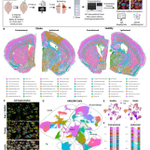
Spatially resolved single-cell atlas reveals cortical glial reactivity associated with regions of neuronal growth programs in both hemispheres after stroke
biorxiv.org/content/10.64898…

Fibroblasts help build their own neuronal niche: human cells compact collagen microgels while converting into neurons. Imaging and bulk RNA-seq track the transition. Early rat graft feasibility, not evidence of functional recovery.
biorxiv.org/content/10.64898…

Very cool!

ライブセル空間トランスクリプトーム出たー
Live Spatial Transcriptomics Enables Longitudinal Tissue Mapping
biorxiv.org/content/10.64898…

3D-printed peptide hydrogels guide axons between human DG- and CA3-enriched spheroids. At 12 weeks, responses favored DG-to-CA3 across 8 connectoids, but exceeded null in only 3/8 in that direction. An in vitro circuit model, not a graft.
biorxiv.org/content/10.64898…

I just funded: Does Low-Dose Psilocin Delay Senescence in Adult Human Skin Fibroblasts? on ResearchHub! researchhub.com/proposal/332…

1
7
352
Haha, I more commonly see the opposite: a reviewer suggests five citations only marginally related to the manuscript. By a remarkable coincidence, all five have the same last author. What do you do? 😂

When doing a peer-review of an article for a medical/surgical journal, you notice a key citation is missing and it happens to be your seminal work on the topic. What do you do?
What do journal editors think?
76%Suggest they cite you
24%Ignore missing reference
270 votes • Final results 2
6
1,431